
How can we help today?
Choose an option to see quick actions and get help faster.Furnace Maintenance in Scottsville, KY
Furnace Maintenance in Scottsville, KY
Furnace Maintenance in Scottsville, KY
Stop Overpaying for Heat and Risking Unexpected Breakdowns This Winter
When your furnace operates inefficiently during the damp, chilling winters in Scottsville, you are paying for wasted energy while risking a complete system failure on the coldest night of the year. Carter Heating and Cooling provides comprehensive maintenance services designed to lower utility costs, improve safety, and extend the lifespan of your heating equipment. Contact us or apply for financing to schedule your tune-up today.
Neglecting annual maintenance leads to accumulated dust, worn components, and potential safety hazards that compromise your home’s comfort. Our technicians address these issues proactively to ensure your system is ready for the season.
- Immediate dispatch for urgent performance issues and convenient scheduling for routine tune-ups.
- Expertise in maintaining all major furnace makes and models, including gas, electric, and propane systems.
- Guaranteed workmanship that focuses on long-term reliability and straightforward communication.
All services are fully licensed, backed by warranties, and supported by flexible financing options to make comfort accessible.
The Scope of Comprehensive Furnace Maintenance
Effective maintenance goes far beyond a simple filter change. It involves a rigorous inspection and calibration of the system's mechanical and electrical components to ensure they are operating within manufacturer specifications. A furnace is a complex machine involving combustible fuels, high-voltage electricity, and moving parts. Without professional attention, minor misalignments or dirt accumulation can escalate into major repairs.
Our maintenance protocol focuses on the "Three S’s": Safety, Sanitation, and System Efficiency. By addressing the entire unit, we identify potential failure points before they disrupt your heating service.
- Safety Controls Testing: We meticulously test the limit switch, which prevents the furnace from overheating, and the flame roll-out switch, which detects if flames are escaping the combustion chamber. Verifying these controls is critical for preventing fire hazards.
- Combustion Analysis: For gas furnaces, proper air-to-fuel ratios are essential. We analyze the draft and combustion gases to ensure that carbon monoxide is being safely vented out of your home and not leaking into living spaces.
- Electrical Connection Tightening: Vibrations from normal operation can loosen electrical connections over time. Loose wires cause resistance, heat buildup, and eventual component failure. We inspect and tighten all voltage connections to prevent intermittent outages.
- Moving Part Lubrication: Friction is the enemy of mechanical efficiency. We lubricate the blower motor bearings and other moving parts to reduce drag, lower electricity consumption, and prevent premature motor burnout.
- Thermostat Calibration: If your thermostat is reading the temperature incorrectly, your furnace may cycle on and off too frequently (short cycling), causing unnecessary wear. We calibrate the thermostat to ensure accurate temperature control.
Understanding the Professional Tune-Up Process
We believe in transparency regarding the work performed in your home. Our process is designed to be thorough yet efficient, minimizing disruption to your day while maximizing the impact on your heating system. When you schedule a service in Scottsville, you are booking a dedicated time slot for a technician to perform a deep-dive analysis of your heating infrastructure.
The process follows a logical flow to ensure no component is overlooked.
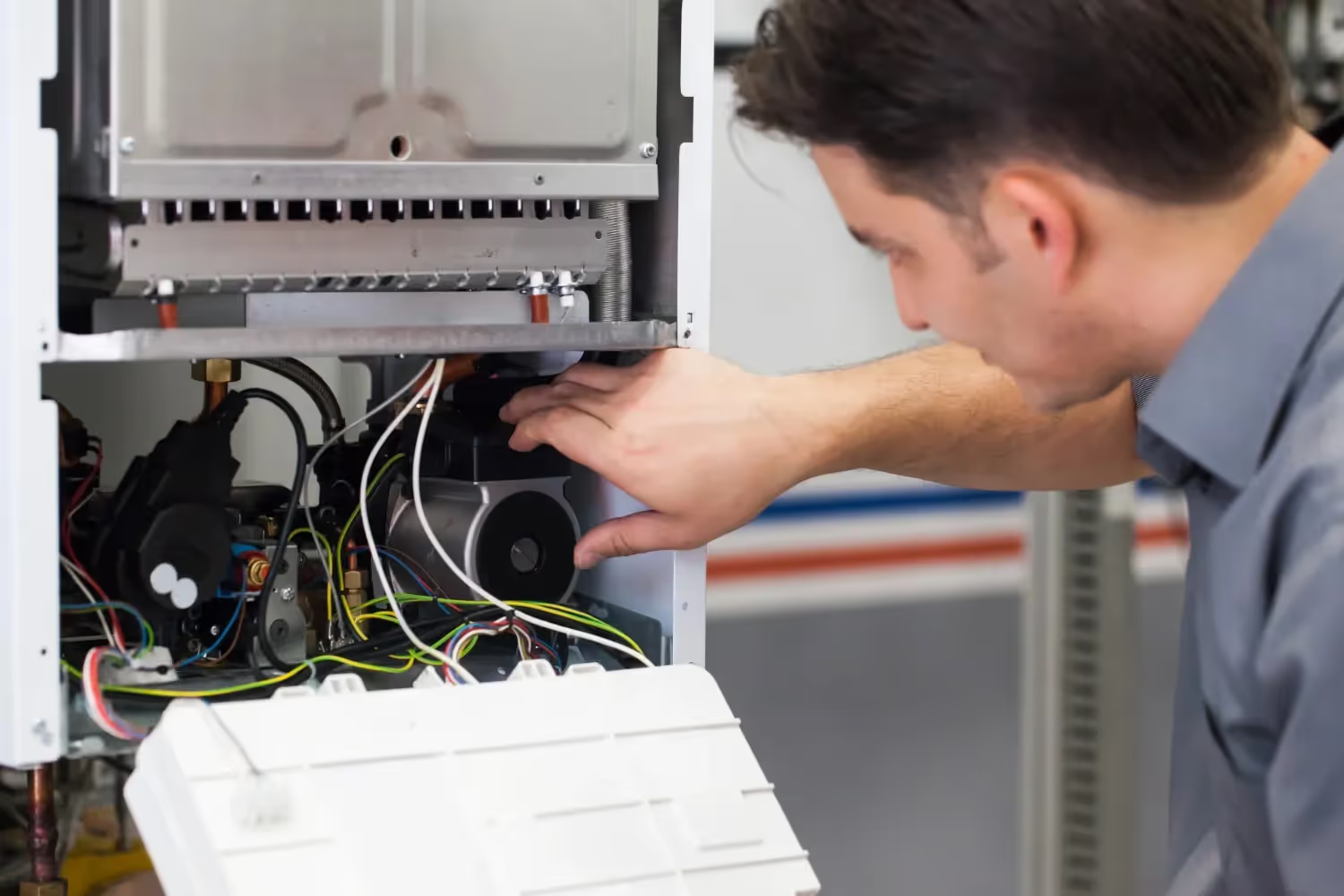
- System Run-Test: Upon arrival, the technician runs the furnace to establish a baseline. We listen for unusual noises, check the flame color (a blue flame indicates healthy combustion; yellow indicates issues), and measure temperature rise.
- Power Down and Disassembly: To access internal components, we disconnect power and remove the service panels. This allows access to the blower assembly, burners, and heat exchanger for visual inspection.
- Deep Cleaning: Dust and debris are removed from the burners, pilot assembly, and blower compartment. A dirty burner cannot mix fuel and air correctly, leading to soot buildup and inefficiency.
- Heat Exchanger Inspection: This is arguably the most critical step. We inspect the heat exchanger for cracks, rust, or corrosion. A cracked heat exchanger allows deadly carbon monoxide to mix with the air being circulated through the house.
- Reassembly and Final Testing: Once cleaned and adjusted, the system is reassembled. We power it back on to verify that airflow is improved, the burn is clean, and the safety switches are responsive.
- Reporting: You receive a detailed report of the findings. If a part is near the end of its life, we inform you immediately so you can decide whether to replace it now or wait.
Deciding Between Maintenance, Repair, and Replacement
Homeowners often confuse the need for maintenance with the need for repair. While maintenance is preventative, repair is reactive. Understanding the difference helps you make smarter financial decisions regarding your HVAC system.
When to Schedule Maintenance
Maintenance is required annually, regardless of how well the system seems to be running. It preserves your manufacturer's warranty—most brands will void the warranty if proof of annual maintenance cannot be provided.
- Rising Energy Bills: If your usage hasn't changed but your bills are climbing, the system has lost efficiency. Maintenance restores this.
- Uneven Heating: If some rooms are cold while others are hot, it often indicates airflow issues that a tune-up can resolve.
- Start of the Season: The best time for service is early autumn, before the heavy demand of winter begins.
When Repair is Needed
- Strange Noises: Squealing, banging, or rattling sounds indicate a mechanical failure that requires immediate repair, not just a tune-up.
- Short Cycling: If the furnace turns on and off every few minutes, it may have a faulty flame sensor or a clogged intake. Carter Heating and Cooling can diagnose the root cause accurately.
- Pilot Light Failure: If the pilot light won't stay lit, or the ignition system fails to spark, a specific component repair is necessary.
When Replacement Beats Repair
Sometimes, throwing money at an old system is not cost-effective.
- Age of Unit: If the furnace is over 15-20 years old and requires a significant repair, replacement is often the wiser investment.
- Frequent Breakdowns: If you have required multiple repairs in the last two years, the system is likely unreliable and nearing end-of-life.
- Cost of Repair: The "50% Rule" suggests that if the cost of repair is 50% of the value of a new system, you should replace it.
Local Climate Factors Affecting Your Heating System
Operating a heating system in Scottsville requires specific attention to environmental factors unique to the region. The climate here is characterized by distinct four-season weather, but the high humidity levels throughout the year present specific challenges for furnace longevity.
Humidity and Corrosion
Even in winter, moisture levels can impact your system. When a furnace cycles off and the metal cools, condensation can occur. In a high-humidity environment, this accelerates oxidation on the heat exchanger and burner assembly. Rust is a primary cause of prematurely cracked heat exchangers. Regular maintenance includes inspecting for early signs of rust to prevent dangerous leaks.
Variable Temperatures
Kentucky winters can fluctuate rapidly between freezing temperatures and milder days. This variability puts significant stress on the heat sequencer and thermostat. The system must be responsive enough to handle a deep freeze one day and a mild afternoon the next. Our tune-ups ensure your system’s staging and cycling logic are calibrated to handle these swings without wasting energy.
Permits and Safety Regulations
The Kentucky Department of Housing, Buildings, and Construction enforces strict codes regarding HVAC systems to ensure resident safety. This includes regulations on venting, gas piping, and clearance distances. Professional maintenance technicians are trained to spot code violations that may have occurred due to DIY repairs or shifting foundations, ensuring your home remains compliant and safe.
The Technical Importance of Airflow and Static Pressure
One of the most overlooked aspects of furnace health is airflow. A furnace is essentially a breathing machine; it pulls air in, heats it, and pushes it out. If this process is restricted, the consequences are severe.
Static Pressure Explained
Static pressure is the resistance to airflow within your ductwork and equipment. High static pressure is like trying to breathe through a straw. It forces the blower motor to work harder to push air through the system. This leads to:
- Overheated Motors: The blower motor draws high amperage, leading to winding failure.
- Cracked Heat Exchangers: Without sufficient airflow to remove heat from the exchanger, the metal overheats and cracks due to thermal stress.
- Reduced Comfort: Low airflow means warm air isn't reaching the furthest rooms in your house.
How Maintenance Fixes Airflow
During a maintenance visit, we check the static pressure. We inspect the filter, the return air drops, and the supply registers. We also clean the blower wheel. A blower wheel caked in dust loses its ability to cup the air, drastically reducing efficiency. Cleaning the wheel can restore significant airflow capacity and reduce the electrical load on the motor.
Why Professional Service is Essential for Warranty Protection
Many homeowners are unaware that their furnace warranty contains a maintenance clause. Manufacturers like Carrier, Trane, and Lennox typically state that the warranty is valid only if the unit is maintained annually by a licensed professional.
Skipping professional maintenance means that if a major component like a compressor or heat exchanger fails, the manufacturer may deny the claim, leaving you with a bill for thousands of dollars. We provide documentation of your service, giving you a paper trail that protects your warranty status. This documentation is also valuable if you decide to sell your home, as it proves the mechanical systems have been cared for.
The Dangers of Carbon Monoxide and Gas Leaks
The most serious risk associated with gas furnaces is carbon monoxide (CO) poisoning. CO is a colorless, odorless gas produced during the combustion of fossil fuels. In a properly functioning furnace, this gas is vented safely outside through the flue pipe.
However, several issues can cause CO to leak into your home:
- Cracked Heat Exchanger: As mentioned, this allows exhaust gas to mix with supply air.
- Blocked Flue: Birds’ nests, leaves, or deterioration can block the exhaust pipe, forcing gas back into the home.
- Backdrafting: If the pressure in your home is negative, air may be pulled down the chimney rather than going up it.
Our maintenance technicians use sensitive gas detection equipment to sniff out even minute traces of gas leaks or CO. We also visually inspect the venting system for integrity and proper slope. This safety check alone is worth the investment in maintenance services.
Maximizing Energy Efficiency and Lowering Bills
The efficiency of a furnace is rated by AFUE (Annual Fuel Utilization Efficiency). A furnace might start its life at 95% AFUE, meaning 95% of the fuel is converted to heat and only 5% is lost. However, without maintenance, this efficiency rating drops year over year.
Soot buildup acts as an insulator on the heat exchanger, preventing heat transfer. Dirty filters restrict air. Loose belts cause slippage. All these factors result in the furnace burning more fuel to provide the same amount of heat.
By restoring the system to factory specifications, we help you reclaim that lost efficiency. A tuned-up furnace runs less often to maintain the set temperature, directly resulting in lower monthly utility bills. For many homeowners, the savings on fuel costs over the course of a winter offset the cost of the maintenance service itself.
Secure Your Comfort and Safety Today
Waiting for a breakdown in the middle of a freezing night adds unnecessary stress and expense to your life. A well-maintained furnace is quiet, efficient, and, most importantly, safe for your family. By addressing wear and tear proactively, you avoid the high costs of emergency repairs and premature system replacement. Carter Heating and Cooling is dedicated to providing thorough, professional maintenance that keeps your home warm regardless of the weather outside.
Don't let the cold catch you unprepared. Contact us today to schedule your comprehensive furnace tune-up.

Great Service at a Fair Price
Veterans Discount


Senior Discount

Law Enforcement

Fire fighters/ems

Hear From Your Neighbors!
Hear from your neighbors to see how our commitment to dependable service and lasting comfort has made a difference in their homes.