

How can we help today?
Choose an option to see quick actions and get help faster.Air Conditioning Inspection in Scottsville, KY
Air Conditioning Inspection in Scottsville, KY
Ensure your AC performs optimally with our comprehensive inspections and same-day service in Scottsville. Schedule a professional evaluation today and stay cool.
Hedging Against Humidity: Optimal Air Conditioning Services
In the humid climate of Scottsville, staying cool isn't just about comfort—it's a necessity. Whether you're dealing with a system malfunction or seeking preventative maintenance, our air conditioning inspections ensure your system performs when you need it most. Contact us today to schedule a comprehensive evaluation or to discuss financing options for necessary repairs.
- Comprehensive inspections covering everything from filters to refrigerants.
- Same-day service available to get your AC system up and running smoothly.
- Detailed reports and straightforward solutions tailored to your specific needs.
Licensed and insured for peace of mind, with flexible financing options to fit your budget.
The Scope of a Professional AC Inspection
A true air conditioning inspection goes far beyond a quick glance at the outdoor unit. When you request a professional evaluation in Scottsville, you are paying for a deep-dive diagnostic process designed to uncover hidden inefficiencies, potential safety hazards, and impending mechanical failures. The goal is to provide a complete picture of the system's health, allowing you to make informed decisions about repairs or maintenance before the summer heat peaks.
The inspection process involves a systematic review of the entire cooling cycle. This includes the electrical components, the airflow dynamics, and the refrigeration cycle. An air conditioner is a complex balance of pressure and temperature; if one variable is off, the entire system suffers. For example, a slight refrigerant leak doesn't just lower cooling capacity; it causes the compressor to work harder, significantly shortening the lifespan of the most expensive component in the unit.
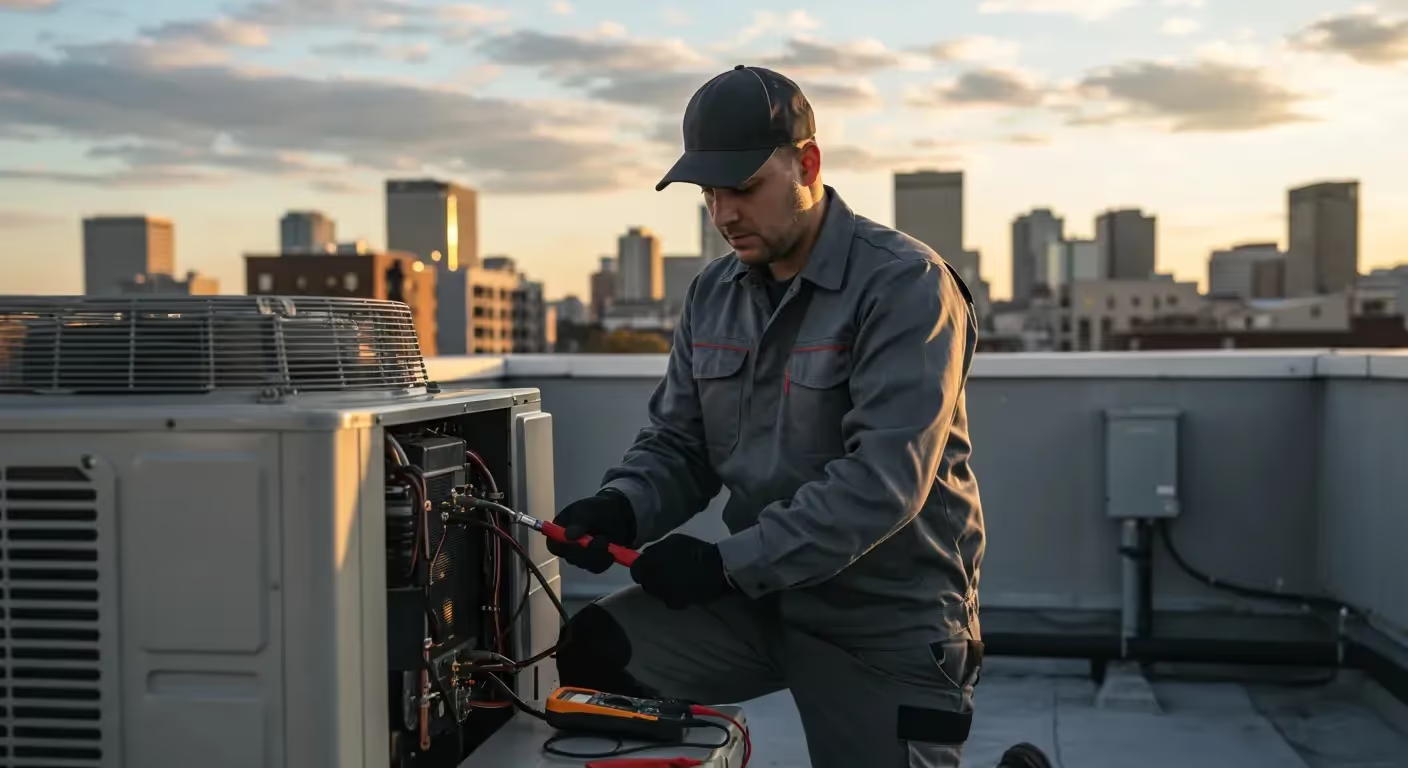
During an inspection, technicians focus heavily on the electrical integrity of the system. Loose connections can cause dangerous arcing or overheating, while worn capacitors can prevent the compressor or fan motors from starting altogether. By measuring the voltage and amperage against the manufacturer’s specifications, we can identify parts that are drawing too much power and are likely to fail soon. This proactive approach saves homeowners from the inconvenience of a sudden breakdown during a July heatwave.
Another critical aspect of the scope is airflow analysis. Even the most advanced AC unit cannot cool a home effectively if the airflow is restricted. This part of the inspection checks the blower motor for dust buildup, examines the evaporator coil for obstructions, and evaluates the ductwork for leaks or crimps. In humid regions like Kentucky, proper airflow is vital not only for temperature control but also for dehumidification. If the air moves too fast or too slow over the coils, moisture isn't removed effectively, leading to a clammy indoor environment.
How the Inspection Process Works
Understanding what happens during a service visit helps eliminate the uncertainty of calling for HVAC support. The process is designed to be thorough, transparent, and respectful of your property. We utilize a structured approach to ensure no component is overlooked and that you receive a clear explanation of your system's status.
Initial Consultation and System History
The process begins with a discussion about any specific issues you have noticed. Technicians will ask about strange noises, odors, or recent spikes in energy bills. This context helps direct the focus toward potential trouble spots. If Carter Heating and Cooling has serviced the unit before, we review previous records to track the degradation of specific parts over time.
Thermostat and Control Testing
The inspection starts at the control center: your thermostat. Technicians verify that the thermostat is reading indoor temperatures accurately and communicating correctly with the air handler and the outdoor condenser. This step ensures that the system cycles on and off at the appropriate times, preventing short-cycling which wears out the equipment.
Outdoor Unit Evaluation
The technician moves to the condenser unit outside. Here, the focus is on the condenser coil, the compressor, and the fan. The coil is inspected for dirt, grass clippings, and debris that act as insulation and trap heat. The technician also checks the refrigerant levels using precision gauges to measure superheat and subcooling. This data reveals exactly how well the system is absorbing and releasing heat.
Indoor Unit and Evaporator Coil Check
Inside, the technician examines the air handler and evaporator coil. This is often where moisture issues originate. The condensate drain line is checked for clogs to prevent water damage to your home. The blower motor and wheel are inspected for dust accumulation, which can unbalance the fan and damage the bearings.
Electrical Component Testing
Every electrical connection is tightened. The contactor is checked for pitting or burning, which can lead to stuck switches. Capacitors are tested for microfarad ratings; if a capacitor is below its rating, it cannot provide the necessary torque to start the motors, leading to system failure.
Final Reporting and Recommendations
Once the physical inspection is complete, the findings are compiled into a detailed report. This is not just a pass/fail assessment. You receive specific data points regarding the condition of your unit. If repairs are needed, they are prioritized by urgency—safety issues and immediate failure risks are highlighted first, followed by recommendations for improving efficiency.
Deciding Between Repair and Replacement
One of the primary reasons homeowners in Scottsville schedule an inspection is to determine if an aging unit is worth saving. An inspection provides the factual data needed to make a financial decision based on logic rather than emotion. There comes a point where the cost of keeping an old system running exceeds the cost of investing in a modern, efficient unit.
The 50% Rule
A common metric used in the industry is the 50% rule. If the cost of the necessary repairs approaches or exceeds 50% of the value of a new system, replacement is generally the wiser financial choice. For example, if a compressor fails on a 12-year-old unit, the repair bill is significant. Putting that money toward a new system with a warranty often makes more sense than patching a dying unit.
Age and Refrigerant Type
The age of the system is a major factor. Air conditioners typically last between 10 and 15 years. If your unit is over 12 years old and requires a major repair, replacement is usually recommended. Furthermore, older systems often utilize R-22 refrigerant (Freon), which has been phased out. R-22 is becoming prohibitively expensive and difficult to source. If an older unit has a refrigerant leak, topping it off is a temporary and costly fix. Upgrading to a system that uses R-410A or newer refrigerants is a better long-term strategy.
Frequency of Breakdowns
If you find yourself calling for repairs every season, those costs add up quickly. A system that is unreliable creates stress and uncertainty. Chronic breakdowns are a sign that the internal components are reaching the end of their fatigue life. An inspection can reveal if the rest of the system is following the same downward trajectory as the failed part.
Energy Efficiency Ratings (SEER)
Older units often have a SEER (Seasonal Energy Efficiency Ratio) rating of 10 or less. Modern standards require a minimum of SEER 14 or higher in Kentucky. Replacing an old SEER 10 unit with a new SEER 16 unit can result in substantial savings on monthly utility bills. Over the course of a few years, these energy savings can help offset the initial installation cost.
Local Considerations for AC Performance
Operating an air conditioning system in South Central Kentucky presents specific challenges that generic maintenance checklists might miss. The local climate and infrastructure influence how systems should be inspected and maintained to ensure longevity.
Managing High Humidity
Scottsville experiences significant humidity, particularly from late spring through early autumn. Your air conditioner is your primary dehumidifier. During an inspection, it is critical to verify that the unit is sized correctly. An oversized unit will cool the house too quickly and shut off before it has removed the moisture, leading to mold growth and discomfort. Technicians check the drop across the evaporator coil to ensure the system is pulling enough moisture out of the air.
Biological Growth and Drainage
The combination of heat and humidity creates the perfect environment for algae and mold to grow in the condensate drain lines. If these lines clog, water can back up and trigger overflow switches that shut down the system, or worse, cause water damage to ceilings and floors. Local inspections always include a rigorous check of the drainage system to prevent these common local issues.
Vegetation and Debris
The lush environment in the region means pollen, cottonwood, and grass clippings are abundant. These particulates clog outdoor condenser coils rapidly. A local inspection accounts for this by checking the airflow through the condenser fins. Impacted coils cause head pressure to rise, driving up electricity usage and stressing the compressor.
Permits and Regulations
When inspections reveal that a full replacement or major modification is necessary, local codes come into play. Kentucky has specific requirements regarding electrical disconnects, wire sizing, and refrigerant handling. Professional inspectors are familiar with these codes and will flag any existing code violations that might have been overlooked in previous years or by unlicensed handy-workers. Ensuring your system is code-compliant is essential for safety and for the resale value of your home.
Why Technical Accuracy Matters
In an industry where sales tactics often overshadow technical service, the accuracy of an inspection is paramount. You need an evaluation that relies on physics and electrical theory, not sales quotas. A high-quality inspection is about giving you the truth about your system’s condition so you can plan accordingly.
The difference lies in the diagnostic tools and the training of the technician. Using advanced digital manifolds and thermal imaging allows for a level of precision that analog tools cannot match. This precision means we can detect a failing capacitor before it swells or a refrigerant leak that is just beginning. It shifts the service from reactive to proactive.
When you receive a report, it should be clear, evidence-based, and devoid of pressure. The focus remains on outlining the current state of the equipment and providing options. Whether the solution is a simple capacitor swap, a chemical coil cleaning, or a discussion about future replacement, the decision always rests with the homeowner.
Secure Your Comfort and Efficiency
Ignoring the health of your cooling system in a climate known for its sweltering summers is a risk that rarely pays off. Small inefficiencies compound into expensive breakdowns, usually on the hottest day of the year. A professional inspection provides the clarity and security needed to navigate the cooling season with confidence.
By identifying worn parts, clearing clogged drains, and verifying safe electrical operation, you extend the life of your equipment and protect your wallet from unexpected energy spikes. Don't wait until the system fails to give it the attention it needs.
Take control of your indoor climate today. Schedule your comprehensive air conditioning inspection now and ensure your home remains a sanctuary against the heat.

Great Service at a Fair Price
Veterans Discount


Senior Discount

Law Enforcement

Fire fighters/ems

Hear From Your Neighbors!
Hear from your neighbors to see how our commitment to dependable service and lasting comfort has made a difference in their homes.