

How can we help today?
Choose an option to see quick actions and get help faster.Heat Pump Repair in Scottsville, KY
Heat Pump Repair in Scottsville, KY
Facing heat pump issues in Scottsville, KY? Contact Carter Heating and Cooling for expert repair services. Ensure your home's comfort with our certified technicians.
Inconsistent Temperatures or Rising Energy Bills?
Experiencing inefficient heating or cooling when you need it most creates immediate stress for homeowners in Scottsville. Your heat pump is designed to handle both the humid summers and the distinct winter cold snaps of Kentucky, but when airflow restricts or components fail, comfort levels drop rapidly. If your system is blowing cold air in heating mode or failing to dehumidify effectively, contact us or inquire about our financing options to restore your comfort immediately.
Carter Heating and Cooling provides a direct response to system failures, ensuring your home returns to the correct temperature without unnecessary delays.
- Same-day heat pump repair services available to minimize downtime.
- Certified technicians ensure your unit runs smoothly and efficiently.
- Flexible financing options to manage unexpected costs.
All repairs come with a labor warranty and comply with local regulations to ensure long-term performance and safety.
Comprehensive Diagnostic and Repair Services
When a heat pump malfunctions, the issue is often buried within the complex interplay of electrical components, refrigerant pressures, and airflow dynamics. A professional diagnostic visit goes beyond a cursory glance. It involves a systematic analysis of the unit’s performance data to pinpoint the exact failure point.
Upon arrival, a technician connects digital gauges to measure superheat and subcooling levels. These metrics reveal if the system is low on refrigerant, which indicates a leak, or if there is a restriction in the line set. Electrical consumption is measured at the compressor and fan motors. Amperage draws that exceed manufacturer specifications often signal a component that is working too hard and is on the verge of total failure.
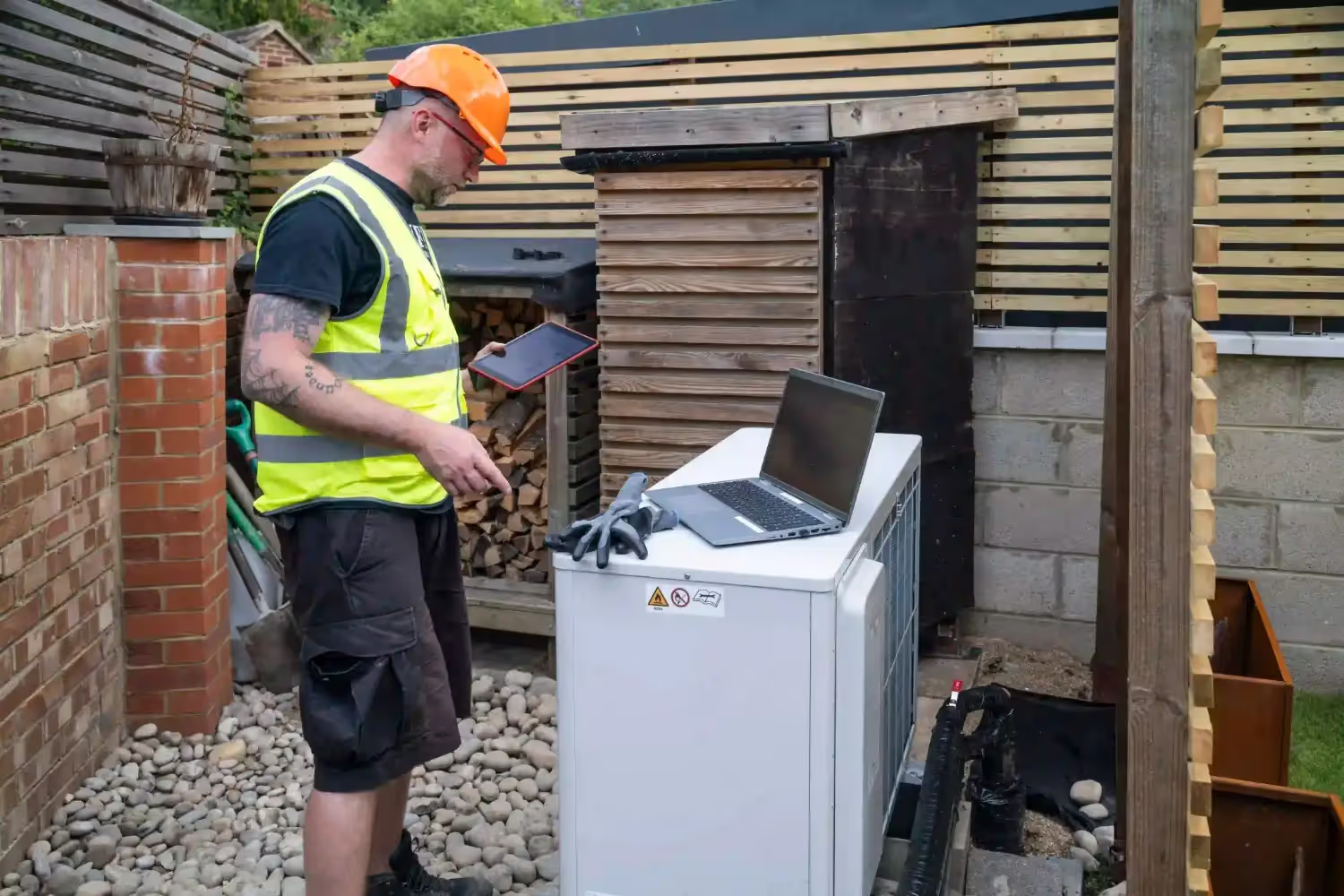
The scope of repair covers every component of the heat pump system:
- Refrigerant Leak Detection and Recharge: Identifying the source of the leak, sealing it, and recharging the system to factory specifications.
- Electrical Component Replacement: Swapping out failed capacitors, contactors, or relays that prevent the compressor or fan from starting.
- Thermostat Calibration: Ensuring the interface between the user and the equipment is communicating accurately.
- Airflow Correction: addressing issues with the blower motor or ductwork restrictions that freeze up the coils.
The Heat Pump Repair Process
Restoring a heat pump requires a logical, step-by-step approach to ensure nothing is overlooked. Professional technicians follow a strict protocol to diagnose, quote, and repair the system efficiently.
- Initial System Assessment: The technician begins by operating the system in both heating and cooling modes (if possible) to replicate the error. They listen for irregular noises like grinding or hissing and check the error codes on the control board.
- Component Isolation: Once the general area of failure is identified, individual components are tested. This might involves checking the resistance on the compressor windings or testing the solenoid on the reversing valve.
- Detailed Estimation: Before any work begins, you receive a clear explanation of the broken part, the cause of the failure, and the total cost for the repair. This eliminates surprise fees.
- Execution of Repair: The technician performs the necessary replacement or adjustment. This includes recovering refrigerant if the closed loop must be opened, brazing new lines, and vacuuming the system to remove moisture.
- Performance Verification: After the part is installed, the system is run through a full cycle. The technician verifies that the temperature split (the difference between supply and return air) is within the optimal range.
- Site Cleanup: Old parts, packaging, and debris are removed, leaving the utility area clean.
Troubleshooting the Reversing Valve
One of the most distinct components of a heat pump is the reversing valve. This is the mechanism that allows the unit to switch between heating and cooling by reversing the flow of refrigerant. If your system is cooling fine but refuses to heat (or vice versa), the reversing valve is often the culprit.
This component can fail in a few ways. The solenoid coil that activates the valve may burn out electrically, or the mechanical slider inside the valve can get stuck due to debris or physical damage. A technician will first test the voltage reaching the solenoid. If the electrical signal is present but the valve does not shift, the valve body itself likely requires replacement. Replacing a reversing valve is a major repair involving brazing and refrigerant handling, requiring certification and specialized tools.
Addressing Frozen Coils and Defrost Boards
In the Scottsville area, winter temperatures frequently drop below freezing, which causes frost to accumulate on the outdoor coil. A functioning heat pump runs a "defrost cycle" to melt this ice. If you notice your outdoor unit is encased in a block of ice, the defrost controls have likely failed.
Several issues can cause this:
- Bad Defrost Sensor: If the sensor cannot detect the temperature of the coil, it will not signal the control board to initiate the melt cycle.
- Faulty Control Board: The "brain" of the unit may not be sending the signal to the reversing valve to temporarily switch modes to heat the outdoor coil.
- Fan Motor Failure: If the outdoor fan does not shut off during the defrost cycle as it should, the heat required to melt the ice dissipates too quickly.
Ignoring a frozen unit can lead to catastrophic compressor failure. The ice blocks airflow, causing the system to struggle and overheat. Immediate professional intervention is required to de-ice the unit and replace the faulty control components.
When to Repair vs. When to Replace
Deciding between repairing an existing unit and investing in a new system is a financial calculation based on age, condition, and efficiency. While repairs are often the fastest solution, there are scenarios where replacement offers better long-term value.
Review the following criteria to aid the decision:
- The 50% Rule: If the cost of the repair approaches or exceeds 50% of the value of a new system, replacement is generally the wiser financial move.
- Age of the Unit: Heat pumps generally last 10 to 15 years. If your unit is over 12 years old and requires a major component like a compressor, investing that money into a new system resets your warranty and life expectancy.
- Frequency of Breakdowns: If you have required multiple repairs in the last two years, the system is likely entering the end of its reliable lifespan. Continued repairs become a "money pit" scenario.
- Efficiency Ratings: Older units often have lower SEER (cooling) and HSPF (heating) ratings. Upgrading to a modern, high-efficiency system can significantly lower monthly utility bills, helping to offset the installation cost over time.
- Refrigerant Type: Older systems may use R-22 refrigerant, which is phased out and extremely expensive to replace. If an R-22 system develops a leak, replacement is almost always the only viable option.
Local Considerations for Scottsville Homeowners
Operating a heat pump in Scottsville requires attention to specific regional factors. The local climate presents challenges that standard maintenance must address to ensure longevity.
- High Humidity Management: During the humid Kentucky summers, the condensate drain line works overtime. Algae and mold growth can easily block the drain, triggering overflow safety switches that shut down the unit. Regular flushing of the condensate line is essential in this region to prevent water damage and system lockouts.
- Winter Cold Snaps: While winters are generally moderate, temperatures do drop significantly. Heat pumps rely on "auxiliary heat" (usually electric heat strips) to supplement heating during extreme cold. A technician must verify that these heat strips are functioning correctly; otherwise, the system will blow lukewarm air when the temperature drops below 35 degrees.
- Vegetation and Debris: The rapid growth of vegetation in the spring and summer can crowd the outdoor unit. Ensuring proper clearance around the condenser is vital for airflow. Additionally, cottonwood and pollen can coat the outdoor coils, acting as an insulator and reducing efficiency. Chemical cleaning of the coils is often necessary.
- Permitting and Codes: Significant repairs, particularly those involving full system replacements or major electrical alterations, may require adherence to local building codes in Scottsville and Allen County. Professional providers handle the permitting process to ensure all work meets safety standards.
The Importance of Specialized Technicians
Heat pumps are more complex than standard air conditioners or furnaces because they perform two functions and operate year-round. This dual functionality means they endure twice the wear and tear of a standard AC unit. Consequently, the technician working on the system requires a higher level of expertise.
A general handyman lacks the specific EPA Section 608 certification required to handle refrigerants legally and safely. Carter Heating and Cooling employs technicians who understand the thermodynamics specific to heat pump operation.
- Correct Refrigerant Charge: In winter, a heat pump with an incorrect refrigerant charge will struggle to extract heat from the outside air. Charging a unit in cold weather requires specific calculation methods (weigh-in method) that differ from summer charging.
- Electrical Safety: Heat pumps utilize high-voltage electricity. Specialized technicians carry the correct meters to diagnose grounding issues, short circuits, and voltage drops without creating safety hazards.
- Tooling: Proper diagnosis requires vacuum pumps, micron gauges, and leak detectors. Attempting repairs without these tools usually results in improper fix that fails again shortly after.
Ensuring Long-Term Performance
Once a repair is completed, the focus shifts to maintaining that performance. The immediate fix solves the acute problem, but verifying the rest of the system ensures you do not face another breakdown next month.
Technicians check the "temperature rise" across the indoor coil to confirm the system is heating effectively. They also inspect the ductwork for leaks. In many homes, conditioned air escapes into the attic or crawlspace before it ever reaches the living areas, forcing the heat pump to run longer than necessary. Sealing these leaks reduces the load on the repaired unit.
Furthermore, checking the static pressure in the ductwork ensures the blower motor is not working against excessive resistance. High static pressure is a leading cause of premature blower motor failure. By adjusting fan speeds or modifying duct transitions, the system breathes easier and lasts longer.
Secure Your Comfort Today
A malfunctioning heat pump disrupts your life and risks the safety of your home during extreme temperatures. Waiting often leads to more extensive damage and higher repair costs. Whether you are dealing with a frozen coil, a broken reversing valve, or a complete system failure, the solution is a phone call away.
Prioritize your home’s climate control by choosing a service provider that understands the technical intricacies of modern heat pumps and the specific demands of the Scottsville climate — schedule service today.
Schedule your heat pump diagnostic or repair immediately.

Great Service at a Fair Price
Veterans Discount


Senior Discount

Law Enforcement

Fire fighters/ems

Hear From Your Neighbors!
Hear from your neighbors to see how our commitment to dependable service and lasting comfort has made a difference in their homes.