

How can we help today?
Choose an option to see quick actions and get help faster.Mini split Inspection in Cave City, KY
Mini split Inspection in Cave City, KY
Experiencing issues with your ductless system in Cave City? Contact us for same-day service and expert mini-split diagnostics. Ensure your system's efficiency today.
Is Your Ductless System Making Noise or Losing Efficiency?
Facing performance issues where your mini-split is not heating or cooling your space effectively? You are not alone—many homeowners in Cave City encounter these frustrations, specifically when humidity levels rise or temperatures drop suddenly. Call Carter Heating and Cooling to schedule your inspection and restore comfort immediately.
- Same-day mini-split inspections and diagnostic solutions.
- Trusted local specialists with over 40 years of reliability in HVAC systems.
- 24/7 emergency support for sudden breakdowns or critical failures.
All diagnostic and repair services are backed by full compliance with local building codes and guaranteed workmanship.
Comprehensive System Evaluation: What to Expect Today
When a ductless mini-split system begins to falter, the issue often lies deeper than a dirty filter. A professional inspection goes beyond a surface-level glance; it involves a rigorous examination of the inverter technology, refrigerant levels, and electrical communication between the indoor and outdoor units. The goal is to identify the root cause of the inefficiency, whether it is a refrigerant leak, a failing control board, or a mechanical obstruction.
Upon arrival, the focus shifts immediately to restoring the operational integrity of your unit. You receive a detailed status report on the health of your system. This includes an assessment of the current heating or cooling output compared to manufacturer specifications. The technician evaluates the system’s ability to handle the specific load of the room it serves.
The inspection scope typically includes:
- Refrigerant Pressure and Leak Detection: Technicians measure operating pressures to ensure they match the manufacturer’s chart. Low levels often indicate a leak that requires immediate sealing before recharging.
- Inverter Compressor Analysis: The compressor is the heart of a mini-split. Testing involves checking the frequency modulation to ensure it ramps up and down correctly to save energy while maintaining temperature.
- Electrical Connection Tightening: Loose wiring can cause intermittent power failures or fire hazards. All terminal blocks, circuit breakers, and disconnect boxes are inspected for thermal stress or corrosion.
- Blower Wheel and Coil Inspection: Dust and mold accumulation on the blower wheel can imbalance the fan and reduce airflow. Coils are checked for debris that inhibits heat transfer.
- Condensate Drain Line Testing: Blocked drain lines are a primary cause of water damage in ductless setups. The technician ensures the gravity drain or condensate pump is functioning correctly to remove moisture.
- Communication Line Verification: Mini-splits rely on data signals between indoor and outdoor units. These signals are tested to ensure commands from the thermostat are being received instantly.
The Inspection and Repair Process
Understanding the flow of a professional service visit helps you plan your day. The process is designed to be efficient, transparent, and focused on minimizing downtime for your household.
- Initial Scheduling and Dispatch: You request a service window that aligns with your schedule. A confirmation is sent when the technician is en route to your Cave City property, ensuring you are not left waiting.
- On-Site Diagnostics: The technician begins by operating the system in both heating and cooling modes (if weather permits) to replicate the error. Advanced diagnostic tools, such as digital manifolds and multimeters, are used to gather data.
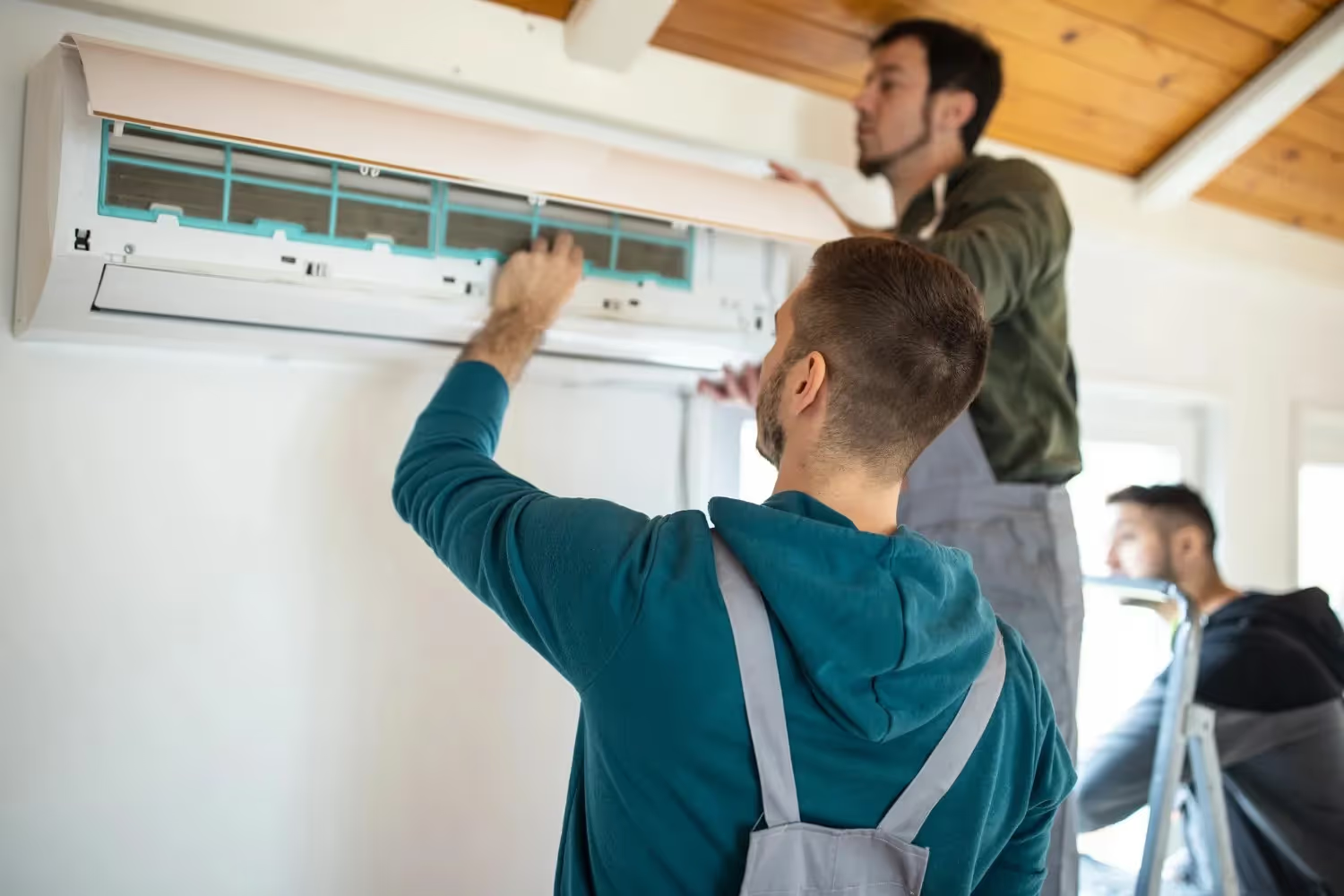
- Visual and Mechanical Check: The cover of the indoor unit is removed to access the filters, coils, and electrical board. Simultaneously, the outdoor unit is inspected for airflow obstructions, fan motor performance, and coil condition.
- Data Interpretation and Reporting: The collected data is analyzed to pinpoint the failure. You are presented with a clear explanation of what component has failed or requires maintenance.
- Repair or Maintenance Execution: With your approval, the necessary adjustments or part replacements are performed immediately if parts are on the truck. This might include cleaning the blower wheel, tightening electrical lugs, or clearing a drain blockage.
- System Validation: After the work is complete, the system is run through a test cycle to verify that the issue is resolved. Discharge temperatures are measured to confirm the unit is blowing hot or cold air as intended.
Deciding Between Repair and Replacement
Homeowners often struggle with the decision to repair an aging mini-split or invest in a new installation. While inspections often lead to simple repairs, there are specific scenarios where replacement is the more financially sound option. This decision usually hinges on the age of the unit, the cost of the repair, and the availability of parts for older models.
Making the right choice prevents you from sinking money into a dying system. Consider the following factors when reviewing your inspection report:
- The 50% Rule: If the cost of the repair approaches or exceeds 50% of the value of a new system, replacement is generally recommended. This is particularly true for major component failures like a compressor or a main control board.
- Age of the Equipment: Mini-split systems typically have a lifespan of 12 to 15 years. If your unit is over 10 years old and requires a significant repair, modernizing to a higher SEER unit often pays for itself in energy savings.
- Refrigerant Type: Older systems may use R-22 refrigerant, which is phased out and extremely expensive to replace. If your older unit has a leak, upgrading to a system that uses R-410A or newer refrigerants is necessary.
- Frequency of Breakdowns: If you have required multiple service calls in the last two years, the system is likely suffering from cumulative wear. Continuing to patch it is often more expensive than a one-time replacement cost.
- Warranty Status: Check if the failed component is still under the manufacturer’s warranty. If the warranty has expired, the full cost of parts and labor falls on you, shifting the calculation in favor of replacement.
If the best route is a replacement, you can invest in a new installation with flexible payment options that fit your budget.
Regional Considerations for Kentucky Homeowners
The climate in Cave City presents unique challenges for ductless mini-split systems. The humid subtropical environment means your system has to work hard to dehumidify in the summer while managing frost accumulation in the winter. Ignoring these regional factors can lead to premature failure or poor indoor air quality.
- Humidity and Drainage: High humidity levels in the region mean the condensate removal system works overtime during summer. Algae and mold growth in drain lines are common here, leading to water backing up and leaking down the wall. Regular inspections must prioritize flushing these lines to prevent property damage.
- Defrost Cycles in Winter: While winters are generally mild, temperatures do drop below freezing. Mini-splits have a defrost mode to melt ice off the outdoor coil. If sensors fail, the unit can freeze up, halting heat production. Verifying the defrost operation is a critical part of the inspection before January and February.
- Pollen and Dust Load: The changing seasons bring varying levels of pollen and agricultural dust. Mini-split filters are smaller than central HVAC filters and clog faster. Local conditions dictate that these filters should be checked monthly and deep-cleaned during professional maintenance to maintain airflow.
- Electrical Stability: Storms and lightning are not uncommon. Mini-splits are inverter-driven and highly sensitive to voltage spikes. Installing or checking the status of a surge protector at the disconnect box is highly recommended for local homes to protect the sensitive electronic boards.
Why Professional Diagnostics Are Necessary
Attempting to diagnose a mini-split issue without proper training often leads to misdiagnosis and further damage. Unlike traditional forced-air systems, mini-splits utilize complex electronics and variable-speed motors that require proprietary error code readers and specialized knowledge. Carter Heating and Cooling utilizes factory-grade diagnostic tools to communicate directly with the system’s onboard computer.
A professional technician understands the nuances of multi-zone setups where one outdoor unit powers multiple indoor heads. If one room is cooling but another is not, the issue could be a solenoid valve or a refrigerant restriction—problems that are impossible to identify without gauging equipment. Safety is also paramount; inspecting 220-volt electrical components carries a risk of shock. Professionals are trained to de-energize and lock out power sources before touching internal wiring.
Furthermore, correct refrigerant handling is a legal and environmental requirement. Only EPA-certified technicians are permitted to handle, recover, and recharge refrigerant. Guessing on refrigerant levels can destroy the compressor, turning a minor maintenance visit into a catastrophic failure.
Troubleshooting Common Mini-Split Symptoms
Before the technician arrives, understanding the symptoms can help expedite the diagnostic process. Homeowners frequently report specific behaviors that point toward distinct internal failures.
- Gurgling or Hissing Noises: This often indicates a refrigerant leak or air bubbles in the lines. If the system is low on charge, it cannot absorb heat effectively.
- Clicking Sounds: Continuous clicking usually points to a plastic contraction issue or a problem with the relay on the circuit board attempting to engage a motor that is stuck.
- Smells Musty or Like Mildew: This is a direct result of mold growth on the blower wheel or inside the condensate pan. It requires a deep chemical clean of the indoor unit (often called a "bib kit" cleaning).
- Unit Turns On but Does Not Blow Air: This suggests a failure of the blower motor or a seized bearing. Alternatively, the system may be in a "cold air prevention" mode if it senses the coil is not hot enough yet in winter.
- Remote Control Unresponsive: If the batteries are fresh, the IR receiver on the indoor unit may be faulty, or the main board may have lost power.
Restore Quiet, Efficient Ductless Comfort with Carter Heating and Cooling
A noisy, underperforming ductless system does more than disturb your peace—it undermines comfort, drives up energy costs, and places your equipment at risk of premature failure. With professional diagnostics, targeted repairs, and honest guidance on repair versus replacement, Carter Heating and Cooling helps you regain reliable, efficient ductless performance tailored to Cave City’s demanding climate. Backed by our special HVAC offers, convenient HVAC financing, and long-term support through a structured HVAC maintenance plan, you can protect your comfort and your budget with confidence.
Don't let a malfunctioning mini-split disrupt your comfort—schedule your professional inspection now.

Great Service at a Fair Price
Veterans Discount


Senior Discount

Law Enforcement

Fire fighters/ems

Hear From Your Neighbors!
Hear from your neighbors to see how our commitment to dependable service and lasting comfort has made a difference in their homes.