
How can we help today?
Choose an option to see quick actions and get help faster.Heating Inspection in Cave City, KY
Heating Inspection in Cave City, KY
Heating Inspection in Cave City, KY
Is Your Furnace Failing to Keep Up With the Cold?
Is your heating system struggling to combat the damp chill typical of Cave City winters? You are likely dealing with an efficiency bottleneck or a failing component that requires immediate professional attention before a complete breakdown occurs. Contact us immediately to schedule a diagnostic visit or apply for financing to restore your home’s comfort.
- Receive a comprehensive system analysis within 24 hours to identify hidden safety risks.
- Expert technicians ensure your system runs efficiently, significantly lowering your monthly utility costs.
- Stay warm and worry-free through the winter season with our guaranteed inspection and repair services.
All diagnostic services are backed by a robust warranty and straightforward financing options to ensure you never have to choose between safety and budget.
Comprehensive Heating System Analysis and Diagnostics
When the temperature drops in Cave City, your heating system operates under immense strain. A superficial look at the unit is not enough to guarantee performance. You need a rigorous, multi-point inspection that evaluates the mechanical, electrical, and safety systems of your heating equipment. Our inspection process is designed to uncover minor issues before they evolve into catastrophic failures that leave you without heat in the middle of January.
Carter Heating and Cooling provides a deep-dive analysis of your equipment. We move beyond basic visual checks to test the actual performance metrics of your system. This involves measuring static pressure, testing safety switches, and analyzing combustion gases. The goal is to verify that your system is not only running but running according to the manufacturer's original specifications. An uncalibrated system wastes energy and shortens the lifespan of expensive components like the compressor or heat exchanger.
Safety and Combustion Verification
For homes utilizing gas furnaces, safety is the primary focus of our inspection. We perform a detailed analysis of the heat exchanger. This component separates the breathing air in your home from the combustion gases. Over time, the expansion and contraction caused by heating cycles can cause cracks in the metal. A cracked heat exchanger can leak carbon monoxide into your living space. We use specialized cameras and combustion analyzers to detect even the smallest hairline cracks or leaks.
We also verify the integrity of the venting system. Blockages in the flue pipe, caused by debris or bird nests, can force exhaust gases back into the home. We inspect the draft inducer motor to ensure it is effectively pulling waste gases out of the system. Additionally, we test the flame sensor and thermocouple. These safety devices are designed to cut off the gas supply if a flame is not detected. If they are dirty or faulty, your furnace may fail to ignite or, worse, allow gas to flow without ignition.
Electrical and Mechanical Performance Testing
Electrical failure is a leading cause of heating system breakdowns. During an inspection, we tighten all electrical connections and measure the voltage and amperage of all motors. Loose connections can cause wires to overheat and burn out, leading to expensive repairs. We examine the capacitor, which provides the starting torque for the blower motor. A weak capacitor puts unnecessary strain on the motor, leading to premature failure.
Mechanically, we assess the condition of the blower assembly. Dust buildup on the blower wheel acts as extra weight, forcing the motor to work harder and reducing airflow. Restricted airflow is the enemy of heating efficiency; it causes the heat exchanger to overheat and limit switches to trip. We also inspect the condition of belts (if applicable) and lubricate moving parts to reduce friction and noise. For heat pumps, we verify the operation of the reversing valve and the defrost control board, ensuring the unit can switch effectively between heating and cooling modes and manage ice buildup during freezing rain events.
How the Heating Inspection Process Works
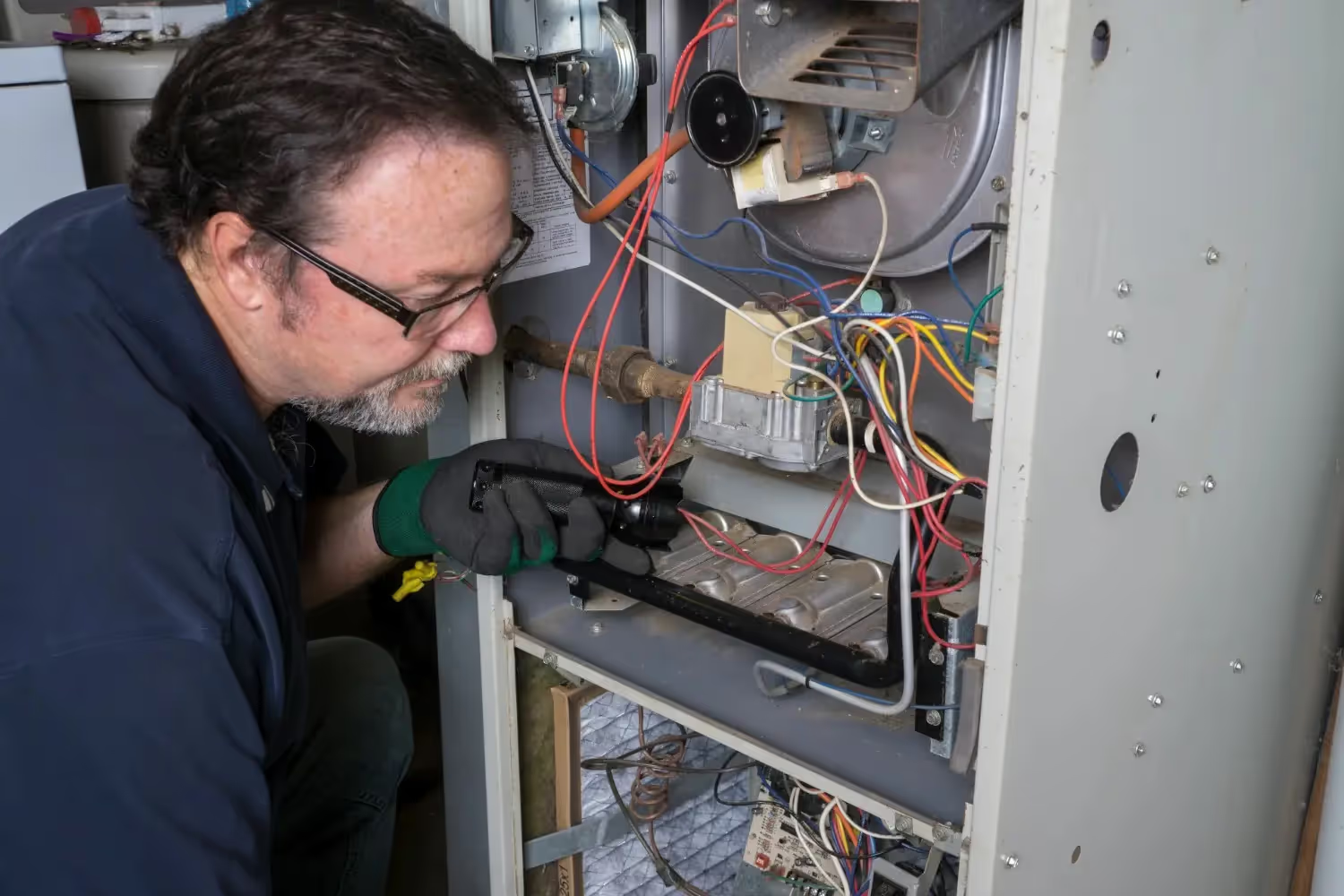
We operate with a standardized, systematic approach to heating inspections. This ensures no component is overlooked and that you receive a consistent, high-quality assessment regardless of the make or model of your system.
- Initial Assessment and Safety Protocol: The process begins with a discussion about any specific issues you have noticed, such as strange noises, cold spots in the house, or rising energy bills. The technician then shuts off power to the unit to safely access internal components.
- System Cleaning and Component Access: We remove the service panels to access the blower, burners, and controls. We clean the burner assembly and the flame sensor to ensure proper ignition. Dust and debris are removed from the cabinet to prevent them from circulating into the air or clogging motor vents.
- Operational Testing and Calibration: Power is restored, and the system is cycled on. We measure the temperature rise—the difference between the air temperature entering the return vent and the air leaving the supply vents. This metric tells us if the system is generating the correct amount of heat. We also check gas pressure at the manifold to ensure the fuel-to-air mixture is correct for optimal combustion.
- Reporting and Recommendations: Finally, we compile all findings into a detailed status report. You receive a clear explanation of the system's health, highlighted with any urgent repairs needed to prevent a breakdown. We provide a prioritized list of recommendations, separating critical safety fixes from optional efficiency upgrades.
Determining When to Repair or Replace Your Heating Unit
An inspection often forces a decision: should you pour money into repairing an aging unit, or is it time to invest in a modern, high-efficiency replacement? This decision should be based on data, not guesses. We help you navigate this choice by analyzing the cost of immediate repairs against the life expectancy of your current system.
The 50% Rule and Equipment Age
A general guideline used in the industry is the 50% rule. If the cost of the repair approaches 50% of the value of the system, and the system is out of warranty, replacement is usually the wiser financial choice. In Cave City, where heating loads are significant, a furnace or heat pump generally lasts 15 to 20 years. If your unit is over 15 years old and requires a major component like a blower motor or control board, the repair money is likely better spent on a down payment for a new unit.
Older units also operate at lower efficiency levels. A furnace installed 20 years ago likely has an Annual Fuel Utilization Efficiency (AFUE) rating of around 70-80%. Modern units can reach up to 98% AFUE. By replacing an old unit, you stop paying for the 20-30% of heat that is currently vanishing up your flue pipe. The monthly savings on utility bills can offset the cost of the new installation over time.
Frequency of Breakdowns and Comfort Levels
If you find yourself calling for repairs multiple times a season, your system has reached the end of its reliability curve. "Band-aid" fixes add up quickly and rarely solve the underlying issue of mechanical wear. Furthermore, if your home has inconsistent temperatures—some rooms boiling while others are freezing—it indicates that the system may be improperly sized or that the ductwork is compromised. An inspection will reveal if the current unit is simply incapable of meeting the heating demand of your home structure, in which case replacement with a properly sized unit is the only solution for consistent comfort.
Local Climate Factors and Service Considerations
Operating a heating system in Kentucky requires attention to specific regional factors. The humid subtropical climate means high humidity is a factor even in cooler months, and the transition seasons can be unpredictable.
Combating Humidity and Freezing Rain
The local climate involves wet winters. High humidity can make the air feel colder than the thermostat reading, forcing you to turn up the heat higher than necessary. For homeowners with heat pumps, the prevalence of freezing rain and high moisture in the air means the defrost cycle is critical. If the defrost control fails, the outdoor unit can freeze over, turning into a block of ice that cannot transfer heat. Our inspections pay special attention to the defrost sensors and logic boards to prevent this specific regional issue.
Permitting and Utility Requirements
When inspection leads to significant repair or replacement, adherence to local building codes is mandatory. Work involving gas lines or major electrical modifications often requires specific permits to ensure safety and insurance compliance. We navigate these regulations for you, ensuring that all work on your heating system meets the strict standards set by local municipalities. Whether your system runs on natural gas, propane, or electricity provided by local utilities, we verify that the installation and operation adhere to the safety protocols required by utility providers in the region.
Why Professional Diagnostics Are Necessary
Many homeowners attempt to diagnose heating issues via online forums or DIY videos. While changing a filter is a great maintenance habit, true diagnostics require tools and training that the average homeowner does not possess. Guessing at the source of a problem often leads to replacing parts that aren't broken while the real issue continues to cause damage.
Precise Identification of Root Causes
A system failure is often a symptom, not the cause. For example, a blower motor might fail because the static pressure in the ductwork is too high. If you simply replace the motor without addressing the ductwork, the new motor will burn out just as quickly. Professional diagnostics identify the root cause—be it undersized return air drops, restricted refrigerant flow, or voltage imbalances. We fix the problem at the source, ensuring longevity for your repairs.
Protecting Your Manufacturer Warranty
Most heating equipment manufacturers require proof of professional maintenance to keep warranties valid. If a major component like a compressor fails, the manufacturer may ask for service records before providing a replacement part. Professional inspections provide the documentation needed to protect your warranty coverage. DIY repairs, on the other hand, can void these warranties immediately. Relying on Carter Heating and Cooling ensures your asset remains protected.
Secure Your Comfort This Winter
Waiting until your system stops working is the most expensive way to handle heating maintenance. A proactive inspection detects the small vibrations, electrical fluctuations, and wear patterns that precede a system failure. By addressing these issues now, you ensure that your home remains a sanctuary of warmth regardless of the weather outside.
Do not gamble with the safety and comfort of your home. Ensure your heating system is safe, efficient, and ready for the demands of the season.
Schedule your comprehensive heating inspection today to guarantee a warm, safe winter for your family.

Great Service at a Fair Price
Veterans Discount


Senior Discount

Law Enforcement

Fire fighters/ems

Hear From Your Neighbors!
Hear from your neighbors to see how our commitment to dependable service and lasting comfort has made a difference in their homes.