

How can we help today?
Choose an option to see quick actions and get help faster.Heating Service in Cave City, KY
Heating Service in Cave City, KY
Heating Service in Cave City, KY
Restore Reliable Warmth to Your Home Immediately
Facing unpredictable heating issues in Cave City’s varied climate can be stressful, especially when temperatures drop unexpectedly. Whether you are dealing with a furnace that blows cold air, a heat pump that refuses to cycle on, or you are considering a necessary system upgrade, prompt action is required to ensure your home remains safe and comfortable. Contact us today or ask about our financing options to get your system running again.
Carter Heating and Cooling understands that when your heat goes out, you cannot afford to wait days for a solution. Our approach focuses on technical precision and speed, ensuring that your heating infrastructure is assessed and repaired correctly the first time.
- Rapid response team available 24/7 to address your heating emergencies.
- Upfront pricing and clear communication, with no hidden fees or surprise charges.
- Experienced technicians who ensure quick and efficient service, with most problems resolved in a single visit.
- All services are fully licensed, insured, and backed by a satisfaction guarantee.
Services Included: From Diagnostic to Full Repair
When a technician arrives at your property, the priority is to accurately identify the root cause of the failure rather than simply swapping out parts in hopes of a fix. Modern heating systems are complex integrations of electrical components, airflow mechanics, and combustion or refrigerant cycles. A professional service call covers a comprehensive evaluation of the entire system to ensure that the immediate issue is resolved and that no secondary problems are lurking.
Comprehensive System Diagnostics
The service begins with a thorough diagnostic phase. Technicians utilize advanced testing equipment to measure static pressure, voltage drops, and combustion efficiency. In Cave City, where humidity levels can fluctuate, checking for moisture-related corrosion on electrical contacts is a standard part of the protocol. The goal is to pinpoint exactly why the system failed.
- Combustion Analysis: For gas furnaces, technicians analyze the flue gases to ensure the heat exchanger is intact and that the system is burning fuel safely and efficiently.
- Electrical Testing: Capacitors, contactors, and control boards are tested to verify they are within manufacturer specifications.
- Airflow Verification: Restricted airflow is a leading cause of heating failure. Technicians check filters, blowers, and ductwork integrity to ensure heat is being distributed effectively.
Component Repair and Replacement
Once the issue is diagnosed, the focus shifts to immediate repair. Service trucks are stocked with common failure points to minimize downtime. The objective is to restore heat during the initial visit whenever possible.
- Ignition Systems: Repairing or replacing hot surface ignitors, flame sensors, and pilot assemblies.
- Blower Motors: addressing issues with failed motors or run capacitors that prevent warm air from circulating.
- Thermostat and Controls: Calibrating or replacing faulty thermostats that fail to communicate correctly with the heating unit.
- Heat Pump Components: Replacing reversing valves, defrost boards, and ensuring refrigerant levels are optimized for the winter months.
Preventative Tune-Ups
Beyond emergency repair, service options include maintenance designed to prevent mid-season breakdowns. This involves cleaning burners, tightening electrical connections, and lubricating moving parts. Regular maintenance is the primary defense against unexpected failures during the coldest weeks of the year.
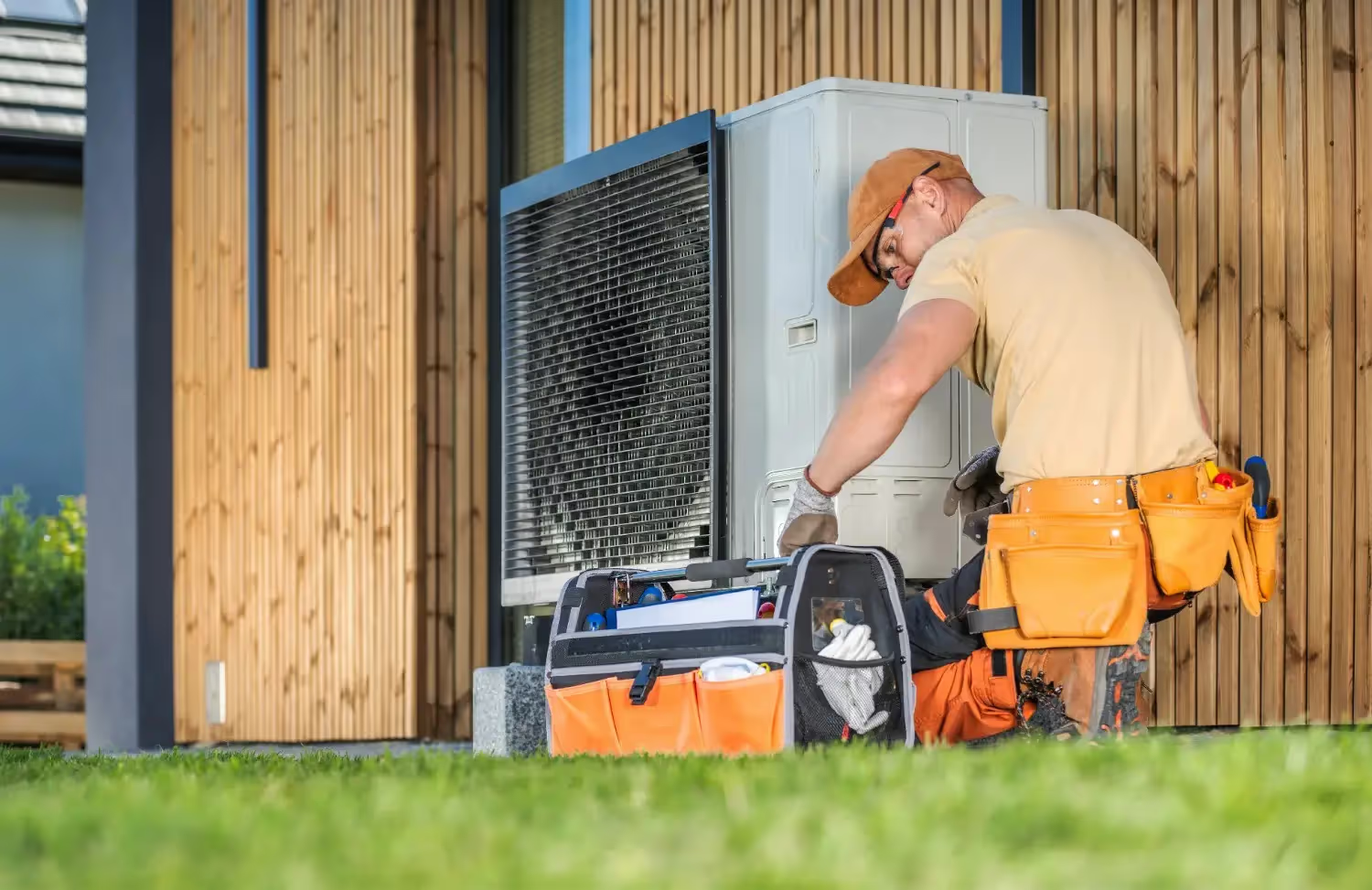
Step-by-Step Guide to Heating Installation
When a system has reached the end of its lifecycle, a structured installation process is vital for long-term performance. A new heater is not a "plug-and-play" appliance; it is a construction project that must be integrated into your home’s existing envelope. The installation process is handled with strict adherence to manufacturer specifications and local building codes.
Technical Assessment and Sizing
The process initiates with a load calculation. Guessing the size of a furnace or heat pump based on square footage alone leads to inefficiency. If a unit is too large, it will short-cycle, wearing out parts prematurely. If it is too small, it will run continuously without reaching the set temperature.
- Technicians perform a Manual J load calculation to determine the exact heating requirements of the home.
- Ductwork is inspected to ensure it can handle the airflow required by high-efficiency modern systems.
- Existing gas lines and electrical circuits are evaluated for capacity and safety compliance.
Removal and Site Preparation
Removing the old unit is done with care to protect the property. The workspace is prepped with drop cloths, and the old equipment is disconnected safely. This stage also involves bringing the installation area up to current codes, which may differ from when the original unit was installed.
- Gas and electric supplies are shut off and disconnected according to safety protocols.
- The old unit and all debris are removed from the property for proper disposal.
- The plenum and return drops are inspected and modified if necessary to fit the new equipment dimensions.
Installation and Commissioning
The new system is positioned, leveled, and connected. This is the most critical phase, as the quality of the installation dictates the efficiency of the equipment.
- The unit is connected to the ductwork, ensuring airtight seals to prevent heat loss.
- Venting for gas furnaces is installed to ensure carbon monoxide is safely exhausted outside the home.
- Electrical connections and thermostat wiring are finalized.
- The system is commissioned, meaning it is fired up and tested. Technicians adjust gas pressure, blower speeds, and refrigerant charges to match the specific needs of the house.
- Finally, the homeowner is walked through the operation of the new system and thermostat.
Deciding Between Heating Repair or Replacement
Homeowners often face the difficult choice of sinking money into an aging system or investing in a new one. Making this decision requires a logical look at the numbers, the age of the unit, and the expected future performance. There are clear metrics used to determine which path offers the best return on investment.
The 50% Rule
A common industry standard for making this decision is the 50% rule. If the cost of the repair approaches 50% of the value of a new system, replacement is generally the wiser financial choice. Putting extensive money into an old unit often results in diminishing returns, as other components are likely to fail shortly after.
System Age and Expectancy
Heating systems have distinct lifespans. Gas furnaces typically last 15 to 20 years, while heat pumps generally last 10 to 15 years due to their year-round usage.
- Under 10 Years Old: Unless the repair is catastrophic (like a cracked heat exchanger), repair is usually the best option. The unit likely has a warranty still in effect.
- 10 to 15 Years Old: This is the "gray area." If the system has been well-maintained and the repair is minor, fix it. If the system has a history of breakdowns, Carter Heating and Cooling often recommends considering replacement to avoid the "money pit" scenario.
- Over 15 Years Old: Technology has improved significantly in the last two decades. Replacing a unit of this age usually results in immediate energy savings that help offset the installation cost.
Efficiency and Comfort Considerations
Older units often operate at 60% to 70% AFUE (Annual Fuel Utilization Efficiency), meaning 30% to 40% of the energy paid for is wasted. Modern systems can reach efficiencies as high as 98%.
- If some rooms are always cold while others are hot, the existing system may be improperly sized or failing to distribute air.
- Rising utility bills without a change in usage habits indicate the system is losing efficiency.
- Frequent repairs (more than once a season) suggest the system is nearing total failure.
Understanding Cave City’s Heating Requirements
Local conditions play a significant role in how heating systems are selected and serviced. Cave City experiences a humid subtropical climate, which means winters are generally mild but can have sharp, freezing dips. This specific weather pattern dictates specific technical requirements for heating infrastructure.
Heat Pumps vs. Furnaces in Kentucky
Because the winters are not as severe as in northern states, heat pumps are a very popular and efficient choice for this region. However, when temperatures drop below freezing, heat pumps lose efficiency.
- Dual Fuel Systems: Many local homes benefit from dual fuel systems, which use an electric heat pump for mild days and switch to a gas furnace when the temperature plummets. This maximizes efficiency across the varied winter weather.
- Defrost Cycles: In humid climates like this, heat pumps can accumulate frost on the outdoor coil. Functioning defrost boards are critical to prevent the system from turning into a block of ice.
Permits and Safety Codes
Heating work involves gas lines, high-voltage electricity, and venting of combustion gases. Adherence to Kentucky building codes is non-negotiable for safety and insurance validity.
- Permitting: Professional installation ensures that all necessary permits are pulled. This is often required for the manufacturer's warranty to be valid and for future real estate transactions.
- Carbon Monoxide Safety: Local codes have strict requirements for venting gas appliances. Improper venting can lead to dangerous CO buildup. Professional service ensures all venting meets current safety standards.
- Electrical Standards: Upgrades often require updating the electrical disconnect or breaker size to handle modern equipment loads safely.
Why Choose Professional Heating Services
Selecting a service provider is about more than just finding someone to turn a wrench. It is about finding a partner who understands the technical nuances of thermodynamics and cares about the long-term safety of the property. Quality service relies on a combination of certified expertise, local experience, and a commitment to transparency.
Technical Expertise and Certification
Modern HVAC equipment is sophisticated. Technicians undergo rigorous training to stay current on the latest technologies, including variable-speed motors, smart thermostats, and modulating gas valves.
- Technicians hold relevant certifications that validate their ability to handle refrigerants and gas connections safely.
- Continuous training ensures familiarity with all major brands and models, allowing for faster diagnostics and repairs.
- Diagnostic tools are calibrated regularly to ensure accuracy, preventing misdiagnosis that costs the homeowner money.
Local Knowledge and Availability
A provider rooted in the area understands the specific challenges posed by the local power grid and weather patterns. Being local also means being available. Heating failures rarely happen at convenient times.
- Trucks are stocked based on the most common equipment found in the region, reducing the need to order parts and wait for shipping.
- Emergency availability ensures that calls are answered when the heat goes out on a Friday night or a holiday.
- Knowledge of local utility rebate programs helps homeowners save money on high-efficiency upgrades.
Integrity and Respect for Property
Inviting a technician into a home requires trust. Read our reviews today. Professional service involves respecting the homeowner’s space and time.
- Technicians use drop cloths and shoe covers to protect flooring during repairs and installations.
- Work areas are cleaned thoroughly upon completion of the job.
- Explanations are given in clear, non-technical language so the homeowner understands exactly what was done and why.
Secure a Warm, Comfortable Home: Schedule Service Today
If your heating system is making strange noises, failing to keep up with the thermostat, or has stopped working entirely, do not risk the safety and comfort of your home. Delaying service can lead to frozen pipes and more expensive repairs down the line. Carter Heating and Cooling is ready to diagnose the issue accurately and provide a lasting solution.
Don't let the cold settle in; secure your home's comfort today.

Great Service at a Fair Price
Veterans Discount


Senior Discount

Law Enforcement

Fire fighters/ems

Hear From Your Neighbors!
Hear from your neighbors to see how our commitment to dependable service and lasting comfort has made a difference in their homes.