

How can we help today?
Choose an option to see quick actions and get help faster.AC Tune-Up in Cave City, KY
AC Tune-Up in Cave City, KY
Beat the heat in Cave City with a professional AC tune-up. Enhance system efficiency, improve performance, and prolong your unit's life. Schedule today!
Restore System Efficiency and Prevent Mid-Summer Failures
High humidity and fluctuating temperatures in Cave City mean your cooling system works overtime, often leading to inflated energy bills and unexpected shutdowns. If your air conditioner runs constantly without reaching the set temperature, or if you notice weak airflow, schedule a professional tune-up immediately by contacting us for an appointment or inquiring about our financing options.
Beat the heat without breaking a sweat. If your AC fails to keep up with the rising temperatures, a professional inspection helps avoid a total system collapse during the hottest days of the year.
- Get same-day service—no long waits.
- Enhance your AC's efficiency and performance.
- Prolong the life of your air conditioning unit.
Fully licensed and insured, with flexible financing available.
Comprehensive AC Maintenance: What is Included in the Service
A professional tune-up is not a superficial visual check; it is a rigorous, multi-point inspection and calibration designed to restore your system to factory specifications. When you request a tune-up in Cave City, the goal is to identify microscopic issues before they become catastrophic failures. Carter Heating and Cooling utilizes a systematic approach to ensure every component of your HVAC system functions correctly.
Airflow and Filtration Analysis
Airflow restrictions are the leading cause of frozen coils and compressor failure. The service begins with a static pressure test to measure the resistance against the blower motor. Technicians inspect the air filter, not just for dirt, but for proper sizing. A filter that is too restrictive can choke the system, while one that is too loose allows debris to coat the evaporator coil. The blower wheel is removed and cleaned if necessary, as even a millimeter of dust on the blades can significantly reduce the volume of air the system moves.
Electrical Component Testing
Heat causes electrical components to degrade. During a tune-up, technicians measure the voltage and amperage of the compressor and fan motors to ensure they are drawing power within the manufacturer's specified range. A critical part of this step is testing the capacitors. These components provide the torque needed to start the motors. A weak capacitor puts immense strain on the compressor, leading to premature burnout. All electrical connections are tightened to prevent arcing and wire damage caused by vibration.
Refrigerant Level Verification
Incorrect refrigerant levels are detrimental to efficiency. If the charge is too low, likely due to a micro-leak, the system cannot remove enough heat from your home, causing it to run continuously. If the charge is too high, liquid refrigerant can flood the compressor, causing instant mechanical failure. Technicians use gauges to measure subcooling and superheat temperatures, ensuring the refrigerant changes state at the precise moment required for optimal heat transfer.
Coil Cleaning and Debris Removal
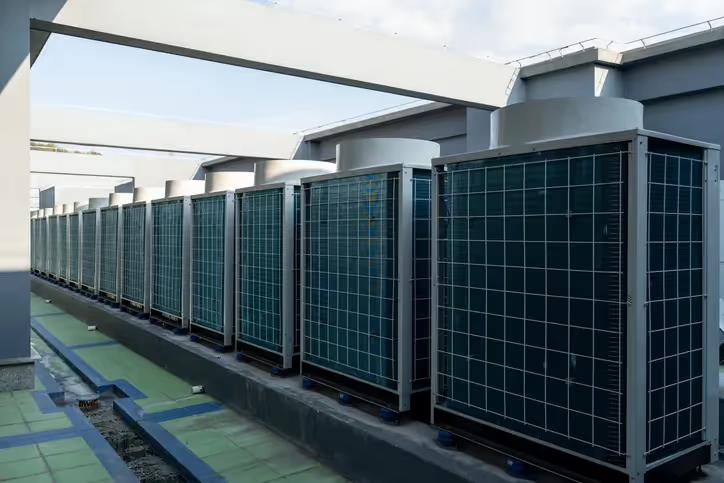
The outdoor condenser coil rejects the heat absorbed from inside your home. In Kentucky, pollen, grass clippings, and dirt frequently clog these fins. A chemical wash is applied to the condenser coils to remove built-up grime that acts as an insulator. Clean coils allow for efficient heat dissipation, keeping head pressures low and reducing electricity consumption. The indoor evaporator coil is also inspected for mold or dust buildup that could impede heat absorption and degrade indoor air quality.
Drain Line Flushing
Your AC unit dehumidifies your home as it cools. This moisture collects in a drain pan and flows out through a condensate line. Over time, algae and sludge can form in this line, causing a blockage. If the water backs up, it can trigger a safety switch to shut down the unit or overflow and cause water damage to ceilings and floors. The maintenance process involves flushing the condensate line and treating the pan to prevent future biological growth.
The Technical Process: How the Inspection and Tune-Up Works
Understanding the sequence of a maintenance visit helps homeowners prepare for the service. The process is designed to be thorough yet efficient, minimizing disruption to your day while maximizing the technical insight gained into your system's health.
- Initial System Assessment: The technician arrives and begins by discussing any specific concerns you have noticed, such as strange noises, odors, or hot spots in the home. They then operate the system from the thermostat to listen for irregular startup sounds and verify the cycle initiation.
- Power Disconnection and Safety Check: To safely inspect internal components, high-voltage power is disconnected. The technician opens the access panels on both the indoor and outdoor units. This reveals the internal wiring, circuit boards, and mechanical parts for a close-up visual inspection regarding wear and tear.
- Deep Cleaning and Lubrication: Debris is removed from the base of the outdoor unit. Motor bearings, if not sealed, are lubricated to reduce friction and heat. The technician applies a non-acidic cleaner to the coils and gently rinses them to avoid bending the delicate aluminum fins.
- Calibration and Testing: Once cleaning is complete, the system is powered back on. The technician attaches digital manifolds to monitor internal pressures and temperature differentials. The thermostat is calibrated to ensure it reads the room temperature accurately, preventing short-cycling or overheating.
- Reporting and Recommendations: Finally, the technician compiles a detailed report of the system’s status. This includes photos of any worn parts, readings of electrical measurements, and a clear assessment of the system's remaining lifespan. You receive a direct explanation of any immediate repairs needed to prevent a breakdown. See our reviews.
Repair vs. Replacement: Making the Right Financial Decision
During a maintenance visit, issues are sometimes uncovered that force a decision between repairing the existing unit or investing in a replacement. This decision should be based on data, age, and financial logic rather than guesswork.
The 50% Rule
A common industry standard is the 50% rule. If the cost of the necessary repair approaches 50% of the value of a new system, replacement is generally the smarter financial move. For example, replacing a compressor on an out-of-warranty unit is expensive and does not guarantee that other old parts won't fail shortly after.
System Age and Efficiency
Air conditioners typically last between 10 and 15 years. If your unit is over 12 years old and requires a significant repair, sinking money into it often yields diminishing returns. Newer systems have higher SEER (Seasonal Energy Efficiency Ratio) ratings. upgrading from a 10 SEER unit to a 16 SEER unit can reduce cooling costs significantly, effectively helping the new system pay for itself over time.
Refrigerant Type
Older systems often utilize R-22 (Freon), which has been phased out due to environmental regulations. Supplies of R-22 are dwindling and becoming prohibitively expensive. If your older unit leaks R-22, the cost to recharge it is often unjustifiable compared to installing a modern system that uses the more environmentally friendly and affordable R-410A or newer alternatives.
Frequency of Breakdowns
If you find yourself calling for service multiple times a year, the cumulative cost of service calls and minor repairs often exceeds the monthly payment of a financed new system. A reliable tune-up service helps track this history, giving you a clear picture of reliability trends over time.
Local Climate Factors Affecting HVAC Performance
Operating an air conditioner in Cave City presents specific challenges dictated by the local geography and climate patterns. Understanding these factors helps in recognizing why specific maintenance tasks are prioritized during a service call.
- High Humidity Loads: The humid subtropical climate means your AC does more than just lower temperature; it acts as a primary dehumidifier. If the evaporator coil is dirty or the refrigerant is low, the system cannot remove moisture effectively. This leads to a clammy indoor environment and promotes mold growth in ductwork. Maintenance ensures the latent cooling capacity (moisture removal) is optimized for Kentucky summers.
- Seasonal Debris and Pollen: Spring in the region brings heavy pollination and often significant rainfall. Wet pollen forms a paste-like substance on outdoor condenser coils that hardens when dried. This barrier is difficult to remove with rain alone and requires chemical cleaning during a tune-up to restore airflow. Neglecting this leads to higher operating temperatures and compressor stress.
- Temperature Fluctuations: The region experiences swings where days are hot and nights are cool, or sudden cold snaps occur in transitional seasons. These fluctuations cause expansion and contraction in refrigerant piping and electrical connections. Regular tightening of fittings and wire terminals helps prevent leaks and electrical shorts caused by this thermal movement.
- Local Codes and Efficiency Standards: Regional standards for HVAC efficiency and installation are strictly regulated. Professional service providers ensure that your system complies with local permit requirements and Kentucky building codes, particularly regarding refrigerant handling and electrical safety. Keeping a system up to code is essential for maintaining home value and insurance compliance.
Why Professional Maintenance is a Necessity
Attempting to service an air conditioner without proper training and tools rarely results in improved performance and can often be dangerous. High-voltage electricity, high-pressure refrigerant gases, and complex electronic controls require a skilled hand.
Specialized Diagnostics
Professionals carry advanced diagnostic tools that go beyond what a homeowner can see. Thermal imaging cameras detect electrical hotspots, and digital manometers measure airflow imbalances that are invisible to the naked eye. These tools identify the root cause of inefficiency, not just the symptoms.
Warranty Preservation
Most equipment manufacturers require proof of annual maintenance by a licensed professional to keep the warranty valid. Skipping these tune-ups can result in a denied claim if a major component like the compressor fails. Professional documentation serves as proof of annual maintenance that the system was cared for according to the manufacturer's terms.
Safety Verification
Gas furnaces are often part of the same central system as the AC. During a cooling tune-up, technicians also check the integrity of the heat exchanger and flue pipes to ensure there are no carbon monoxide risks, even if the heat isn't running. Additionally, checking safety limits and shut-off switches ensures the unit powers down correctly in the event of a fault, protecting your home from electrical fires.
Maximizing System Longevity
Routine maintenance is the single most effective way to extend the lifespan of an HVAC unit. By keeping coils clean, motors lubricated, and electrical components within spec, the mechanical stress on the system is drastically reduced. This allows the unit to run smoother and last years longer than a neglected system, providing a better return on your investment.
Protect Your Cooling System With Preventive Seasonal Care: Schedule Today
To ensure your home remains comfortable throughout the season, prioritize preventative care. Addressing minor issues now prevents emergency situations later. For expert service in Cave City and a thorough evaluation of your cooling system, reach out to Carter Heating and Cooling today to schedule your comprehensive tune-up.

Great Service at a Fair Price
Veterans Discount


Senior Discount

Law Enforcement

Fire fighters/ems

Hear From Your Neighbors!
Hear from your neighbors to see how our commitment to dependable service and lasting comfort has made a difference in their homes.