

How can we help today?
Choose an option to see quick actions and get help faster.Heat Pump Installation in Cave City, KY
Heat Pump Installation in Cave City, KY
Secure a comfortable home with our quick, efficient heat pump installation services in Cave City. Ensure your home's warmth and safety today!
Stay Warm in Winter: Quick Heat Pump Installation
Struggling with a failing heat system right when you need it the most? Ensure your home stays comfortable with fast, efficient heat pump installation. Contact us today or inquire about our financing options to restore your home's comfort immediately.
- Experience rapid installation services often completed within the day.
- Enjoy enhanced efficiency and lower energy bills with the latest heat pump models.
- Receive full service coverage including installation, maintenance, and repairs.
Fully licensed and insured, with flexible financing available to meet your budget.
When temperatures drop in Cave City, a reliable heating system is not just a luxury; it is a necessity for the safety and comfort of your household. Carter Heating and Cooling understands that heating emergencies rarely happen at convenient times. Whether your current unit has completely shut down or is struggling to keep up with the seasonal demand, prompt action is required to restore order to your home. We specialize in high-intent, decision-phase services that prioritize getting your new system up and running without unnecessary delays.
Immediate Heat Pump Installation to Combat Cold Spells
A failing HVAC system during a Kentucky cold snap creates immediate stress for homeowners. While Cave City generally enjoys mild winters, the region still sees an average of 10 inches of snowfall and freezing temperatures that can compromise indoor safety. An inefficient or broken system forces your auxiliary heating to work overtime, leading to astronomical electric bills and uneven heating throughout the house. Waiting for a repair on a dead unit often costs more in time and discomfort than proactively upgrading to a modern system.
The heat pump is the ideal solution for this specific climate. Because it handles both heating and cooling, it serves as a year-round workhorse. During the humid summers, it acts as a high-efficiency air conditioner. In the winter, it reverses the cycle to pull heat from the outside air—even in cold temperatures—to warm your home. Modern systems are designed to operate efficiently even when the thermometer drops significantly, ensuring you are never left in the cold. By choosing to install a new unit now, you eliminate the risk of mid-season failure and gain immediate control over your indoor environment.
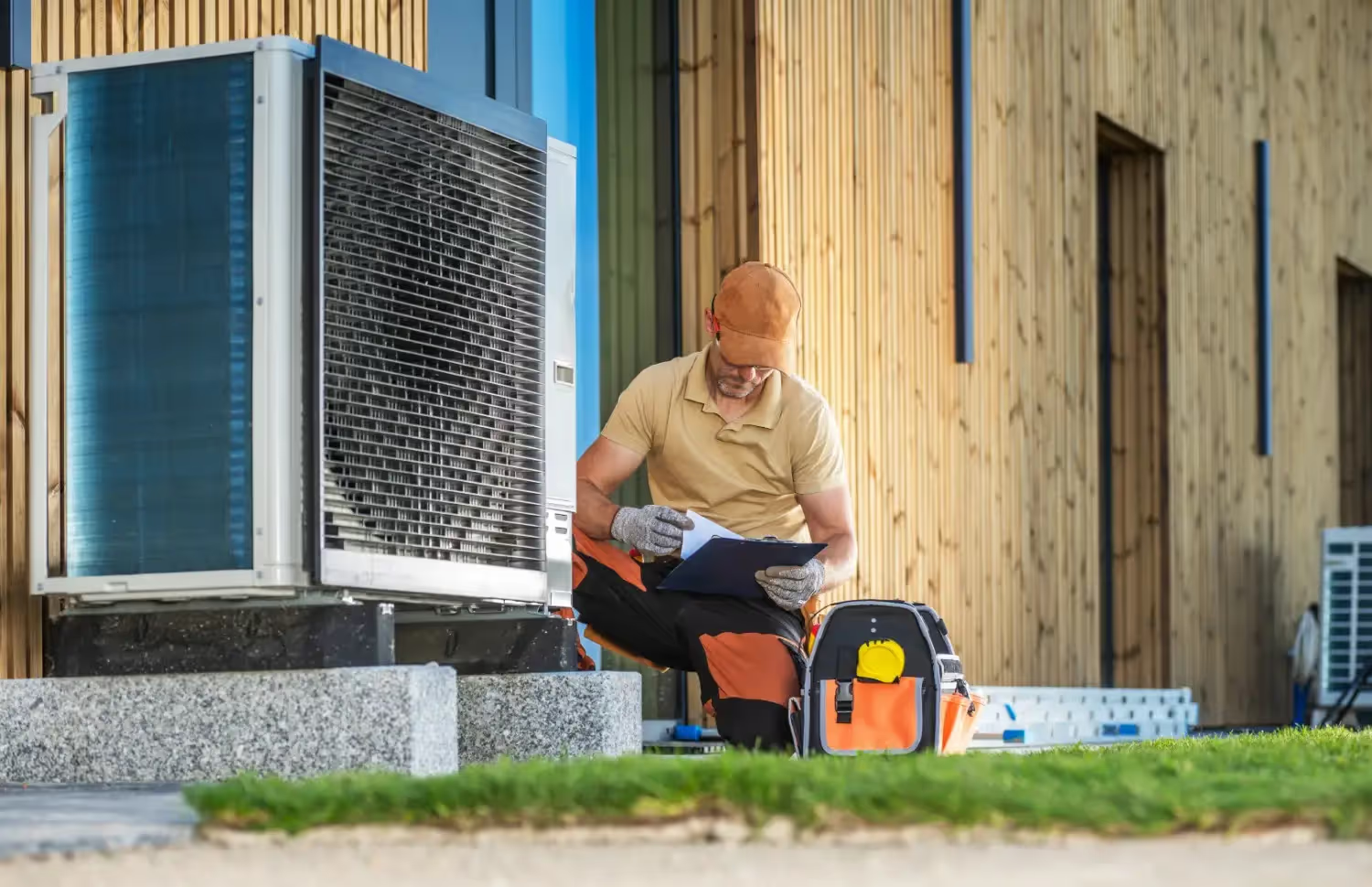
What Our Heat Pump Installation Involves: Scope, Process, and Timelines
Homeowners in the decision stage need to know exactly what they are paying for and how long it will take. A professional installation is about more than just swapping out a box; it is a comprehensive service designed to ensure the longevity and efficiency of your investment.
When you schedule an installation, the scope of work generally includes:
- Site Evaluation and Load Calculation: We verify that the unit size selected is mathematically correct for your home’s square footage, insulation levels, and window orientation. Oversized units cycle too frequently, while undersized units run constantly without reaching the set temperature.
- Safe Removal and Disposal: The old equipment is disconnected, removed, and disposed of according to EPA regulations, particularly regarding the handling of old refrigerants.
- Infrastructure Inspection: Technicians examine existing ductwork, electrical connections, and thermostat wiring to ensure they can support the new, high-efficiency equipment.
- System Setup: The indoor air handler and outdoor condenser are mounted, leveled, and connected.
- Post-Installation Testing: The system is pressure-tested, charged with refrigerant, and cycled through all modes to guarantee performance before the technician leaves.
Regarding timelines, a standard residential replacement is typically a single-day project. If significant ductwork modification is required, the timeline may extend slightly, but the goal is always to restore climate control before the end of the day.
The Installation Process: Step-by-Step Guide to Your New Heat Pump
Understanding the mechanics of the installation helps homeowners prepare for the appointment — check our FAQs. We follow a strict protocol to ensure every manufacturer specification is met, preserving your warranty and maximizing energy efficiency ratings (SEER2 and HSPF2).
- Arrival and Site Preparation:
Technicians arrive with the necessary equipment and protective gear to keep your home clean. The workspace around the indoor and outdoor units is cleared. Floor runners are laid down to protect flooring during the transport of heavy equipment.
- Refrigerant Recovery:
Before the old unit can be moved, the existing refrigerant must be pumped out into a recovery cylinder. This is a critical legal and environmental step. Once the lines are clear, the old unit is disconnected from the electrical grid and the copper line set.
- Setting the Outdoor Unit:
The new heat pump condenser is placed on a composite pad or mounting bracket. This ensures it remains level and is elevated above potential snow accumulation levels typical for the region. Proper clearance is established around the unit to ensure adequate airflow, which is vital for the heat exchange process.
- Installing the Indoor Air Handler:
The indoor component is fitted to the return air plenum. This step requires precision to ensure an airtight seal. Air leaks here can significantly reduce the efficiency of the system and allow unfiltered air to circulate through your home.
- Line Set Connection:
Copper refrigerant lines are run between the indoor and outdoor units. These lines are brazed—welded with high heat—to create a sealed loop. A vacuum pump is then used to remove moisture and air from the lines, creating a pure environment for the new refrigerant.
- Electrical and Control Wiring:
High-voltage wiring is connected to a safety disconnect box, and low-voltage wiring is run to the thermostat. In many cases, a new smart thermostat is installed to help you manage energy usage more effectively.
- Final Charge and Commissioning:
The system is released with the factory refrigerant charge, and adjustments are made based on the length of the line set. Technicians measure static pressure and temperature differentials (delta T) to prove the system is cooling and heating exactly as designed.
Deciding Between Repair or Replacement: What’s Best for Your Heat Pump?
One of the most difficult decisions for a homeowner is determining when a unit has reached the end of its viable life. While repairs can resolve minor issues, there is a tipping point where continuing to patch an old system becomes financially irresponsible.
Consider replacement if your system meets the following criteria:
- The 50% Rule:
If the cost of the repair approaches 50% of the value of a new system, replacement is the smarter financial move. Investing thousands of dollars into a compressor for a 12-year-old unit is rarely a good return on investment.
- Age of the Unit:
Most heat pumps have a lifespan of 10 to 15 years. If your unit is in this age range and requires a major repair, parts are likely becoming obsolete, and the system is operating at a fraction of its original efficiency.
- Refrigerant Type:
Older systems utilize R-22 (Freon), which has been phased out. R-22 is becoming prohibitively expensive and difficult to source. Modern systems use R-410A or newer eco-friendly alternatives. If your R-22 system has a leak, Carter Heating and Cooling recommends replacement as the only viable long-term option.
- Rising Energy Bills:
Heat pump technology has improved drastically in the last decade. A modern system can be up to 40% more efficient than a unit installed in the early 2000s. If your utility bills are creeping up despite normal usage, the equipment is likely losing its ability to transfer heat effectively.
- Comfort Issues:
If some rooms are freezing while others are hot, or if the unit makes excessive noise and struggles to maintain humidity levels, the internal components are likely worn beyond reasonable repair.
Understanding Local Requirements: Permits, Utilities, and Seasonal Considerations in Cave City
Installing a heat pump is a construction project that intersects with local regulations and environmental factors. Proper adherence to these requirements ensures your home remains insurable and compliant with Kentucky building codes.
- Permitting and Inspections:
In Kentucky, HVAC installations often require permits to ensure the electrical and mechanical work meets safety standards. Professional installers handle the paperwork and scheduling of any necessary inspections. This protects the homeowner from liability and ensures the work is up to code.
- Utility Rebates and Incentives:
Local utility providers frequently offer rebates for homeowners who upgrade to high-efficiency heat pumps. These incentives are designed to reduce the load on the grid. To qualify, equipment usually must meet specific SEER (Seasonal Energy Efficiency Ratio) and HSPF (Heating Seasonal Performance Factor) ratings. Your installer can provide the AHRI certificate required to claim these funds.
- Seasonal Installation Timing:
The climate in this region dictates the best times for installation. March and April see peak precipitation, which can complicate outdoor work. Conversely, waiting until the deep freeze of winter or the heat of July creates a desperate situation. The ideal installation windows are during the shoulder seasons—spring and fall—when the demand on the system is lower, and the weather allows for uninterrupted outdoor labor.
- Local Weatherproofing:
Because this area experiences humidity in summer and frost in winter, the heat pump installation must account for condensate drainage. Proper drainage piping prevents water damage to the home’s foundation or basement during the humid months. Additionally, snow legs (risers) are often used under the outdoor unit to prevent snow accumulation from blocking airflow during winter storms.
Why Choose Us: Our Commitments to Quality and Community
Selecting the right contractor is just as important as selecting the right brand of equipment. The longevity of a heat pump is heavily dependent on the quality of the installation. A top-tier unit installed poorly will fail prematurely, whereas a standard unit installed perfectly can last for decades.
We focus on the technical details that others might overlook. This includes nitrogen purging during brazing to prevent oxidation inside the copper lines, verifying proper airflow with static pressure testing, and ensuring the thermostat is calibrated to the specific needs of the household.
- Technical Expertise:
Our team stays updated on the latest heat pump technologies, including variable-speed compressors and communicating systems that offer precise temperature control.
- Warranty Support:
We register all equipment warranties on your behalf and back our labor with guarantees. You will never be left wondering who to call if an issue arises post-installation — read our reviews.
- Respect for Your Home:
Installers use drop cloths and shoe covers to protect your property. We believe in leaving the workspace cleaner than we found it, removing all debris and old equipment for proper recycling.
- Clear Communication:
From the initial quote to the final walkthrough, you will receive clear, honest information without technical jargon. You will know exactly how to operate your new thermostat and how to change your filters before we leave.
A comfortable home requires a system you can trust and a team that stands behind their work. Do not let a failing system compromise your safety or drain your bank account with high energy costs.
Carter Heating and Cooling is ready to help you upgrade your home comfort today.
Restore Reliable, Efficient Heat to Your Home
A failing or outdated heating system can quickly turn winter into a stressful and uncomfortable season. By upgrading to a modern heat pump installed by Carter Heating and Cooling, you gain rapid, same-day-ready comfort, improved energy efficiency, and long-term reliability backed by professional installation, strong warranties, and flexible financing options. From precise sizing and code-compliant installation to ongoing maintenance and repair support, our team is committed to keeping your Cave City home safe, warm, and efficient all winter long.
Secure your comfort now. Contact us to schedule your heat pump installation and take the first step toward a more efficient home.

Great Service at a Fair Price
Veterans Discount


Senior Discount

Law Enforcement

Fire fighters/ems

Hear From Your Neighbors!
Hear from your neighbors to see how our commitment to dependable service and lasting comfort has made a difference in their homes.