

How can we help today?
Choose an option to see quick actions and get help faster.Mini split Installation in Cave City, KY
Mini split Installation in Cave City, KY
Explore efficient ductless mini split systems for your Cave City home. Enjoy targeted cooling and significant energy savings. Schedule a consultation today!
Inefficient Cooling Leaving Rooms Uncomfortable During Humidity Spikes?
When your current cooling system fails to manage the humidity and heat characteristic of a Cave City summer, you face uncomfortable nights and rising energy bills. You might be weighing the costs of repairing an aging window unit or central system against investing in a modern, ductless solution. Contact us today to discuss your specific cooling needs or to learn about our financing options.
A ductless mini split offers a targeted way to reclaim comfort in your home without the invasive construction of adding ductwork. Whether you are outfitting a new home addition, a garage, or an older property where ducts aren't an option, getting the installation right the first time is critical for efficiency and longevity.
- Achieve precise temperature control with zone-specific cooling and heating.
- Reduce energy consumption with high-efficiency inverter technology.
- secure same-day consultation to restore comfort to your home immediately.
- Confident service with licensed technicians, upfront pricing, and customer satisfaction guarantees.
What to Expect From Your Ductless Installation Today
Choosing to install a mini split system is a decision that impacts your home’s comfort for the next 15 to 20 years. The installation process is significantly less invasive than traditional HVAC replacements, but it requires specialized knowledge of refrigerant lines, electrical loads, and structural mounting. When you schedule a service with Carter Heating and Cooling, the focus is on a seamless transition from your old cooling method to a new, high-performance system.
The scope of work generally includes a comprehensive site assessment to determine the ideal location for both the indoor air handler and the outdoor condenser. Technicians ensure that the chosen wall can support the weight of the unit and that there is adequate drainage for condensate. The goal is to provide a turnkey solution where the workspace is left clean, the system is fully tested, and you understand exactly how to operate your new remote or wall controller.
Included in a standard professional installation:
- Load Calculation: Precise measurements of the room size, insulation levels, and window exposure to determine the exact BTU capacity needed.
- Structural Mounting: Secure installation of the indoor evaporator unit on a wall, floor, or ceiling, and a stable pad or bracket mounting for the outdoor condenser.
- Electrical Integration: Safe connection to your home’s electrical panel, often requiring a dedicated circuit to handle the equipment's amperage.
- Line Set Management: Neatly running and concealing the refrigerant lines and communication cables inside protective housing (line hide) to maintain your home’s curb appeal.
- System Commissioning: Pressure testing the lines, vacuuming the system to remove moisture, and releasing refrigerant to ensure optimal pressures.
The Ductless System Installation Process
A proper installation follows a strict sequence to ensure the warranty remains valid and the system operates at its SEER (Seasonal Energy Efficiency Ratio) rating. While the process is faster than central air installation, shortcuts here lead to leaks and premature compressor failure.
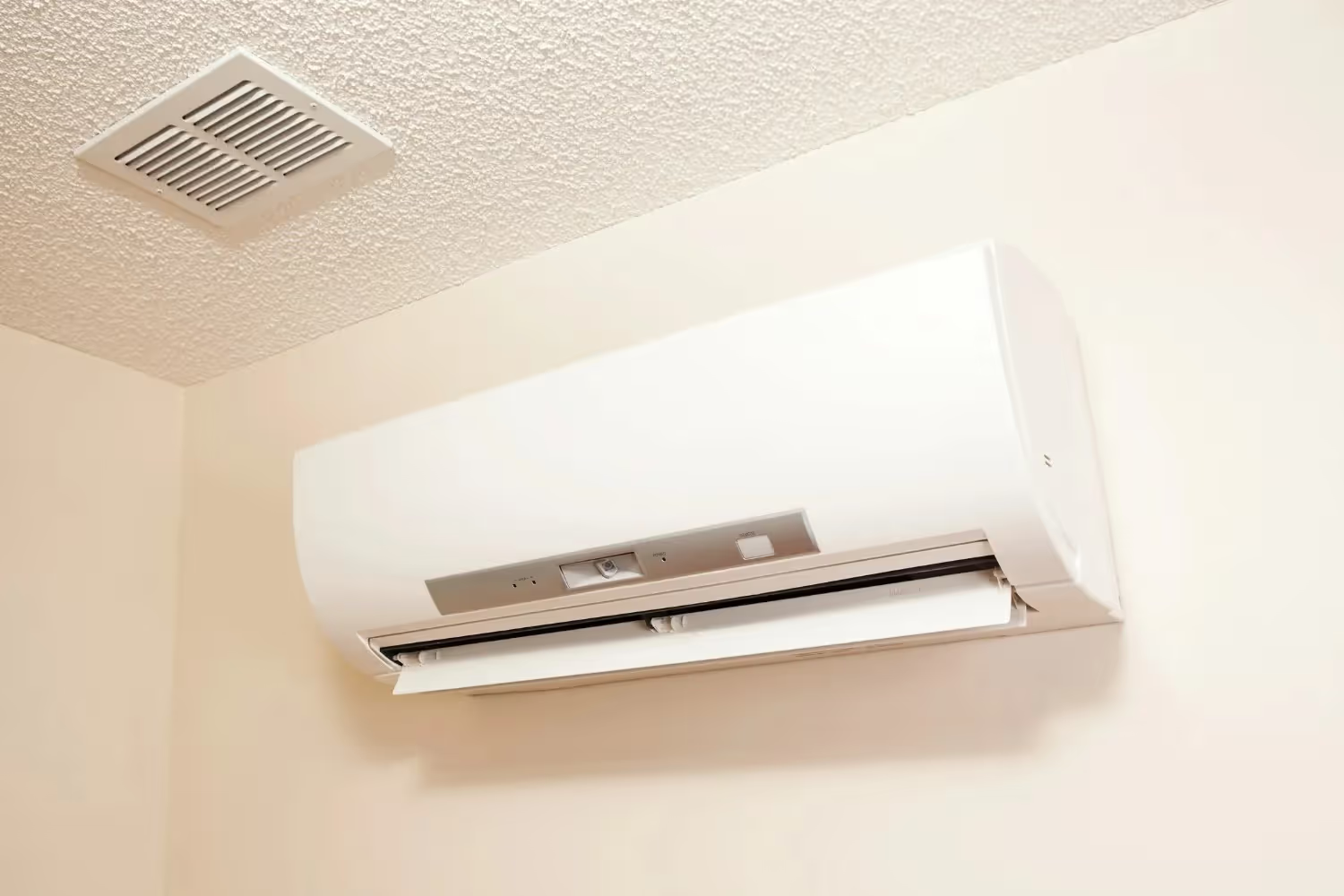
- First, the technician evaluates the indoor zone. The air handler must be mounted high on the wall for optimal air distribution, but accessible enough for filter cleaning. The location must also allow for a direct path to the outdoors for the line set.
- Next, a small, three-inch hole is drilled through the exterior wall. This hole is drilled at a slight downward angle to assist with gravity drainage for the condensate line. This step is critical; improper angles can lead to water leaking down your interior walls.
- Then, the mounting plate is leveled and secured to the interior wall. This plate holds the entire weight of the indoor unit, so hitting studs or using appropriate anchors is non-negotiable.
- Following the indoor mounting, the outdoor condenser unit is positioned. In Cave City, this often involves placing the unit on a composite pad to keep it off the ground, or mounting it on wall brackets to protect it from ground debris and splashing during heavy rain.
- The refrigerant lines, drain tube, and communication wire are then bundled and passed through the wall. The technician connects these lines to both units using flared connections. These connections must be torqued to precise manufacturer specifications to prevent refrigerant leaks.
- Once connected, the system is not immediately turned on. The technician attaches a vacuum pump to the lines. This removes all air and moisture from the copper tubing. Moisture inside the lines can mix with oil and refrigerant to create acid, which eats away at the compressor windings over time.
- Finally, the refrigerant is released, the hole in the wall is sealed with silicone or duct putty to prevent drafts and pest entry, and the system is powered up for a test run. The technician checks the temperature differential between the supply and return air to verify cooling performance.
When Replacement Beats Repair
Homeowners often struggle with the decision to repair an existing, aging system or to switch to a new mini split setup. If you are currently relying on window units or an old central system that leaves hot spots in your house, the math often favors replacement.
Consider replacement if the following conditions apply:
- The 50% Rule: If the cost of the repair approaches 50% of the value of a new system, replacement is the smarter financial move. New systems come with warranties, whereas a repair on an old system only guarantees that specific part.
- Age of Equipment: If your current cooling source is over 10-15 years old, it is likely operating at a much lower efficiency than modern standards. New mini splits frequently offer SEER ratings of 20 or higher, which can drastically cut monthly utility costs compared to older 10 or 12 SEER units.
- Refrigerant Type: Older systems use R-22 (Freon), which has been phased out and is incredibly expensive to replace. If your old system has a refrigerant leak, upgrading to a system that uses R-410A or newer eco-friendly refrigerants is necessary.
- Inconsistent Comfort: If repairs fix the mechanical operation but the room still feels humid or stuffy, the system may be oversized or undersized. A new mini split allows for correct sizing, which improves dehumidification—a vital factor during Kentucky summers.
- Noise Levels: Aging compressors and fans often become loud and intrusive. If the noise disrupts sleep or conversation, modern ductless systems are whisper-quiet, often operating as low as 19 decibels.
Local Considerations for Homeowners
Installing HVAC equipment involves more than just buying a unit; it requires navigating local building standards and environmental factors specific to the region. In the Cave City area, the subtropical climate necessitates specific installation protocols to handle humidity and storm activity.
- Humidity Control: The area receives significant rainfall and humidity. Mini splits are excellent at dehumidifying, but only if they are sized correctly. An oversized unit will cool the room too quickly and shut off before it has removed the moisture, leaving the air feeling clammy. Technicians must perform load calculations to ensure the unit runs long enough to pull humidity out of the air.
- Electrical Permits: Local codes usually require a dedicated disconnect box installed near the outdoor unit for safety. This allows a technician to cut power immediately during service. Ensuring your electrical panel has the capacity to add this circuit is part of the initial assessment.
- Outdoor Unit Security: Given the potential for severe spring weather and thunderstorms, outdoor condensers must be securely anchored. Whether on a concrete pad or wall brackets, the unit needs to withstand high winds. Additionally, raising the unit slightly helps prevent issues with mud splatter or debris accumulation during heavy rains.
- Setback Requirements: Local zoning may dictate how close mechanical equipment can be to property lines. Professional installers ensure that the condenser placement complies with these setbacks to avoid future disputes or fines.
Why Proper Sizing and Placement Matters
The most common cause of dissatisfaction with mini split systems is not equipment failure, but improper application. A unit that is too large for the space will "short cycle," turning on and off frequently. This increases wear on the compressor and fails to dehumidify the room. Conversely, a unit that is too small will run constantly, driving up electric bills while failing to reach the target temperature on the hottest days.
Placement is equally important for airflow.
- Indoor Units: Must be placed where airflow is unobstructed. placing a unit above a tall cabinet or too close to a ceiling fan can disrupt the air throw, causing "short circuits" where the unit sucks in its own cold air and shuts off prematurely.
- Outdoor Units: Need breathing room. If a condenser is crowded by shrubs, fences, or placed in a recessed corner, it cannot dissipate heat effectively. This leads to high head pressure, reduced efficiency, and potential system overheating.
- Aesthetic Integration: A professional installation considers the visual impact. Using paintable line hide covers and routing lines along downspouts or corners helps blend the mechanical components into the home's exterior.
Energy Efficiency and Inverter Technology
One of the primary drivers for switching to ductless cooling is the potential for energy savings. Unlike traditional "on/off" compressors that consume massive amounts of electricity during startup, modern mini splits utilize inverter-driven compressors.
- Variable Speed Operation: The inverter allows the compressor to speed up or slow down based on the demand. Once the room reaches the set temperature, the unit throttles down to maintain it, using a fraction of the power required by a conventional system.
- Zoning Efficiency: With a mini split, you only cool the rooms you are using. There is no energy wasted pushing cold air through leaky ducts in an attic or crawlspace. This targeted approach can reduce cooling costs by up to 30%.
- SEER Ratings: High SEER ratings indicate how much cooling you get for every unit of electricity consumed. Investing in a higher SEER unit often pays for itself through lower utility bills over the life of the system.
Maintenance Requirements for Longevity
While mini splits are durable, they require specific maintenance to maintain air quality and efficiency. Because these units do not use ductwork, the air filter is located directly on the indoor unit and handles a high volume of dust and particulate matter.
- Filter Cleaning: The mesh filters inside the indoor unit should be checked and washed every two to four weeks depending on usage and pets. Clogged filters restrict airflow, forcing the system to work harder and reducing cooling capacity.
- Coil Cleaning: Over time, the evaporator coil inside the unit can accumulate dust and mold, especially in humid environments. Annual professional cleaning ensures the coil remains efficient and the air you breathe is clean.
- Drain Line Maintenance: The condensate drain line removes moisture from your home. Algae and mold can grow in this moist environment, potentially causing clogs. Regular flushing of the drain line prevents water backups that could damage the unit or your walls.
- Condenser Care: The outdoor unit should be kept clear of grass clippings, leaves, and cottonwood. Dirty outdoor coils cannot release heat effectively, dropping the system's efficiency.
Flexible Solutions for Various Home Types
Ductless systems are incredibly versatile, making them the ideal solution for homes where traditional central air is impossible or impractical.
- Historic Homes: Older homes often lack the space for ductwork. Mini splits preserve the architectural integrity of the structure, requiring only a small hole for installation rather than tearing open walls and ceilings.
- Additions and Sunrooms: Extending existing ductwork to a new addition often puts too much strain on the current HVAC system. A mini split operates independently, providing dedicated comfort to the new space without impacting the rest of the house.
- Garages and Workshops: Converting a garage into a livable space requires a heating and cooling source that is separate from the main house to avoid pulling fumes into the living area. A ductless unit provides safe, effective temperature control for these workspaces.
- Hot or Cold Spots: even in homes with central air, certain rooms (like those above a garage or with large west-facing windows) may never get comfortable. A single-zone mini split can supplement the central system to correct these temperature imbalances.
Securing Your Comfort with Professional Service
Investing in a mini split system transforms how you experience your home during the peak of summer and the chill of winter. The technology offers a superior level of control, quiet operation, and energy efficiency that window units simply cannot match. However, the performance of the machine is entirely dependent on the quality of the installation. From load calculations to the final vacuum pressure test, every step matters.
Carter Heating and Cooling provides the expertise required to ensure your investment delivers reliable comfort for years to come. We help you navigate the options, select the right equipment for your specific layout, and execute a flawless installation that respects your property.
Ready to upgrade your home comfort with a high-efficiency mini split system? Contact us today to schedule your consultation and take control of your indoor climate.

Great Service at a Fair Price
Veterans Discount


Senior Discount

Law Enforcement

Fire fighters/ems

Hear From Your Neighbors!
Hear from your neighbors to see how our commitment to dependable service and lasting comfort has made a difference in their homes.