

How can we help today?
Choose an option to see quick actions and get help faster.Mini split Maintenance in Cave City, KY
Mini split Maintenance in Cave City, KY
Struggling with mini split performance issues in Cave City? Contact us for expert mini split maintenance services and ensure your system operates flawlessly. Schedule now!
Tackling Mini Split Performance Issues? Get Expert Assistance Now!
Is your mini split system not cooling effectively, leaking water down the wall, or showing signs of mechanical wear right when you need it most? Contact us today to schedule a professional maintenance visit and restore your system’s efficiency immediately.
Homeowners in Cave City often rely on ductless systems for targeted comfort, but neglecting routine care can lead to sudden breakdowns and inflated energy bills. Carter Heating and Cooling provides thorough, intent-based maintenance designed to catch small issues before they become expensive repairs. Our technicians dive deep into the mechanics of your unit, ensuring every component functions correctly.
- Revitalize unit performance with detailed maintenance checks that address airflow and cooling capacity.
- Prevent common issues such as condensate leaks and mold growth with regular, deep-cleaning service.
- Enhance energy efficiency and reduce long-term costs by optimizing the system’s electrical and mechanical operation.
All services are backed by a comprehensive warranty and adhere strictly to local coding standards to ensure your peace of mind.
Quick Fixes for Immediate Mini Split Problems
When a ductless system acts up, the symptoms are often immediate and disruptive to your home environment. Unlike central air systems, mini splits are located directly in the living space, making issues like noise, smells, and leaks impossible to ignore. Identifying these problems early is the first step toward resolution.
One of the most frequent issues is water leaking from the indoor air handler. This typically indicates a clogged condensate drain line. Over time, dust, algae, and mold build up in the drain pan and line, causing water to back up and overflow. While a homeowner might wipe up the water, the blockage requires professional clearing to prevent structural damage to the wall or floor.
Another common trigger for service is a system that runs but fails to cool or heat. This "blowing warm air" scenario often stems from restricted airflow due to a dirty blower wheel or clogged filters. In ductless units, the blower wheel is compact and can easily become caked with debris, significantly reducing the volume of air moving across the coils. If the airflow is restricted, the heat exchange process fails, and the room remains uncomfortable.
Strange odors are also a sign that maintenance is overdue. A musty or "dirty sock" smell usually points to bacterial growth on the evaporator coils. Because these units remove humidity, the interior stays damp. Without regular chemical cleaning, this moisture becomes a breeding ground for mold, which is then circulated back into the room.
Finally, communication errors between the remote and the unit can mimic a mechanical failure. If the unit does not respond to commands, it may be a control board issue or a sensor malfunction. While changing batteries is a simple troubleshooting step, unresponsive units often require diagnostic testing of the electrical components to verify voltage and signal transmission.
Comprehensive Maintenance Today: Scope, Timeline, and Inclusions
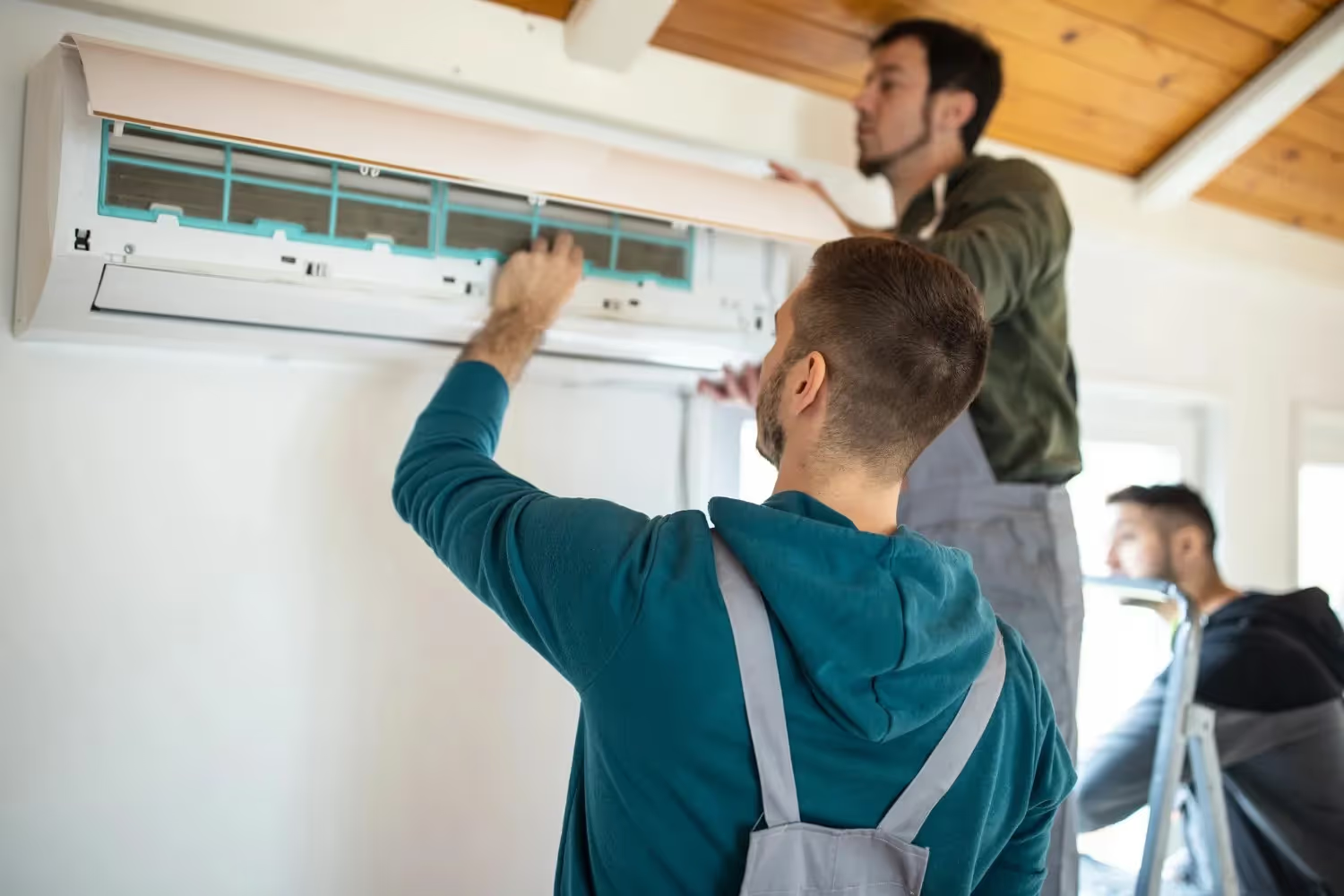
When you book a professional tune-up, the goal is to return the unit to factory-fresh specifications. This is not a superficial dusting; it is a deep clean and mechanical inspection. The scope of work covers both the indoor air handler and the outdoor condenser unit.
The indoor unit requires meticulous attention to air quality and drainage. The technician will remove the filters and the outer casing to access the evaporator coil and blower wheel. Using specialized cleaning bibs to protect your walls and floors, the technician applies a coil cleaner to dissolve grime and mold. The blower wheel is inspected and cleaned to ensure it spins freely and moves air quietly.
Drainage systems are flushed to ensure water flows freely to the exterior of the home. This step often includes adding pan tablets that inhibit future algae growth.
Outdoor maintenance is equally critical. The condenser coil is exposed to the elements, gathering dirt, leaves, and pollen. A dirty outdoor coil cannot release heat effectively, causing the compressor to work harder and draw more electricity. The service includes washing this coil to maximize heat rejection.
Electrical connections are tightened, and the refrigerant levels are checked. Mini splits are critically charged systems; even a slight variance in refrigerant can drastically alter performance. The technician measures operating pressures and temperature differentials to ensure the charge is exact.
- Inspection of Filters: Removing, cleaning, or replacing primary and secondary filtration screens.
- Coil Cleaning: Application of non-acidic cleaners to indoor and outdoor coils to remove insulating grime.
- Blower Wheel Service: Cleaning the fan blades to reduce vibration and noise while increasing airflow.
- Condensate Line Flush: Using pressure or vacuum to clear the drain line and testing for proper flow.
- Refrigerant Check: Measuring superheat and subcooling to verify the system is holding the correct charge.
- Electrical Safety: Inspecting wiring, capacitors, and terminal blocks for signs of burning or loose connections.
Understanding the Mini Split Maintenance Process
The maintenance process is structured to be efficient and thorough, minimizing disruption to your household while maximizing the technical benefit to the equipment.
First, the technician initiates a functional test. The system is turned on to maximum capacity to establish a baseline for performance. This allows the specialist to hear any unusual noises, such as rattling or grinding, and to measure the temperature difference between the return air and the supply air. This "delta T" reading gives an immediate indication of how well the system is cooling or heating.
Next, the unit is powered down at the disconnect to ensure safety during the hands-on work. The technician begins the disassembly of the indoor unit cabinets. This is necessary to reach the internal components that standard cleaning cannot reach. Protective bibs or bags are installed around the unit to catch water and cleaning agents.
Then, the cleaning phase begins. High-pressure water or steam, combined with specialized HVAC detergents, is used to strip the buildup from the evaporator coils and the barrel fan. This slurry is captured in the bib and drained away, keeping your home dry. Simultaneously, the outdoor unit is sprayed down to remove debris that restricts airflow.
Following the cleaning, the technician moves to the electrical and mechanical inspection. Capacitors are tested to ensure they are within the manufacturer's specified microfarad range. The compressor amp draw is measured to verify it is not overworking. If the unit is a heat pump, the reversing valve is checked for proper operation.
Finally, the system is reassembled and powered back on. A post-cleaning performance test is conducted. The technician waits for the system to stabilize and re-checks the temperature split. The workspace is cleaned, and a report is generated detailing the work performed and any recommendations for future repairs.
Deciding Between Mini Split Repair and Replacement
There comes a point in the lifecycle of every HVAC system when maintenance or repair is no longer the most improved financial decision. Making the call between fixing an existing unit or investing in a new one depends on several technical and economic factors.
Age is the primary indicator. Most mini split systems have a life expectancy of 15 to 20 years with proper maintenance. If your unit is approaching or has surpassed this age range, major component failures—such as a compressor burnout or a leaking coil—often signal the end of the unit's useful life. Investing heavily in a system that is near the end of its lifecycle rarely yields a good return on investment.
The cost of repair relative to the value of the system is another critical metric. A general rule of thumb used in the industry is the "50% rule." If the cost of the necessary repair approaches 50% of the cost of a new unit, replacement is usually the wiser choice. This is particularly true if the unit is out of warranty.
Refrigerant type is also a factor. Older units may utilize R-410A or even phased-out refrigerants. As environmental regulations change and refrigerants become more expensive or obsolete, repairing a leak in an older system becomes cost-prohibitive. Newer systems utilize more efficient refrigerants and inverter technology that can significantly lower monthly utility bills, offsetting the cost of installation over time.
- Frequency of Breakdowns: If you are calling for repairs multiple times a year, the cumulative cost will quickly exceed the price of a new, reliable system.
- Efficiency Ratings: Compare the SEER rating of your current unit to modern options. Moving from a 15 SEER unit to a 25 SEER unit can result in substantial energy savings.
- Parts Availability: As models are discontinued, sourcing control boards or specific motors becomes difficult and expensive, leading to long downtimes.
- Comfort Consistency: If the unit can no longer maintain the set temperature despite repairs, the compressor or sensors may be failing beyond the point of simple adjustment.
Adhering to Cave City’s HVAC Standards and Seasonal Tips
Operating a mini split in this region requires an understanding of the specific environmental challenges. Cave City experiences a humid subtropical climate, which places a heavy latent load on cooling systems. This means your air conditioner must work hard not just to lower the temperature, but to remove significant amounts of moisture from the air.
In high-humidity environments, the condensate drain system is under constant stress during the summer months. Algae grows rapidly in warm, wet environments like drain pans. Regular maintenance in the spring is essential to ensure these lines are clear before the peak heat arrives. If the system cannot drain properly, the unit will shut down to prevent water damage, leaving you without cooling on the hottest days.
Winter performance is equally important. While mini splits are excellent heaters, efficiency drops as outdoor temperatures plummet. Local seasonality suggests that a fall tune-up is critical to check the defrost cycle operation. The outdoor unit must be able to melt frost accumulation on the coils to maintain heating capacity. If the defrost sensors or boards are faulty, the unit will freeze over and stop providing heat.
Regarding local regulations, any significant repair involving refrigerant lines or electrical modifications must adhere to Kentucky’s HVAC and electrical codes. Proper handling of refrigerant is mandated by federal law to prevent venting into the atmosphere. Ensuring your service provider follows these protocols protects you from liability and ensures the safety of your home’s electrical infrastructure.
- Clear Vegetation: Keep shrubs and plants trimmed back at least two feet from the outdoor unit to ensure proper airflow, which is vital during humid Kentucky summers.
- Monitor Dehumidification: If your home feels clammy even when cool, the fan speed may be set too high, preventing the coil from removing moisture effectively. Ask your technician to adjust settings for humidity control.
- Protect from Snow: In winter, ensure the outdoor unit is not buried in snow drifts, which can block airflow and cause ice buildup on the fan blades.
Why Choose Us? Licensing, Expertise, and Local Commitment
Selecting a service provider for ductless systems requires finding a team with specific technical training. Mini splits differ significantly from traditional central air systems in terms of electronics, inverter technology, and maintenance requirements. A technician trained only on standard split systems may miss critical nuances of a ductless inverter drive or a specialized drainage assembly.
Carter Heating and Cooling employs technicians who are specifically trained in ductless technology. We utilize the correct tools, such as flare nut torque wrenches and digital micron gauges, to ensure every connection is precise. Improper torque on flare connections is the number one cause of refrigerant leaks in these systems; we eliminate that risk through precision tools and adherence to manufacturer specifications.
We also prioritize the cleanliness of your home. Mini split maintenance is an interior job, often taking place in bedrooms or living rooms. Our team uses drop cloths, shoe covers, and specialized cleaning bibs to ensure that no water, dust, or cleaning solution touches your walls or furniture.
Furthermore, we are fully licensed and insured, meeting all state requirements for HVAC contractors. This validates that our team understands the local building codes and safety standards required for working with high-voltage electricity and high-pressure refrigerants. We provide transparent reports on the status of your equipment, giving you the data you need to make informed decisions about your home comfort systems without pressure — see our customer reviews.
Restore Quiet, Efficient Comfort to Your Home
A noisy or underperforming ductless mini-split is more than an inconvenience—it’s a sign that your comfort, efficiency, and long-term equipment health may be at risk. With detailed diagnostics, region-specific expertise, and code-compliant repairs, Carter Heating and Cooling helps you protect your home, control humidity, and keep energy costs in check. From emergency repairs to planned replacements with flexible financing and proactive maintenance plans, our team is committed to restoring and maintaining reliable comfort in your Cave City home.
Don't let a malfunctioning mini-split disrupt your comfort—contact Carter Heating and Cooling today to schedule your professional ductless system inspection and get your system running smoothly again.
Ready to improve your home’s comfort and air quality? Schedule your comprehensive mini split maintenance today.

Great Service at a Fair Price
Veterans Discount


Senior Discount

Law Enforcement

Fire fighters/ems

Hear From Your Neighbors!
Hear from your neighbors to see how our commitment to dependable service and lasting comfort has made a difference in their homes.