

How can we help today?
Choose an option to see quick actions and get help faster.Mini Split Maintenance in Plum Springs, KY
Mini Split Maintenance in Plum Springs, KY
Expert mini split maintenance in Plum Springs ensures efficient operation and prevents costly repairs. Schedule your professional service today and stay comfortable year-round.
Keep Your Comfort Without the Hassle
Struggling with mini split maintenance in Kentucky’s fluctuating weather can lead to inefficient cooling and unexpected breakdowns just when you need your system the most. Whether you are dealing with a sudden drop in performance or simply want to prevent future issues in Plum Springs, professional attention ensures your ductless system operates at peak capacity. Contact us to schedule service or inquire about our available financing options for system upgrades.
Carter Heating and Cooling understands that a well-maintained system is the difference between consistent comfort and costly emergency repairs. We provide:
- Expert servicing by certified technicians with 30+ years of experience.
- Fast response times, including same-day service availability to restore your comfort immediately.
- All services backed by solid warranties for peace of mind.
- Fully licensed and locally approved—maintenance you can trust.
What You Get Today: Comprehensive Mini Split Service
When you book a maintenance appointment, you are paying for a rigorous, multi-point inspection and cleaning process designed to extend the life of your equipment. A mini split system operates differently than a traditional forced-air HVAC unit. It relies on precise refrigerant levels and unobstructed airflow to utilize its inverter technology efficiently. Without regular service, the internal components accumulate dust, mold, and debris, which forces the compressor to work harder and consume more electricity.
A professional tune-up addresses the specific vulnerabilities of ductless technology. Unlike standard systems, mini splits have blower wheels located directly in the living space, making them prone to accumulating biological growth that affects indoor air quality. The service performed today ensures that every mechanical and electrical component functions exactly as the manufacturer intended.
Detailed Cleaning and Sanitization
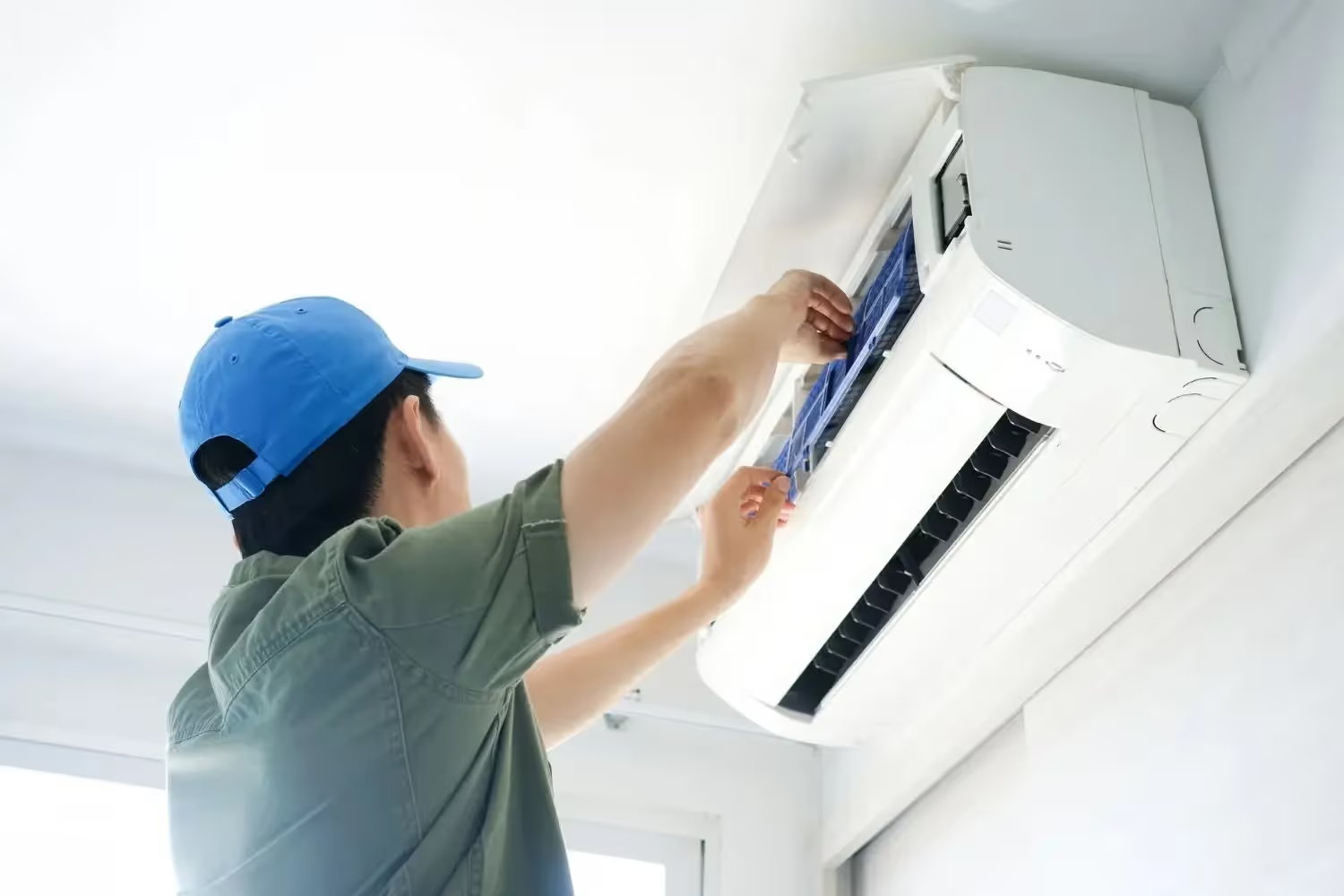
- Blower Wheel Cleaning: Technicians remove the build-up of dust and microbial growth from the barrel fan inside the wall unit. This restores the aerodynamic balance of the fan, reducing noise and vibration while increasing airflow volume.
- Evaporator Coil Treatment: The indoor coils are cleaned with specific, non-corrosive agents to remove dirt that acts as an insulator. Clean coils absorb heat efficiently, which is vital for dehumidifying your home during a humid Plum Springs summer.
- Filter Maintenance: Reusable mesh filters are washed and sanitized. If additional filtration media (such as catechin or deodorizing filters) are present, they are inspected and replaced if necessary.
- Condensate Drain Flush: The drain line is arguably the most critical maintenance point for a mini split. Technicians flush the line and check the condensate pump to prevent water backups, which can cause significant water damage to walls and floors.
Electrical and Mechanical Verification
- Refrigerant Charge Check: Mini splits are critically charged systems. Even a slight discrepancy in refrigerant levels can drastically reduce efficiency. Technicians measure operating pressures and temperatures to ensure the charge is exact.
- Inverter Communication Testing: The communication line between the indoor and outdoor units is inspected. This wire sends complex signals regarding fan speed and compressor load. Loose connections here can cause erratic behavior or total system shutdown.
- Compressor Amp Draw: The electrical current drawn by the compressor is measured against the manufacturer's specifications. High amp draws often indicate internal wear or a failing component that needs preemptive replacement.
- Tightening Connections: All electrical terminals are tightened. Thermal expansion and contraction throughout the year can loosen wires, creating fire hazards or causing circuit board failures.
How the Maintenance Process Works
Understanding the workflow of a service visit helps you prepare and know what to expect. The goal is to be thorough yet non-intrusive, ensuring your home remains clean while the system is serviced. The process follows a logical sequence to diagnose, clean, and verify performance.
- Arrival and Site Protection: The technician arrives within the scheduled window. Before touching the equipment, drop cloths are placed around the indoor unit to protect furniture and flooring from water or cleaning solutions.
- Initial Operation Test: The system is run in both cooling and heating modes (if applicable) to establish a baseline. The technician listens for unusual noises like rattling or grinding and checks the temperature differential between supply and return air.
- Power Disconnection: For safety, power is disconnected at the service disconnect box or breaker panel. This allows for safe inspection of high-voltage components.
- Disassembly and Deep Clean: The front casing and louvers of the indoor unit are removed. A specialized "bib" or catch bag is often placed around the unit to catch water and debris during the coil and blower wheel cleaning process.
- Outdoor Unit Servicing: While the indoor unit dries, attention shifts to the outdoor condenser. The condenser coil is washed to remove pollen, grass clippings, and dirt that block heat release. The fan motor is checked for play in the bearings.
- Reassembly and Final Testing: Once cleaned, the unit is reassembled. Power is restored, and the system is operated for at least 15 minutes to stabilize pressures. The technician verifies that the system is draining water correctly and blowing cold (or warm) air.
When Replacement Beats Repair
While maintenance can significantly extend the life of a ductless system, there comes a point where investing in a new unit is more improved financial decision than pouring money into an aging one. Mini split technology evolves rapidly, and older units may lack the efficiency ratings (SEER2) of modern equipment.
Making the decision to replace usually comes down to three factors: the age of the unit, the cost of the repair, and the frequency of breakdowns. If your system requires R-410A refrigerant, which is being phased out, repair costs for leaks will continue to rise.
- Compressor Failure: The compressor is the heart of the system. If it fails and the unit is out of warranty, the cost of the part and labor often rivals the cost of a completely new outdoor unit. In this scenario, replacement is almost always the smarter path.
- Repeated Refrigerant Leaks: If a system has a history of leaks, it indicates corrosion in the coils or poor initial installation. Continuously topping off refrigerant is illegal and expensive. If the leak cannot be permanently fixed, the unit must be replaced.
- Control Board Issues: Inverter boards are complex computers. On older units (>10 years), replacement boards may be discontinued or prohibitively expensive. If multiple boards fail, it suggests an underlying electrical issue that might ruin a new board as well.
- Efficiency degradation: If your energy bills in Plum Springs are climbing despite regular maintenance, the compressor valves may be worn, leading to poor compression and high energy usage. A new system could lower monthly utility costs by 20-30%.
Local Considerations for Plum Springs Homeowners
Operating a mini split in this region requires specific attention to local climate factors. Carter Heating and Cooling tailors maintenance protocols to address the unique challenges posed by the local environment.
Managing Humidity and Condensate
The humid subtropical climate means your air conditioner acts as a powerful dehumidifier for a large portion of the year. This results in a high volume of condensate water passing through the system.
- Algae Growth: The combination of warmth and moisture inside the drain pan creates an ideal breeding ground for algae. If not treated with biocide tablets or flushed regularly, this slime blocks the drain, causing water to overflow down your wall.
- Mold Prevention: High humidity levels can lead to mold growth on the blower wheel if the unit isn't allowed to dry out. We recommend specific fan settings to mitigate this risk.
Winter Operation and Defrost Cycles
Winters here can drop into the low 20s°F, meaning your heat pump must work hard to extract heat from the outside air.
- Ice Accumulation: As the unit runs in heating mode, the outdoor coil will freeze. The system has a defrost cycle to melt this ice. Maintenance ensures the defrost sensors and reversing valves are functioning so your unit doesn't turn into a block of ice, leaving you without heat.
- Snow Clearance: Local homeowners must ensure that snow drifts do not block the outdoor unit. Restricted airflow during winter can cause the compressor to overheat and shut down on safety limits.
Electrical and Code Compliance
Local building codes and electrical standards change over time.
- Disconnect Boxes: We verify that the outdoor disconnect box is weather-tight and compliant with current local codes. Water intrusion here is a common cause of breaker trips.
- Surge Protection: Due to the sensitivity of inverter boards to voltage spikes, we inspect existing surge protectors or recommend installation if none exist. This is particularly important during storm season.
Why Choose Professional Maintenance?
There is a distinct difference between wiping down the outside of a unit and performing a technical tune-up. Attempting DIY maintenance on mini splits often leads to damaged blower wheels, broken plastic clips, or improper reassembly that causes vibration noise. Professional service ensures that the warranty remains valid, as many manufacturers require proof of annual maintenance by a licensed contractor to honor parts warranties.
Our approach focuses on technical precision and long-term reliability. We do not just look for problems; we look for solutions that prevent future failures.
- Licensed Expertise: Technicians hold the necessary state certifications to handle refrigerants and high-voltage electrical components safely.
- Comprehensive Tooling: We utilize specialized tools, including digital manifolds, micron gauges, and anemometers, to measure performance with decimal-point accuracy.
- Warranty Preservation: Detailed service records are maintained to prove that the equipment has been cared for according to manufacturer guidelines.
- Safety First: We identify potential hazards such as frayed wiring or mold spores that could impact the health and safety of your household.
The decision to maintain your mini split is a decision to protect your investment. Neglect leads to higher operational costs, reduced comfort, and premature replacement. By choosing a scheduled maintenance plan, you ensure that your system is ready for the heat of July and the chill of January.
Protect Performance and Comfort All Year Long
A well-maintained mini split system delivers consistent comfort, lower energy costs, and fewer unexpected breakdowns—especially in Kentucky’s demanding climate. Whether your goal is preventing future issues or restoring peak efficiency, professional care ensures your ductless system continues working exactly as it should. Carter Heating and Cooling provides expert mini split maintenance designed to protect your investment and keep your home comfortable in every season.
Ensure your home remains comfortable throughout the year without the stress of unexpected equipment failure. Secure your appointment for professional maintenance in Plum Springs today — contact us today.
Schedule Your Mini Split Maintenance Now

Great Service at a Fair Price
Veterans Discount


Senior Discount

Law Enforcement

Fire fighters/ems

Hear From Your Neighbors!
Hear from your neighbors to see how our commitment to dependable service and lasting comfort has made a difference in their homes.