
How can we help today?
Choose an option to see quick actions and get help faster.Evaporative Humidifier Service in Plum Springs, KY
Evaporative Humidifier Service in Plum Springs, KY
Experience optimal indoor air quality with our expert humidifier services in Plum Springs, KY. Ensure your comfort and health with professional installations and repairs. Schedule now!
Combat Dry Winter Air with Expert Humidifier Services
Struggling with dry indoor air in Plum Springs, KY? Our comprehensive humidifier services ensure optimal humidity levels for your comfort and health, so contact us today to schedule an assessment or apply for financing. Low humidity levels during the cooler months can wreak havoc on your respiratory health and damage wooden fixtures within your home. Carter Heating and Cooling specializes in whole-home evaporative solutions that integrate directly with your existing HVAC infrastructure to provide consistent moisture control.
- Achieve perfect indoor humidity with expert installations and repairs that target the root cause of dryness.
- Benefit from 24/7 service availability for emergency needs and advice regarding your indoor air quality.
- Enjoy long-lasting comfort with top-quality humidifiers and maintenance services designed to extend the lifespan of your heating system.
Certified and licensed professionals ensuring compliance and satisfaction with every service.
What You Get With Professional Evaporative Humidifier Service
When you invest in professional service for your evaporative humidifier, you are securing the functionality of your home’s central heating system and indoor air quality. An evaporative humidifier works on a simple principle—using the airflow from your furnace to evaporate water from a saturated pad—but the execution requires precision. The service begins with a thorough diagnostic of your current humidity levels relative to the outdoor temperature. Technicians assess the entire assembly, ensuring that the water supply line, drainage system, and airflow bypass are functioning correctly without leaks or obstructions.
A comprehensive service visit typically includes the inspection of the solenoid valve, which controls the flow of water to the unit. If this valve fails, the unit may either receive no water, rendering it useless, or run continuously, wasting gallons of water and potentially causing overflow damage. Technicians also evaluate the condition of the water panel, often called the evaporator pad or "biscuit." In the Plum Springs area, mineral deposits can clog these panels rapidly, restricting airflow and reducing evaporation rates. Professional service includes the replacement of this consumable component to restore peak efficiency.
Furthermore, the electrical integration between the humidifier and the furnace board is verified. The humidifier should only engage when the heat is running or when the blower is active, depending on the specific wiring configuration. Incorrect wiring is a common issue that leads to water waste or high humidity levels when the air is not circulating. Service appointments also cover the cleaning of the distribution tray, which sits atop the water panel. If this tray is clogged with sediment, the water will not distribute evenly across the pad, significantly reducing the unit's output.
How Evaporative Humidifier Installation and Replacement Works
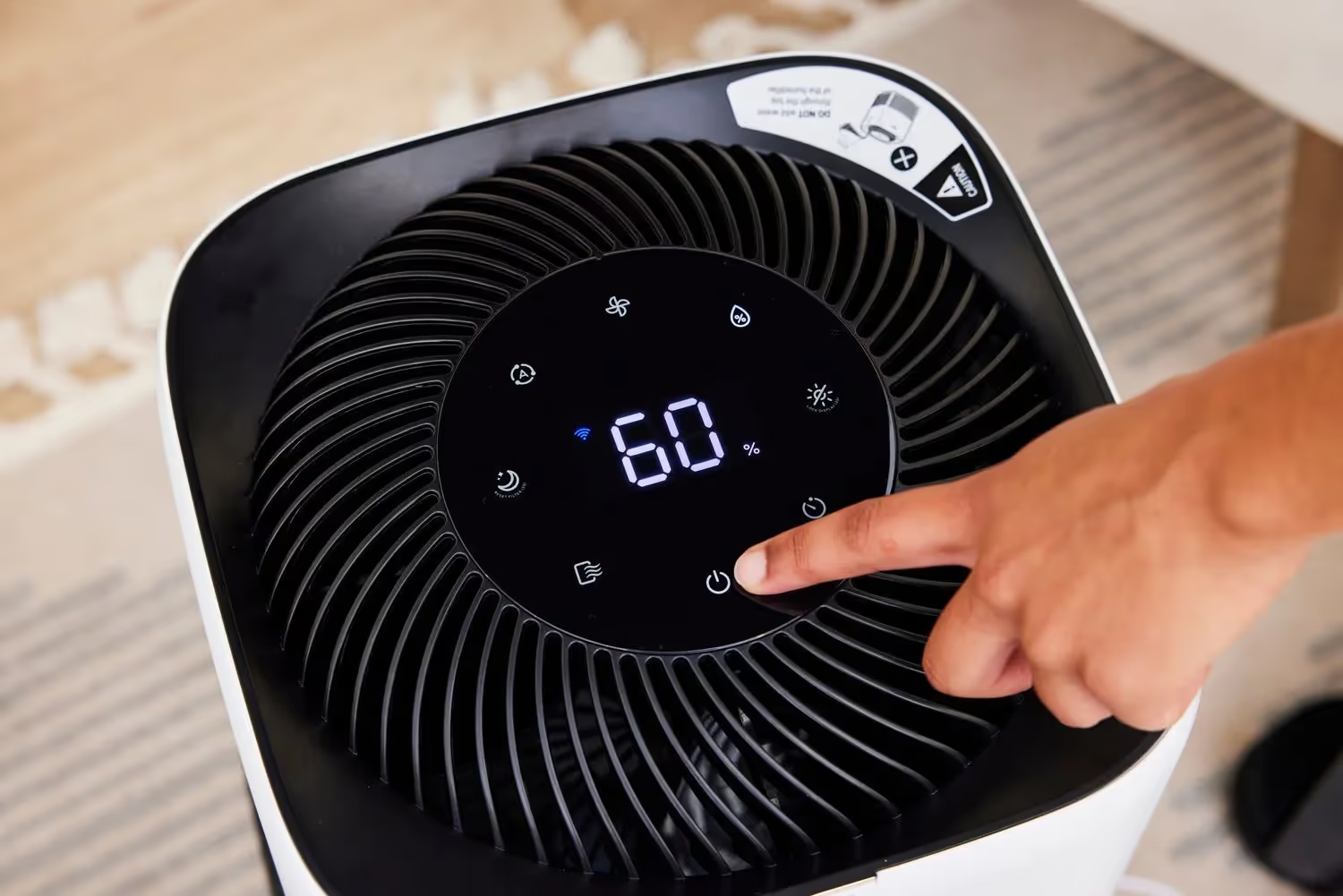
The installation or replacement of a whole-home evaporative humidifier is a precise process that integrates plumbing, electrical, and HVAC airflow dynamics. This is not a standalone appliance; it becomes a permanent part of your central heating system. The process is designed to be efficient and minimally invasive, ensuring your system is up and running quickly.
- First, the technician determines the optimal location for the unit. For bypass units, this usually involves connecting the supply and return plenums. For fan-powered units, the placement is typically on the supply duct. This step involves measuring the pressure differential to ensure that air will flow correctly through the humidifier core.
- Next, a template is applied to the ductwork, and the sheet metal is cut to accommodate the housing of the humidifier. This requires specialized tools to ensure the structural integrity of the duct is maintained and that the seal is airtight to prevent pressure loss in the HVAC system.
- Following the mounting of the unit, the plumbing connections are established. A water line is tapped, typically from a nearby hot or cold water pipe. Manufacturers often recommend hot water for evaporative units to increase the evaporation rate, though cold water is standard for many installations. A saddle valve or a dedicated plumbing tee is installed to feed the solenoid.
- Then, the drainage system is routed. Evaporative humidifiers are "flow-through" systems, meaning they flush water over the pad to prevent stagnation. A drain line must be run to a floor drain, condensate pump, or utility sink, ensuring a proper slope to prevent backflow.
- After the plumbing is secure, the electrical wiring is connected. This involves installing a humidistat—either a manual wall-mount version or integrating the controls into a smart thermostat. A current sensing relay or sail switch may be installed to detect airflow, ensuring the water only flows when the furnace fan is blowing.
- Finally, the system is tested. The technician cycles the furnace, adjusts the humidistat to call for humidity, and verifies that water flows, drains, and evaporates as intended without leaks.
When Replacement Beats Repair
Deciding between repairing an aging humidifier or replacing it with a new evaporative unit often comes down to the condition of the core components and the age of the equipment. While evaporative humidifiers are generally durable, they operate in a wet environment, making them susceptible to corrosion, mineral buildup, and plastic degradation over time.
- Consider replacement if the unit is over 10 to 12 years old. Plastic housings can become brittle from constant exposure to heat and moisture cycles, leading to hairline cracks that cause water leaks. If the housing is compromised, no amount of repair can guarantee a watertight seal.
- Evaluate the cost of parts versus a new unit. If the solenoid valve, humidistat, and feed tube all need replacing simultaneously, the cost of parts and labor may approach the price of a brand-new installation. Modern units are also more water-efficient and easier to maintain.
- Look for severe mineral scaling. If the scale buildup has hardened on the distribution tray, drain spud, and damper assembly to the point where they cannot be cleaned without breaking, replacement is the more viable option. This is common in areas with hard water where maintenance has been neglected for several seasons.
- Assess the availability of parts. Older models may have discontinued parts, making repairs difficult or impossible. Upgrading to a current model ensures that replacement pads and components will be readily available for years to come.
- Analyze the comfort levels in the home. If the current unit is undersized or simply cannot keep up with the dryness of the home despite running constantly, replacing it with a higher-capacity fan-powered or larger bypass unit will provide a tangible improvement in indoor air quality.
Managing Humidity in the Kentucky Climate
The climate in Plum Springs and the surrounding region presents a unique challenge for homeowners. We experience a distinct seasonality that swings from humid, muggy summers to cold, dry winters. While dehumidification is the priority in July, the heating season brings a rapid drop in dew points. When your furnace heats this cold, dry air, the relative humidity inside your home can drop to desert-like levels, often below 20% if left uncontrolled.
Local water quality also plays a significant role in the performance of evaporative humidifiers. The mineral content in the local water supply means that calcium and lime deposits accumulate quickly on the evaporator pad. These minerals turn the soft, absorbent paper mesh into a rock-hard block that water cannot permeate. For residents in this area, this often dictates that maintenance schedules must be strictly adhered to, sometimes requiring pad changes twice a heating season rather than just once.
Permitting and code compliance are also factors when dealing with systems that involve water lines and electrical connections. Professional installation ensures that the water tap method meets local plumbing codes and that the electrical integration follows safety standards. Improper installation of the drain line is a common code violation that can lead to water damage or sewer gas issues if not trapped correctly. Carter Heating and Cooling ensures that every aspect of the service, from the water feed to the drainage slope, aligns with regional requirements and best practices for the local climate.
The Mechanics of Whole-Home Hydration
Understanding the different types of evaporative humidifiers helps in making informed service decisions. The two primary styles found in residential applications are Bypass and Fan-Powered units.
Bypass Humidifiers
These utilize the pressure difference between the supply (hot) and return (cold) air ducts. A bypass duct connects the two plenums, forcing air through the humidifier and over the water panel. These are energy-efficient as they use the furnace blower to move air. However, they require space for the additional ductwork and are best suited for homes with easy access to both the supply and return trunks.
Fan-Powered Humidifiers
These units have their own internal fan to push air through the water panel. They are typically mounted on the supply plenum and do not require a bypass duct. This makes them ideal for tight utility closets or installations where the return duct is inaccessible. Because they generate their own airflow, they can often produce more humidity per day than a bypass unit, making them suitable for larger homes or homes with looser envelopes that lose moisture more rapidly.
Both systems rely on a "flow-through" design. This means a small trickle of water constantly flows down the panel to wash away minerals before they can harden. While this uses more water than older drum-style humidifiers (which utilized a reservoir of standing water), it is significantly more sanitary. Standing water breeds bacteria and mold, which are then blown into the home. Flow-through designs eliminate this risk, provided the drain line is kept clear.
Troubleshooting Before Calling for Service
Before scheduling a professional technician, there are several checks a homeowner can perform to determine the nature of the issue. These steps can sometimes resolve simple operation errors or provide the technician with valuable information.
- Check the damper position. Bypass humidifiers have a damper that must be opened in the winter and closed in the summer. If the damper is closed, air cannot pass through the water panel, and no humidification will occur.
- Verify the humidistat setting. Ensure the humidistat is set to a call for humidity, typically around 35% to 45%. If it is set too low, the unit will not engage. Conversely, if it is set too high, you may notice condensation on windows.
- Inspect the water panel. If the panel looks encrusted with white or grey scale, it needs to be replaced. A clogged panel restricts airflow and reduces the system's ability to put moisture into the air.
- Listen for the "click." Turn the humidistat all the way up while the furnace is running. You should hear a distinct click from the solenoid valve, followed by the sound of water flowing. If you hear the click but see no water, the valve screen may be clogged or the water supply is turned off.
- Check the water supply valve. Ensure the saddle valve or supply line valve is in the open position. Sometimes these are inadvertently closed during summer maintenance or other plumbing work.
Long-Term Benefits of Proper Humidification
Maintaining a properly functioning evaporative humidifier offers benefits that extend beyond simple comfort. The structural integrity of your home is influenced by humidity. Hardwood floors, cabinets, and crown molding contain moisture; when the air becomes excessively dry, this moisture is drawn out, causing wood to shrink, crack, and separate. Consistent humidity levels preserve these investments.
Furthermore, proper humidity makes the air feel warmer. Dry air causes moisture to evaporate from your skin rapidly, creating a cooling effect. By maintaining humidity levels between 35% and 50%, you can often lower your thermostat by a few degrees without sacrificing comfort, leading to energy savings over the course of the winter.
Health benefits are also a major driver for service. Dry air dries out the mucous membranes in the nose and throat, which are the body's first line of defense against viruses and bacteria. Keeping these membranes moist helps the body filter out airborne pathogens. Additionally, static electricity, which can damage sensitive electronics, is virtually eliminated when humidity is controlled.
Expert Solutions for Your Home Comfort
Choosing the right partner for your humidifier needs ensures that your system operates safely and effectively. We prioritize factory-authorized parts and adhere to strict installation protocols to prevent water damage and maximize efficiency. Whether you need a seasonal pad replacement, a solenoid repair, or a complete system upgrade, our team provides the technical expertise required to solve your dry air problems.
We understand the local water conditions and heating requirements, allowing us to recommend the exact maintenance schedule your system requires. Don't let dry air compromise your health or your home's interior.
Call Us Now!
Take control of your indoor environment today. Contact us now to schedule your evaporative humidifier service or installation.

Great Service at a Fair Price
Veterans Discount


Senior Discount

Law Enforcement

Fire fighters/ems

Hear From Your Neighbors!
Hear from your neighbors to see how our commitment to dependable service and lasting comfort has made a difference in their homes.