
How can we help today?
Choose an option to see quick actions and get help faster.Heating Maintenance in Plum Springs, KY
Heating Maintenance in Plum Springs, KY
Heating Maintenance in Plum Springs, KY
Is Your Furnace Failing to Keep Up With the Winter Chill?
Winter temperatures in Kentucky can drop rapidly, leaving your home uncomfortable and potentially unsafe if your heating system fails to perform. When your heater struggles to maintain a consistent temperature or makes unusual noises, you need immediate professional attention to restore warmth and peace of mind. Contact us today to schedule your comprehensive heating maintenance or ask about our flexible financing options.
Homeowners in Plum Springs rely on efficient heating systems to navigate the cold months, but neglecting routine care often leads to unexpected breakdowns and inflated energy bills. Our approach focuses on identifying minor issues before they escalate into major repairs. We provide thorough inspections and tune-ups designed to bring your equipment back to factory specifications.
- Same-day service availability ensures you are never left waiting in a freezing home.
- Certified technicians optimize your system to maximize energy efficiency and extend equipment longevity.
- Preventative maintenance protocols reduce the risk of sudden, mid-winter breakdowns.
- Licensed and certified—your satisfaction is guaranteed with every service call.
The Importance of Comprehensive Heating System Tune-Ups
Your heating system is a complex machine involving electrical connections, gas lines, moving parts, and combustion processes. Over time, these components wear down, gather dust, and drift out of calibration. A professional maintenance visit is not merely a visual check; it is a rigorous optimization process. In Plum Springs, where winter weather can fluctuate between mild days and freezing nights, your system must be prepared to handle varying loads without faltering.
When a technician arrives at your property, the goal is to ensure safety, efficiency, and reliability. This involves a deep clean of critical components and a stress test of the system’s capabilities. Ignoring these requirements often results in the heat exchanger cracking, the blower motor burning out, or the pilot light failing repeatedly. By addressing wear and tear proactively, you ensure that the heat generated is distributed evenly throughout your home, eliminating cold spots and drafts.
Furthermore, manufacturer warranties often require proof of professional maintenance. If a major component fails and there is no record of annual service, you may be liable for the full cost of the replacement part. Carter Heating and Cooling ensures all documentation is in order, protecting your investment and keeping your warranty valid.
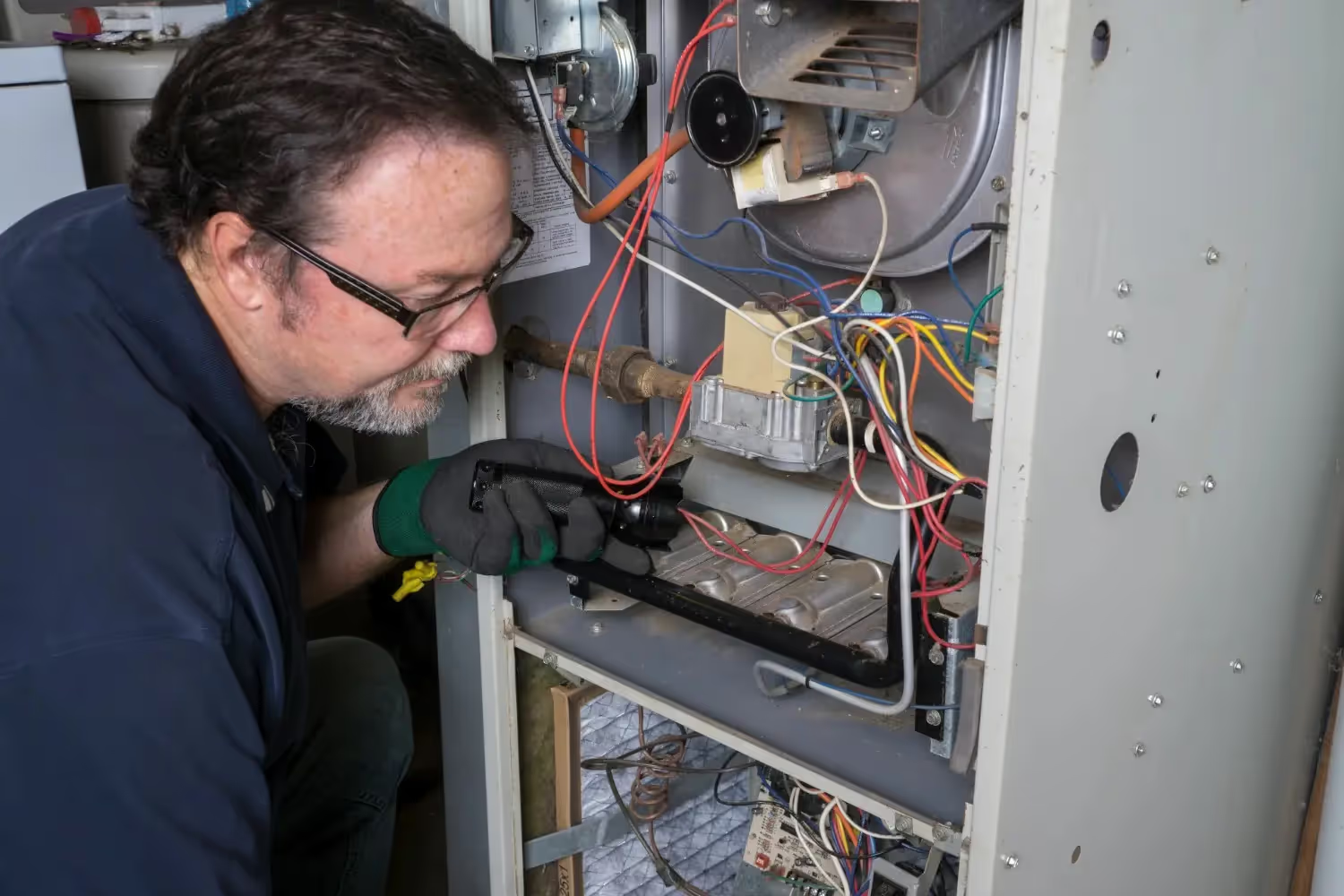
What Is Included in a Professional Heating Maintenance Visit
A comprehensive tune-up covers every aspect of your heating unit, whether it is a gas furnace, electric furnace, or heat pump. The objective is to reset the system to its peak performance levels.
Safety and Combustion Analysis
- Inspect the heat exchanger for cracks or corrosion to prevent carbon monoxide leaks.
- Test the ignition system for safe and reliable firing.
- Check the burner assembly for proper flame characteristics and clean if necessary.
- Verify the functionality of safety controls, including limit switches and thermocouples.
- Test for gas leaks in furnace piping and connection points.
Airflow and Blower Motor Optimization
- Check the blower motor amperage and voltage for proper operation.
- Lubricate all moving parts to reduce friction and prevent overheating.
- Inspect the blower belt for wear, tension, and alignment.
- Evaluate the air filter condition and replace standard filters if needed.
- Measure airflow across the system to ensure adequate heat distribution.
Electrical and Thermostat Calibration
- Tighten all electrical connections to prevent shorts and fire hazards.
- Measure the voltage and current on motors to ensure they are within design specifications.
- Calibrate the thermostat to ensure it reads the indoor temperature accurately.
- Inspect the condensate drain (for high-efficiency units and heat pumps) to prevent water damage.
The Maintenance Process: Step-by-Step Restoration
Understanding the workflow of a maintenance visit helps homeowners know what to expect. The process is systematic, ensuring no component is overlooked.
First, the technician conducts a preliminary assessment. This involves operating the system to listen for unusual sounds, checking the thermostat response, and measuring the temperature rise—the difference between the air entering the return vent and the heated air exiting the supply vents. This baseline data indicates how well the system is currently performing.
Next, the power is disconnected to allow for safe internal inspection. The cabinet is opened, and the interior is cleaned to remove dust and debris that can insulate components and cause overheating. For gas furnaces, the burners are brushed and vacuumed. For heat pumps, the outdoor coils are cleaned to ensure proper heat transfer.
Then, mechanical and electrical checks are performed. Capacitors are tested to ensure they can start the motors reliably. Bearings are lubricated, and belts are adjusted. This phase focuses on reducing the mechanical stress on the system, which directly correlates to energy consumption. A system that runs smoothly uses less electricity or gas.
Finally, the system is restarted and monitored. The technician checks the manifold gas pressure to ensure the furnace is burning fuel at the correct rate. If the pressure is too high, it wastes fuel and stresses the heat exchanger; if too low, it causes condensation issues. After all adjustments are made, a final report is generated detailing the condition of the unit and any recommended repairs.
Signs Your Heating System Requires Immediate Attention
While annual maintenance is standard, certain symptoms indicate that your system is deteriorating and requires intervention sooner rather than later. Ignoring these signs in a climate like Plum Springs can lead to a total loss of heat during a freeze.
- Rising Energy Costs: If your utility bills increase significantly without a change in usage or weather, the system has lost efficiency.
- Short Cycling: The heater turns on and off frequently without reaching the set temperature, indicating overheating or a thermostat issue.
- Yellow Pilot Light: A blue flame indicates complete combustion. A yellow flame suggests incomplete combustion and the potential production of carbon monoxide.
- Unusual Noises: Banging, squealing, or rattling sounds often point to loose or broken mechanical parts.
- Poor Air Quality: An increase in dust or dry air in the home can result from dirty burners or cracked heat exchangers.
Repair vs. Replacement: Making the Right Financial Decision
Homeowners often face the dilemma of whether to repair an aging unit or invest in a new system. This decision relies on several factors, including the age of the unit, the cost of repairs, and long-term energy savings.
When to Repair
- The system is under 10 years old and generally reliable.
- The repair cost is less than 50% of the value of the equipment.
- The unit is still under a manufacturer’s warranty covering parts.
- The breakdown is due to a minor component like a capacitor, igniter, or belt.
When to Replace
- The furnace or heat pump is over 15 years old. Systems of this age are significantly less efficient than modern models.
- The cost of the repair approaches 50% of the cost of a new unit.
- The system requires frequent repairs, indicating that multiple components are reaching the end of their lifespan.
- The heat exchanger is cracked. This is a severe safety hazard that necessitates immediate replacement of the heat exchanger or the entire furnace.
- Your home has humidity problems or excessive dust, which newer systems can manage better through variable-speed technology.
Local Considerations: Climate and Codes in the Region
Operating a heating system in Plum Springs requires adherence to specific regional codes and an understanding of the local climate. The humidity levels in Kentucky can affect how heat pumps operate, specifically regarding the defrost cycle. A system that is not properly maintained may freeze over during a cold snap, engaging the emergency heat strips excessively and driving up electric bills.
Permitting and Licensing
Technicians operating in this area must adhere to regulations set by the Kentucky Department of Housing, Buildings and Construction. This includes holding valid HVAC licensing to handle refrigerants and gas lines. Unauthorized work not only poses safety risks but can also complicate the sale of a home if unpermitted modifications are discovered during inspection.
Utility Infrastructure and Efficiency
Local utility providers may offer rebates or incentives for upgrading to high-efficiency systems or performing regular maintenance that reduces grid load. Ensuring your system meets the specific efficiency ratings (AFUE for furnaces, HSPF for heat pumps) recommended for this climate zone is essential for keeping operational costs manageable. Additionally, older homes in the area may have outdated ductwork or insulation that compromises the performance of even a brand-new heater. A maintenance visit often includes a visual inspection of accessible ductwork to identify leaks that are siphoning heat into the attic or crawlspace.
Why Professional Certification Matters
The HVAC industry is heavily regulated for a reason. Handling natural gas, high-voltage electricity, and combustion byproducts requires specialized training. A certified technician understands the thermodynamics of heating and the specific code requirements for venting and clearances.
Hiring a professional ensures that:
- Gas pressure is set to the exact manufacturer specifications.
- Venting systems are checked for blockages (like bird nests or debris) that could force exhaust gases back into the home.
- Electrical connections are torqued to preventing arcing.
- Refrigerant levels in heat pumps are balanced to the ounce.
Carter Heating and Cooling employs technicians who undergo rigorous training to stay updated on modern HVAC technology. From smart thermostats to variable-speed blowers, modern heating requires more than a wrench; it requires diagnostic expertise.
Securing Your Comfort for the Season
The reliability of your heating system is directly tied to the quality of care it receives. A well-maintained furnace or heat pump operates quietly, maintains steady temperatures, and keeps energy costs predictable. Waiting for a breakdown to occur usually results in higher costs and the inconvenience of emergency repairs during the busiest time of the year.
By prioritizing seasonal maintenance, you protect the mechanical integrity of your system and the safety of your home. Whether you are dealing with an aging gas furnace or a modern heat pump, professional attention ensures it is ready to handle the demands of winter.
Do not wait until the first freeze to check your heating system. Secure your appointment today to ensure a warm, safe, and efficient home all winter long.

Great Service at a Fair Price
Veterans Discount


Senior Discount

Law Enforcement

Fire fighters/ems

Hear From Your Neighbors!
Hear from your neighbors to see how our commitment to dependable service and lasting comfort has made a difference in their homes.