
How can we help today?
Choose an option to see quick actions and get help faster.Furnace Inspection in Plum Springs, KY
Furnace Inspection in Plum Springs, KY
Furnace Inspection in Plum Springs, KY
Is Your Furnace Ready for the Cold Season?
Noticing your furnace struggling to keep up as the temperature drops? You're not alone—many homeowners face furnace challenges as the cold months approach, but ignoring minor irregularities now can lead to a complete system breakdown during the first freeze of the year. Contact us today to schedule a comprehensive inspection or call to discuss available financing options for necessary repairs.
Residents in Plum Springs, KY know that while winters here can be mild, the cold snaps are unpredictable and demand a reliable heating system. Carter Heating and Cooling ensures your equipment is operating safely and efficiently before you rely on it daily.
- Get your furnace inspected by certified experts today.
- Ensure optimal performance and lower your energy bills.
- Receive a detailed inspection report with actionable insights.
Backed by a full warranty and all necessary local permits for peace of mind.
What Is Included in a Professional Furnace Tune-Up
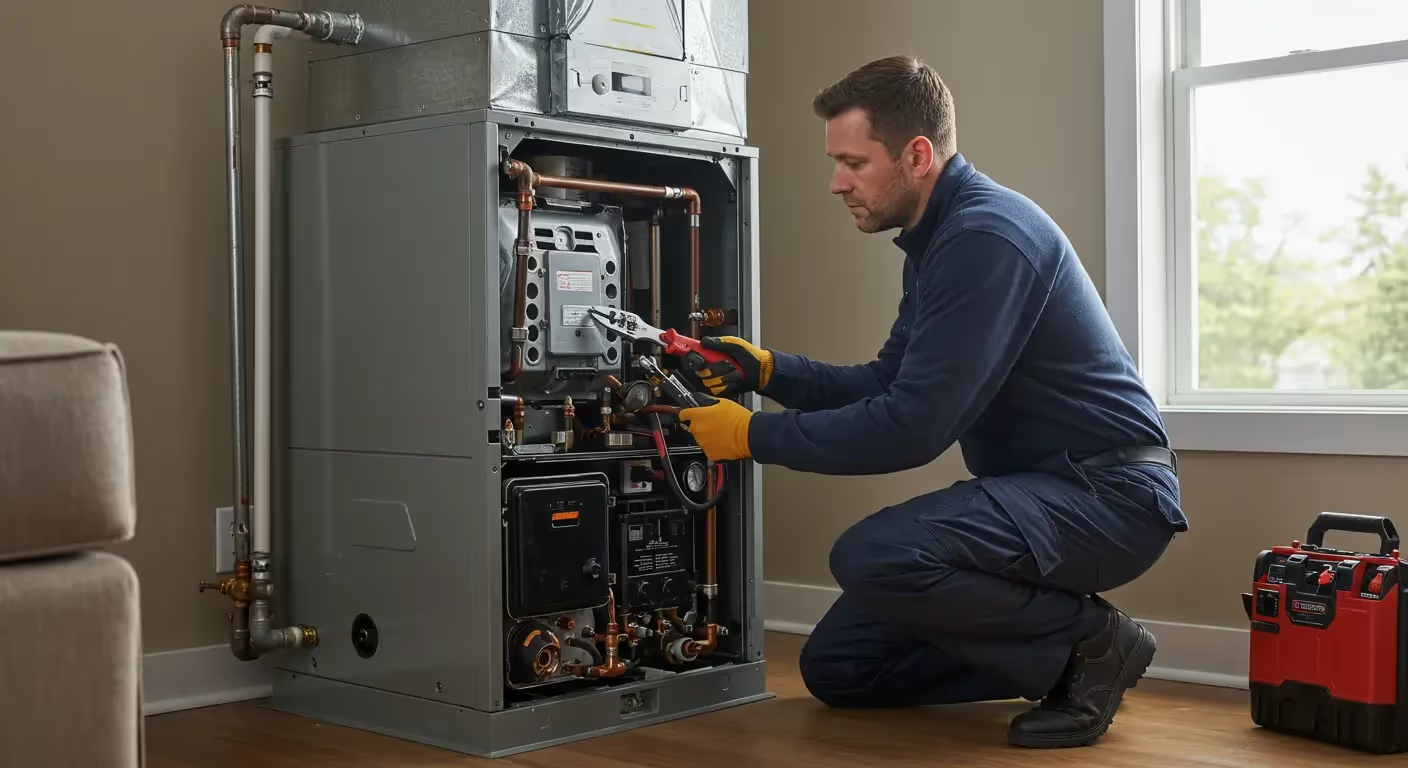
A furnace inspection is not merely a quick visual check; it is a rigorous diagnostic process designed to uncover latent issues that threaten the safety and efficiency of your home. The goal is to return the system to factory specifications. When a technician arrives at your property, they evaluate the entire heating envelope, focusing on the mechanical, electrical, and combustion systems.
Combustion and Safety Analysis
The most critical aspect of any gas or propane furnace inspection is safety. The combustion process produces heat, but it also produces byproducts like carbon monoxide.
- Heat Exchanger Analysis: The heat exchanger is inspected for cracks, corrosion, or separation. Even a hairline crack can allow exhaust gases to mix with the breathing air in your home.
- Flame Sensor Testing: Technicians clean and test the flame sensor to ensure it correctly detects ignition. A dirty sensor is a common cause of furnaces that cycle on and off repeatedly.
- Burner Assembly Cleaning: The burners are removed and cleaned to ensure proper gas flow and ignition. Misaligned or dirty burners can cause "flame rollout," where fire escapes the combustion chamber, creating a fire hazard.
- Carbon Monoxide Testing: Using calibrated analyzers, the technician measures CO levels around the unit and in the ductwork to ensure zero leakage.
Electrical Component Evaluation
Modern furnaces rely heavily on electronic controls. A failure here often mimics a mechanical failure.
- Thermostat Calibration: The thermostat is tested to ensure it reads temperature accurately and communicates effectively with the furnace control board.
- Blower Motor Amp Draw: The electrical current (amperage) drawn by the blower motor is measured. High amp draw indicates the motor is working too hard, often due to friction or failing bearings, which precedes motor burnout.
- Safety Switch Verification: Limit switches, rollout switches, and pressure switches are tested to confirm they will shut the unit down immediately if unsafe operating conditions occur.
- Wiring Tightening: Loose electrical connections create resistance and heat, which can melt wire insulation and cause component failure. All connections are inspected and tightened.
Airflow and Ductwork Assessment
Heat cannot be distributed effectively if the air cannot move. Restricted airflow overheats the heat exchanger and drives up utility costs.
- Static Pressure Measurement: Technicians measure the external static pressure to determine if the ductwork is undersized or if there are blockages restricting flow.
- Filter Inspection: The condition of the air filter is checked. If the filter is clogged, it is replaced or cleaned, as this is the primary cause of system overheating.
- Ductwork Integrity: Accessible ductwork is inspected for leaks, disconnected joints, or crushed sections that lead to energy loss in unconditioned spaces like attics or crawlspaces.
The Inspection Process: Step-by-Step
Understanding the workflow of a service visit helps homeowners prepare and ensures transparency. This is a technical service appointment focused on data and performance metrics.
- Initial Operation Check: The technician begins by turning the system on to observe its startup sequence. They listen for unusual noises like banging, screeching, or rattling, and look for delayed ignition.
- System Deactivation and Disassembly: Power to the unit is cut to safely remove panels. This provides access to the blower compartment, burners, and control board.
- Cleaning and Lubrication: Moving parts, specifically non-sealed motor bearings, are lubricated to reduce friction. The blower wheel is cleaned of dust and debris, as even a small layer of dust can significantly reduce air movement.
- Testing and Measurement: This is where the diagnostic tools are utilized. Multimeters measure voltage and resistance; manometers measure gas pressure; and combustion analyzers measure exhaust composition.
- Reassembly and Final Test: Once all components are serviced, the unit is reassembled. The system is run through a full heating cycle to verify that all readings are stable and the temperature rise (the difference between air entering and leaving the furnace) is within manufacturer limits.
- Reporting: You receive a detailed report outlining what was checked, the current condition of the parts, and prioritized recommendations for any needed repairs.
Deciding Between Repair and Replacement
During an inspection, issues may be discovered that require more than a simple tune-up. Homeowners must then decide whether to invest in repairs or consider a system replacement. This decision relies on specific mathematical and practical criteria.
The Age and Efficiency Factor
Furnaces typically have a lifespan of 15 to 20 years. If your unit is approaching the 15-year mark, major repairs are often not cost-effective.
- Efficiency degradation: An older furnace that was 80% efficient when new may now be operating at 60-70% efficiency due to wear and tear. Replacing it with a modern 96% AFUE (Annual Fuel Utilization Efficiency) unit can drastically reduce monthly bills.
- Part availability: As units age, sourcing specific parts becomes difficult and expensive. If a proprietary control board or blower motor is obsolete, replacement becomes the only viable option.
The Cost-to-Value Ratio
Industry professionals often use the "$5,000 Rule." Multiply the age of the equipment by the estimated cost of the repair. If the total exceeds $5,000, replacement is generally the smarter financial move.
- Frequency of breakdowns: If you have required repairs in two consecutive years, the system is likely entering a cascade of failures. Fixing one part often puts stress on the next weakest link, leading to another bill shortly after.
- Safety Violations: If a heat exchanger is cracked, the unit must be shut down immediately (red-tagged) for safety. In this scenario, replacement is almost always recommended over replacing just the heat exchanger, as the cost of labor and the part approaches the cost of a new unit.
Performance Consistency
Carter Heating and Cooling technicians assess comfort levels. If the furnace runs constantly but the house remains cold, or if there are significant temperature variances between rooms, the system may be undersized or failing to produce adequate heat. In these cases, repair will not solve the underlying capacity issue.
Regional Considerations for HVAC Systems
Operating a heating system in Plum Springs and the surrounding areas presents specific challenges due to the local climate and infrastructure. The Midwest climate requires systems that can handle distinct weather patterns.
Managing Humidity and Condensation
While winters are the primary focus for heating, the transition seasons in this region involve high humidity.
- Corrosion Risks: High humidity during the spring and summer can cause rust to form on the heat exchanger and burners while the furnace sits idle. This corrosion is a primary focal point during fall inspections.
- Condensate Drains: For high-efficiency condensing furnaces, the condensate drain lines must be clear. In our region, algae or mold growth can block these lines during the off-season, causing water damage or system shut-offs when the heat is turned on.
Temperature Fluctuations
The region often experiences "false springs" followed by sudden freezes.
- Thermal Shock: Rapid changes in outdoor temperature force the furnace to work harder to maintain indoor stability. The expansion and contraction of metal components during these cycles stress the heat exchanger. Regular inspection ensures the metal has not fatigued or cracked under this stress.
Permits and Utility Requirements
Local codes dictate specific requirements for venting and gas piping.
- Venting Standards: If a furnace needs repair or replacement, technicians ensure the flue pipe meets current safety codes to prevent back-drafting of exhaust gases.
- Gas Pressure: Local utility gas pressure can fluctuate. Technicians adjust the furnace’s gas valve to match the local supply pressure, ensuring the unit doesn't over-fire (overheat) or under-fire (waste fuel).
Why Professional Diagnostics Are Necessary
Attempting to inspect a furnace without professional training and tools is dangerous and ineffective. Homeowners can change a filter, but they cannot measure the subtle electrical and chemical signals that predict a failure. — visit our FAQs for common questions.
Advanced Diagnostic Tools
Professionals utilize tools that are inaccessible to the average homeowner.
- Manometers: Precise measurement of gas manifold pressure is required to ensure the fuel-air mixture is correct. Incorrect pressure wastes fuel and damages the heat exchanger.
- Combustion Analyzers: These digital tools analyze the flue gas for oxygen, carbon dioxide, and carbon monoxide ratios. This data provides a "blood test" for the furnace, revealing internal issues that visual inspection cannot see.
- Infrared Cameras: Thermal imaging can detect hot spots in the electrical panel or heat loss in the ductwork that the naked eye misses.
Identifying "Invisible" Failures
Many furnace failures happen silently. A capacitor (which helps start the motor) can be on the verge of failure while looking perfectly normal. A technician can measure its capacitance; if it falls outside the rated range, it is replaced preemptively, saving you from a midnight breakdown. Similarly, a limit switch may be "sticking," causing the furnace to run hotter than it should, shortening its life. These are issues only a trained eye with the right instrumentation can catch.
Warranty Preservation
Most manufacturer warranties require proof of annual maintenance by a licensed professional. Skipping professional inspections can void the warranty on the parts. If a major component like a compressor or heat exchanger fails, the manufacturer may deny the claim if maintenance records cannot be produced. Professional service ensures your coverage remains intact.
Ensuring Reliable Heat All Winter
The reliability of your heating system is not something to leave to chance. A furnace is a complex machine involving combustible gases, high-voltage electricity, and moving parts. Regular, professional attention is the only way to ensure it operates safely and efficiently when the temperatures in Plum Springs drop.
An inspection today prevents an emergency call tomorrow. It identifies small components that are drifting out of spec before they cause a total system shutdown. It ensures your family is safe from carbon monoxide and fire hazards. It optimizes the system to run on the least amount of energy possible, keeping utility costs manageable.
Carter Heating and Cooling is ready to assist you in securing your home’s comfort for the season. Do not wait for the first snow to discover your system is compromised.
Contact us immediately to schedule your comprehensive furnace inspection.

Great Service at a Fair Price
Veterans Discount


Senior Discount

Law Enforcement

Fire fighters/ems

Hear From Your Neighbors!
Hear from your neighbors to see how our commitment to dependable service and lasting comfort has made a difference in their homes.