
How can we help today?
Choose an option to see quick actions and get help faster.Heating Tune-Up in Plum Springs, KY
Heating Tune-Up in Plum Springs, KY
Heating Tune-Up in Plum Springs, KY
Beat the Cold: Why Regular Heating Tune-Ups Are Essential
Feeling the chill more intensely this year? Your heating system may be crying out for a needed tune-up. Let us bring the warmth back efficiently and promptly; contact us today to schedule your inspection. Ignoring minor irregularities in your furnace or heat pump often leads to significant efficiency losses just when the weather in Plum Springs, KY turns cold.
Reliable heating is not just about comfort; it is about safety and financial prudence. A system that struggles to maintain temperature draws more power, stressing internal components and driving up utility costs. Our comprehensive maintenance approach targets the root causes of inefficiency before they evolve into system failures.
- Ensure optimal efficiency and warmth throughout winter.
- Extend the lifespan of your heating equipment.
- Prevent costly breakdowns and unexpected repairs.
All services are backed by a solid warranty with easy financing options available.
Comprehensive Inspection and Calibration Scope
A professional heating tune-up goes far beyond a simple filter change. It involves a rigorous analysis of the mechanical, electrical, and safety systems within your unit. Homeowners often ask what is actually included in a service visit. The goal is to return the system to factory specifications, ensuring that every cycle produces the maximum amount of heat for the least amount of energy.
The core of the service focuses on the combustion process for gas furnaces and the refrigerant cycle for heat pumps. If the fuel-to-air mixture is incorrect, your system burns fuel wastefully. If the refrigerant levels are off, the heat transfer process is compromised.
Specific tasks performed during a maintenance visit include:
- Thermostat Calibration: Technicians verify that the temperature reading on your wall matches the actual temperature in the room. Miscalibration leads to "short cycling," where the system turns on and off too frequently, causing excessive wear.
- Electrical Connection Tightening: Vibrations from normal operation loosen electrical wires over time. Loose connections cause voltage imbalances that can burn out motors and ruin control boards.
- Lubrication of Moving Parts: Friction is the enemy of efficiency. Blower motors and induced draft fans require precise lubrication to rotate freely. Without this, the motor works harder, overheats, and eventually seizes.
- Heat Exchanger Inspection: This is a critical safety check. The heat exchanger separates combustion gases from the breathing air. Technicians look for microscopic cracks or corrosion that could allow carbon monoxide to leak into the living space.
- Burner Cleaning: Soot and sediment build-up on burners restrict gas flow. Cleaning these components ensures a clean, blue flame, which indicates efficient combustion. Orange or yellow flames often signal incomplete combustion and carbon monoxide production.
- Condensate Drain Cleaning: High-efficiency furnaces and heat pumps produce condensation. If the drain line clogs with algae or debris, water can back up, triggering safety switches that shut down the system or causing water damage to the home infrastructure.
The Maintenance Process: What to Expect
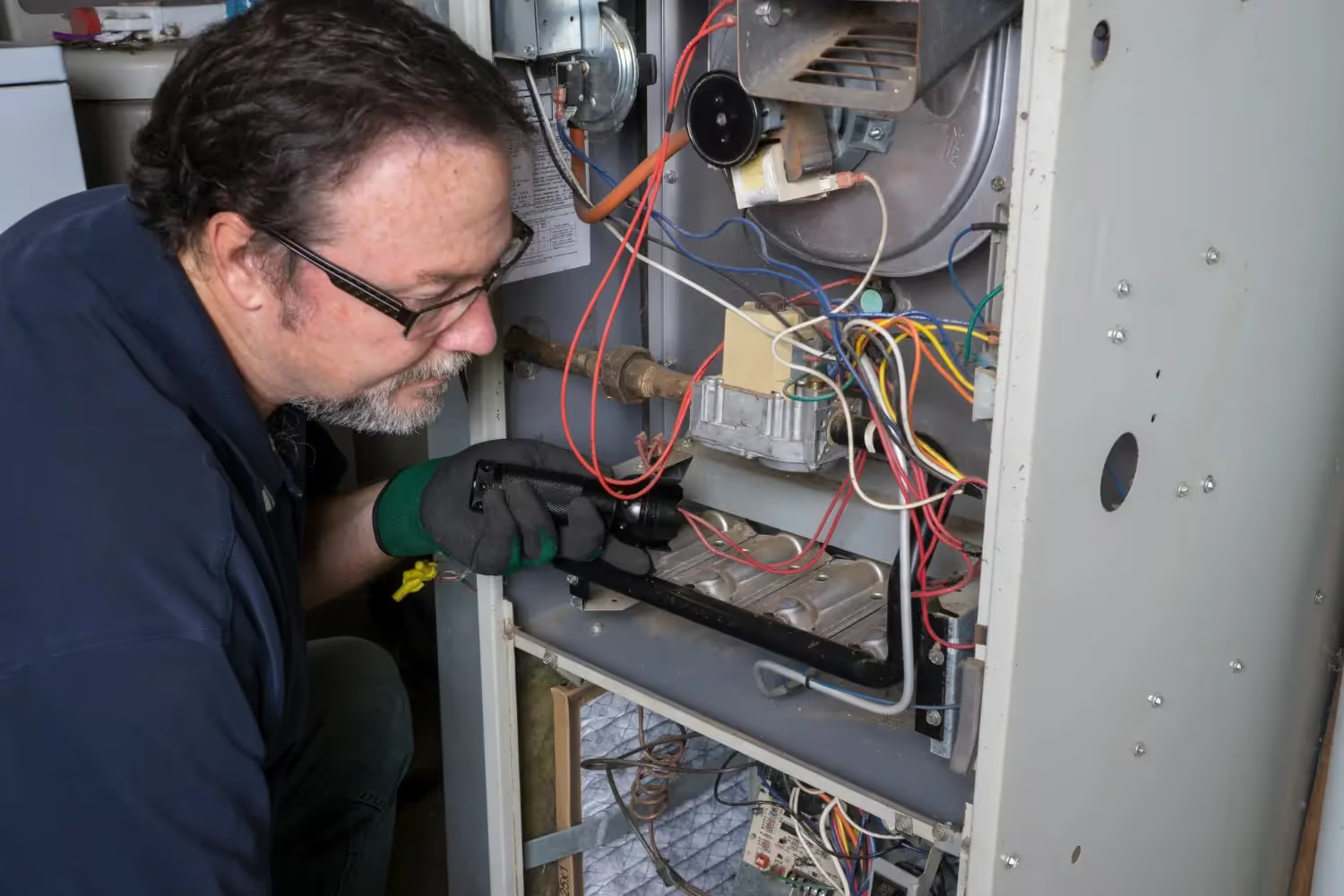
Understanding the workflow of a professional tune-up helps homeowners prepare for the visit and understand the value provided. The process is systematic, ensuring no component is overlooked.
- Initial Assessment and Safety Check: The process begins with a conversation about any specific issues noticed, such as strange noises or cold spots in the house. The technician then performs a visual inspection of the unit’s exterior and the surrounding area to check for clearance issues or obvious signs of deterioration. Safety detectors are often used immediately to ensure there are no active gas leaks or carbon monoxide presence before work begins.
- System Shutdown and Internal Access: Power to the unit is cut to safely access internal components. Panels are removed to expose the blower assembly, burners, and electrical compartments. This stage allows the technician to identify worn belts, frayed wires, or rusted components that are not visible during operation.
- Cleaning and Adjustment: This is the hands-on portion of the service. Technicians use specialized brushes and vacuums to remove dust and debris from the blower wheel and cabinet. Clean components transfer heat more effectively. Carter Heating and Cooling technicians also adjust gas pressure valves and pilot lights to manufacturer specifications during this phase.
- Restart and Performance Testing: Once cleaned and adjusted, the system is powered back on. The technician monitors the startup cycle, checking for smooth ignition and proper flame sensor operation. They measure the "temperature rise"—the difference in air temperature between the supply and return ducts—to confirm the system is generating the correct amount of heat.
- Reporting and Recommendations: The visit concludes with a detailed report. This document outlines exactly what was checked, any readings that were taken, and the overall health of the system. If a part is nearing the end of its life but hasn't failed yet, it will be noted here, allowing the homeowner to plan for future repairs rather than facing an emergency.
Recognizing When Maintenance is Urgent
Waiting for a total breakdown is the most expensive way to manage a heating system. Your equipment usually signals that it is struggling long before it stops working entirely. Recognizing these signs early allows for a tune-up to correct the issue before it requires a major part replacement.
- Audible and Olfactory Indicators: Heating systems should run relatively quietly. Banging, clanking, or squealing noises usually indicate loose parts or belt issues. Similarly, while a slight dust smell is normal when turning the heat on for the first time in autumn, persistent burning smells or the scent of rotten eggs (natural gas) require immediate professional attention.
- Inconsistent Heating: If one room is freezing while another is overheating, the system is failing to distribute air properly. This is often due to ductwork issues or a struggling blower motor that a tune-up can identify.
- Rising Energy Bills: An unexplained spike in heating costs is a clear indicator of efficiency loss. If usage habits haven’t changed but the bill has jumped, the system is running longer cycles to achieve the same result. Maintenance restores efficiency and lowers these monthly costs.
- Short Cycling: If the furnace runs for only a few minutes, shuts off, and then turns back on shortly after, it is short cycling. This puts immense stress on the heat exchanger and starter capacitor. It is frequently caused by airflow restrictions or thermostat issues that are resolved during standard maintenance.
Repair vs. Replace: Making the Financial Decision
During a tune-up, a technician may discover significant issues. At this stage, the homeowner must decide whether to invest in a repair or opt for a full system replacement. This decision involves comparing the immediate cost against long-term value and reliability.
- The 50% Rule: A common industry standard suggests that if the cost of the repair approaches 50% of the value of a new system, replacement is the more improved financial option. Investing heavily in an old unit often leads to "throwing good money after bad," as other parts are likely to fail soon.
- Age of the Equipment: The average lifespan of a well-maintained furnace is 15 to 20 years, while heat pumps typically last 10 to 15 years. If the equipment in your Plum Springs home is nearing or past this age range, a major repair is rarely worth the investment. Newer models offer significantly higher AFUE (Annual Fuel Utilization Efficiency) ratings, which can offset the installation cost through energy savings over time.
- Frequency of Breakdowns: If the system has required multiple repairs in the last two years, it has become unreliable. The cumulative cost of frequent service calls often exceeds the monthly payment of a financed new system.
- Comfort and Air Quality: Older systems often struggle with humidity control and air filtration. If the home feels stuffy, dry, or dusty despite regular filter changes, the technology in the current unit may be obsolete. Modern systems offer variable-speed blowers and advanced filtration that drastically improve indoor air quality.
Navigating Plum Springs Winters Efficiently
The climate in this region presents specific challenges for heating infrastructure. While the area is classified as humid subtropical, winters bring distinct cold spells that test the limits of residential heating systems.
- Humidity Management: Even in winter, humidity levels can fluctuate. A properly tuned system helps manage indoor humidity. If the air is too dry, it feels colder than the thermostat reading, prompting homeowners to turn up the heat unnecessarily. If it is too humid, mold growth becomes a risk. Technicians check the condensate systems and humidifier compatibility during the tune-up to ensure a balanced indoor environment.
- The Impact of Freeze-Thaw Cycles: The region experiences fluctuations where temperatures drop below freezing and then rise again. This cycle causes expansion and contraction in venting pipes and gas lines. Routine maintenance ensures that these shifts haven't compromised the seals or structural integrity of the exhaust system, preventing dangerous leaks.
- Local Utility Considerations: Efficiency standards and utility costs in the area dictate the importance of high-performance equipment. A tune-up ensures that your system draws only the necessary amperage and burns fuel at the rated efficiency. This is particularly important for residents relying on heat pumps, where the auxiliary heat strips (emergency heat) consume significantly more electricity. Maintenance ensures the heat pump handles the load as long as possible before resorting to expensive auxiliary heat.
- Preparation for Peak Season: The best time to service the system is before the first deep freeze. Once the temperature drops significantly, emergency service calls spike, and wait times can increase. Early maintenance ensures the system is ready to handle the heaviest load of the year without interruption.
Why Professional Maintenance Matters
While changing a filter is a task for the homeowner, the complexities of modern HVAC systems require professional certification and specialized tools. Attempting DIY maintenance on gas lines or high-voltage electrical components poses severe safety risks and can void manufacturer warranties.
- Warranty Preservation: Most equipment manufacturers require proof of annual maintenance by a licensed professional to keep the warranty valid. If a major component like a compressor or heat exchanger fails, the manufacturer may deny the claim if there is no record of regular service. Professional documentation provides the necessary proof to protect your asset.
- Safety Assurance: Carbon monoxide is odorless, colorless, and deadly. A cracked heat exchanger or a blocked flue pipe can vent this gas into the home. Professionals use calibrated combustion analyzers to detect even trace amounts of CO leakage that a standard home detector might miss until levels are critical.
- Long-Term System Health: Regular attention keeps the system running cleaner and cooler. Heat is the primary cause of component degradation. By ensuring proper airflow and reducing friction, professional maintenance significantly extends the operational life of the unit, delaying the need for expensive capital expenditure on a replacement.
Ensuring your home remains warm and safe requires proactive care. Don't wait for the first snow to discover your system isn't up to the task. Secure your comfort and efficiency now.
Schedule your heating tune-up today to ensure a warm, worry-free winter.
Tune-Up Services That Restore Proper Heating Function and Control
Get better performance from your unit with a certified heating tune-up in Plum Springs, KY, by Carter Heating and Cooling. Our team calibrates controls, checks gas pressure, cleans internal components, and ensures even heat distribution across your property.
Schedule a Heating Tune-Up and Restore Your System’s Efficiency and Accuracy

Great Service at a Fair Price
Veterans Discount


Senior Discount

Law Enforcement

Fire fighters/ems

Hear From Your Neighbors!
Hear from your neighbors to see how our commitment to dependable service and lasting comfort has made a difference in their homes.