
How can we help today?
Choose an option to see quick actions and get help faster.Heating Repair in Plum Springs, KY
Heating Repair in Plum Springs, KY
Heating Repair in Plum Springs, KY
Restore Warmth to Your Home With Reliable Heating Repair
A failing heating system during a freezing Kentucky winter is more than an inconvenience; it is a safety concern for your family and your home. When temperatures in Plum Springs drop between 20 and 30°F, you need a solution that restores your comfort immediately, not days later. Contact us now to schedule a diagnostic or apply for financing to get your heat running today.
Waiting for a repair often leads to colder indoor temperatures and the risk of frozen pipes. Our team understands the urgency of a cold house. We prioritize rapid response times to ensure your system is diagnosed and repaired correctly on the first visit.
- Immediate service availability for urgent heating failures.
- Professional technicians equipped to fix gas furnaces, heat pumps, and electric systems.
- Transparent, flat-rate pricing provided before any work begins.
All services are backed by a comprehensive warranty for your peace of mind — read our reviews online.
Immediate Solutions for Heating Failures
When your heat goes out, the primary goal is to identify the root cause and implement a fix that lasts. Homeowners often notice warning signs before a total breakdown, such as strange noises, weak airflow, or rapidly rising energy bills. Addressing these issues immediately prevents minor component failures from damaging the entire HVAC unit.
We arrive with fully stocked trucks designed to handle the most common heating malfunctions in a single trip. Our technicians carry a wide inventory of universal parts, including ignitors, flame sensors, control boards, and blower motors. This preparation minimizes downtime and eliminates the need to wait for parts to be shipped.
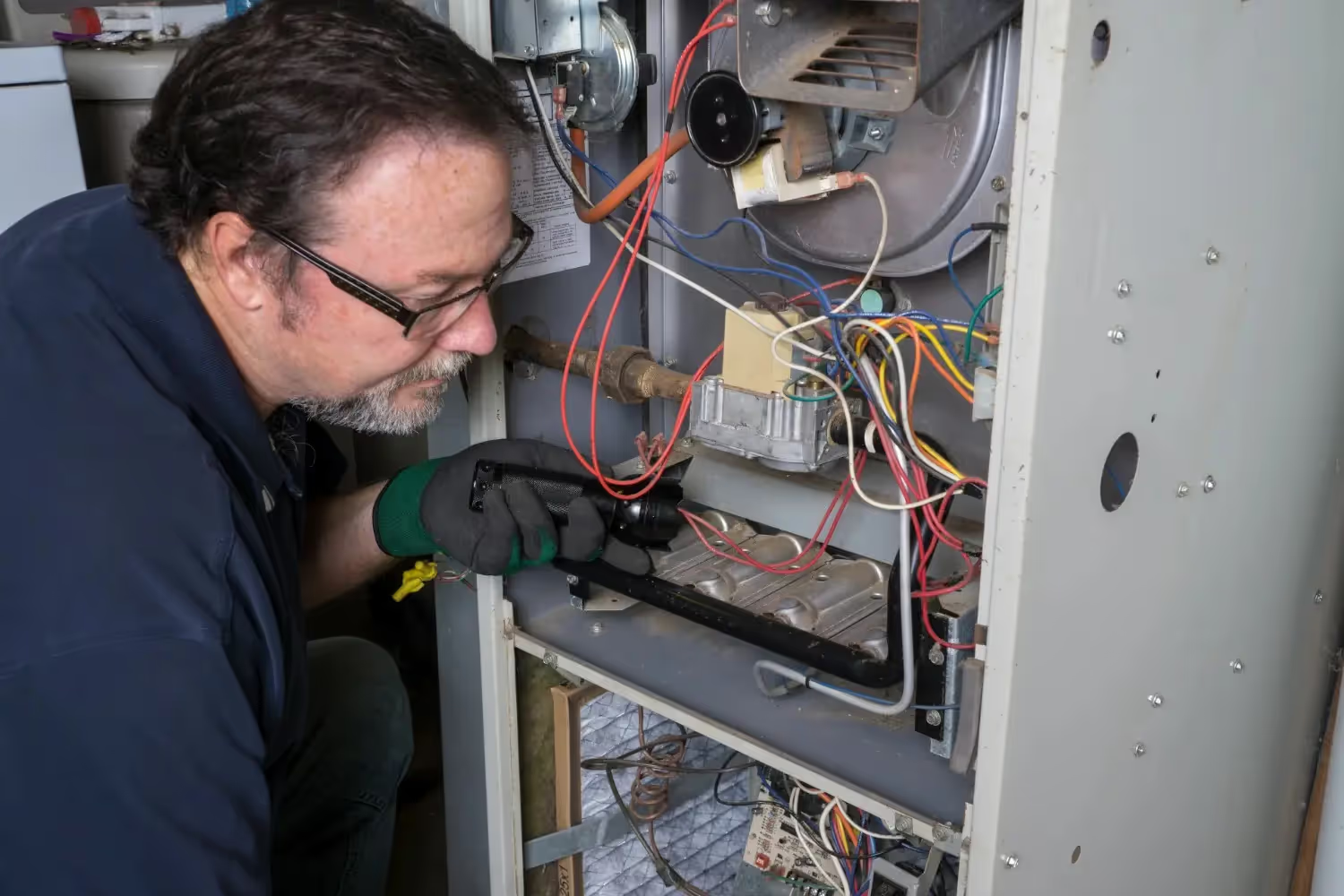
Upon arrival, we conduct a thorough safety check. This includes testing for carbon monoxide leaks, inspecting the heat exchanger for cracks, and verifying that all electrical connections are tight and safe. If the system is safe to operate, we proceed with the mechanical repair. You receive a clear explanation of what is broken, why it failed, and exactly what it costs to fix it. There is no guesswork involved, only data-driven diagnostics and expert solutions.
How Our Heating Repair Process Works
Understanding what happens when you request service helps reduce the stress of a breakdown. We have streamlined our repair protocol to ensure efficiency and respect for your property. The focus is always on restoring heat as quickly as possible while adhering to strict safety standards.
- First, you request service through our direct line or online portal. Our dispatch team prioritizes calls based on urgency and weather conditions, ensuring that homes without heat receive immediate attention.
- Next, a licensed technician arrives at your property in Plum Springs. They will wear shoe covers and use drop cloths to protect your flooring. The technician will ask you specific questions about the symptoms you noticed, such as when the noise started or if the system is short-cycling.
- Then, the diagnostic phase begins. The technician uses advanced multimeters, manometers, and combustion analyzers to test the system’s performance against manufacturer specifications. This isolates the exact component causing the failure.
- After diagnosing the issue, we present a written quote. This price includes all labor and parts required to complete the job. You approve the work before we lift a wrench.
- Once approved, the technician performs the repair. This may involve replacing a faulty capacitor, cleaning a dirty flame sensor, or calibrating the gas valve.
- Finally, we test the system. The heater is cycled through a full run to ensure it ignites, heats, and shuts down properly. We verify that the thermostat is reading accurately and that warm air is reaching every vent in the home.
Deciding Between Repair and System Replacement
One of the most difficult decisions a homeowner faces is knowing when to stop repairing an old unit and when to invest in a new one. While our primary goal is to repair your existing equipment, there are mathematical and safety thresholds where replacement becomes the more financially sound option.
We help you navigate this decision using industry-standard guidelines rather than sales pressure. The decision often comes down to age, cost, and safety.
- The Age of the System: Most gas furnaces and heat pumps have a lifespan of 15 to 20 years. If your unit is approaching this age and requires a major repair, the money spent on fixing it may be better invested in a new system with a fresh warranty.
- The 50% Rule: If the cost of the repair equals 50% or more of the value of a new system, replacement is generally recommended. Putting thousands of dollars into an old unit that may break again next season is rarely economical.
- Frequency of Breakdowns: If you have required multiple repairs in the last two years, the system has likely become unreliable. Constant repairs add up quickly and often exceed the monthly cost of financing a new, high-efficiency unit.
- Safety Concerns: A cracked heat exchanger is a non-negotiable safety hazard that can leak carbon monoxide into your living space. In almost all cases, a cracked heat exchanger necessitates a full system replacement due to the cost and labor involved in swapping just that component.
Carter Heating and Cooling provides honest assessments. If a repair will buy you several more years of reliable performance, we will tell you. If the system is a money pit or a safety risk, we will provide you with data to make an informed replacement decision.
Local Factors Affecting Heating in Plum Springs
Operating a heating system in Kentucky requires attention to specific regional factors. The climate in Plum Springs puts unique stress on HVAC equipment, which dictates how we approach repairs and maintenance.
- Winter Temperature Fluctuations: We experience winters where temperatures can drop into the 20s or lower. This drastic drop forces heat pumps to rely heavily on auxiliary heat strips, which can drive up electric bills and burn out components if the system is not efficient. Gas furnaces run for longer cycles, putting stress on the ignitor and inducer motor.
- Summer Humidity Impact: Although heating is a winter concern, the high humidity we experience in the summer affects your furnace. Excess moisture in the air can cause rust and corrosion on the heat exchanger and burners while the system sits idle. When you fire up the furnace for the first time in autumn, this corrosion can lead to immediate failure.
- Permits and Codes: any significant work on your heating system, particularly involving gas lines or electrical circuits, must adhere to local building codes. We ensure that all repairs meet state and local safety regulations, protecting your home’s value and insurance validity.
- Utility Rebates: Local energy providers sometimes offer rebates for high-efficiency repairs or upgrades. We stay informed about current programs to help you save money where possible.
Common Heating Components We Repair
Modern heating systems are complex machines with numerous safety switches and electronic controls. A failure in one small area can shut down the entire system. We have extensive experience repairing and replacing the following components.
- Ignitors and Pilot Lights: In modern furnaces, the hot surface ignitor is the most common failure point. It gets incredibly hot to light the gas; over time, it cracks and fails. Older systems with pilot lights often have issues with the thermocouple, a safety sensor that shuts off the gas if the pilot goes out.
- Blower Motors: The blower motor is responsible for pushing warm air through your ductwork. If the motor fails, the furnace may run, but no air will move, causing the system to overheat and shut down. We replace capacitors and motors to restore airflow.
- Flame Sensors: This safety device detects if a fire is actually burning. If it gets dirty (which is common), it cannot sense the flame and will shut the gas valve off after a few seconds to prevent a gas leak. Cleaning or replacing this sensor is a routine repair.
- Thermostats: Sometimes the problem isn't the heater at all, but the brain controlling it. Faulty wiring, dead batteries, or bad sensors in the thermostat can prevent the heater from turning on.
- Limit Switches: These switches monitor the internal temperature of the furnace. If the filter is clogged and airflow is restricted, the furnace gets too hot, and the limit switch trips to prevent a fire. If this happens repeatedly, the switch eventually fails and must be replaced.
The Risks of DIY Heating Repair
In an era of online tutorials, many homeowners are tempted to troubleshoot heating issues themselves. However, HVAC systems involve high-voltage electricity, combustible gases, and pressurized refrigerants. Without specialized training and tools, DIY repairs can be dangerous and costly.
- Safety Hazards: Mishandling gas connections can lead to leaks, fires, or explosions. Incorrectly wiring a blower motor can cause electrical shorts or shock hazards. Professional technicians are trained to handle these risks safely.
- Carbon Monoxide: Improperly reassembling a flue pipe or burner assembly can obstruct proper venting. This can cause odorless, deadly carbon monoxide to backdraft into your home instead of venting outside.
- Voiding Warranties: Most equipment manufacturers require proof that repairs were performed by a licensed professional to maintain the warranty. DIY repairs typically void these protections, leaving you responsible for the full cost of future failures.
- Misdiagnosis: swapping out parts based on a guess is expensive. You might replace a thermostat, then a sensor, and then a control board, only to find out the issue was a loose wire. We pinpoint the problem immediately, saving you the cost of unnecessary parts.
Our Commitment to Service Quality
We believe that high-quality service goes beyond just fixing the machine. It involves clear communication, respect for your time, and standing behind our work. When you hire a service provider, you need to know that the job will be done right the first time and that the company will be there if anything goes wrong.
- Workmanship Guarantees: We stand behind the quality of our labor. If a repair fails due to our workmanship, we return to make it right at no cost to you.
- Manufacturer Warranties: We use OEM (Original Equipment Manufacturer) parts whenever possible. These parts come with their own warranties, ensuring that you are covered if a component is defective.
- Respect for Your Home: Our technicians treat your property with care. We clean up the work area, remove all debris and old parts, and leave your utility room as clean as we found it.
Recognizing Emergency Heating Situations
Not every heating issue is an emergency, but many are. Knowing when to call for immediate service can save your home from damage. We prioritize calls that involve safety risks or extreme temperatures.
- Gas Smells: If you smell sulfur or rotten eggs, evacuate the home immediately and call your utility company and us. This indicates a gas leak.
- No Heat in Freezing Weather: If the temperature is below freezing and your heat is out, your water pipes are at risk of bursting. This is an emergency that requires immediate intervention.
- Loud Booms or Screeching: A loud boom upon ignition indicates delayed ignition, which can damage the heat exchanger. Screeching usually points to a seized motor bearing. Both require immediate shutdown and professional repair.
- Constant Cycling: If the furnace runs for two minutes and shuts off, repeatedly, it is short-cycling. This puts immense strain on the components and needs to be addressed quickly to prevent a total motor burnout.
Getting Your Heat Back On
The discomfort of a cold home is resolved with a simple phone call. We handle the logistics, the diagnostics, and the heavy lifting so you can return to a warm, comfortable environment. Whether it is a minor sensor cleaning or a major component replacement, our team is ready to deploy to Plum Springs.
Do not endure another cold night hoping the problem will fix itself. Heating issues invariably get worse with time. Trust Carter Heating and Cooling to provide the professional, decisive service required to get your system running efficiently again.
Call us today to schedule your heating repair service.

Great Service at a Fair Price
Veterans Discount


Senior Discount

Law Enforcement
Fire fighters/ems
Hear From Your Neighbors!
Hear from your neighbors to see how our commitment to dependable service and lasting comfort has made a difference in their homes.