

How can we help today?
Choose an option to see quick actions and get help faster.Dehumidifier Installation in Plum Springs, KY
Dehumidifier Installation in Plum Springs, KY
Explore professional dehumidifier installation services in Plum Springs. Ensure optimal indoor air quality and structural integrity. Schedule your consultation today.
Eliminate Excess Moisture and Protect Your Indoor Air Quality
High humidity isn't just uncomfortable; it threatens the structural integrity of your property and the health of your family. If sticky air, musty odors, or condensation on windows are becoming the norm in your home, immediate action is required to restore balance. Carter Heating and Cooling provides the expertise needed to solve moisture challenges permanently. Call us or apply for financing to schedule your consultation today.
- Secure a professional dehumidifier installation that integrates seamlessly with your existing HVAC system.
- Prevent mold growth and safeguard your drywall, flooring, and furniture from moisture damage.
- Improve energy efficiency by reducing the latent load on your air conditioner.
We provide fully licensed and insured installation services with manufacturer warranty support and flexible payment plans available.
Comprehensive Whole-Home Dehumidifier Installation Services
Managing indoor climate goes beyond simple temperature control. In regions like Plum Springs, humidity is a constant variable that standard air conditioning systems cannot always handle effectively. A dedicated whole-home dehumidifier works in tandem with your central heating and cooling system to mechanically remove excess water vapor from the air, delivering superior comfort and air quality throughout the entire building structure.
We specialize in the installation of high-capacity, whole-home dehumidification systems — read our reviews today. Unlike portable units that only treat a single room and require manual draining, these systems are plumbed directly into your home's drainage and integrated into the ductwork. This ensures that treated, dry air is distributed evenly to every room. Our service includes a full assessment of your current HVAC layout, selection of the appropriately sized unit for your square footage, and a complete installation that adheres to all local safety codes.
When you invest in a professional installation, you are purchasing a solution that runs automatically. These systems utilize dedicated humidistats or integrate with smart thermostats to monitor indoor moisture levels continuously. Once the humidity rises above your set point—typically between 40% and 50%—the system activates, removing moisture efficiently before it can absorb into your furniture or encourage microbial growth.
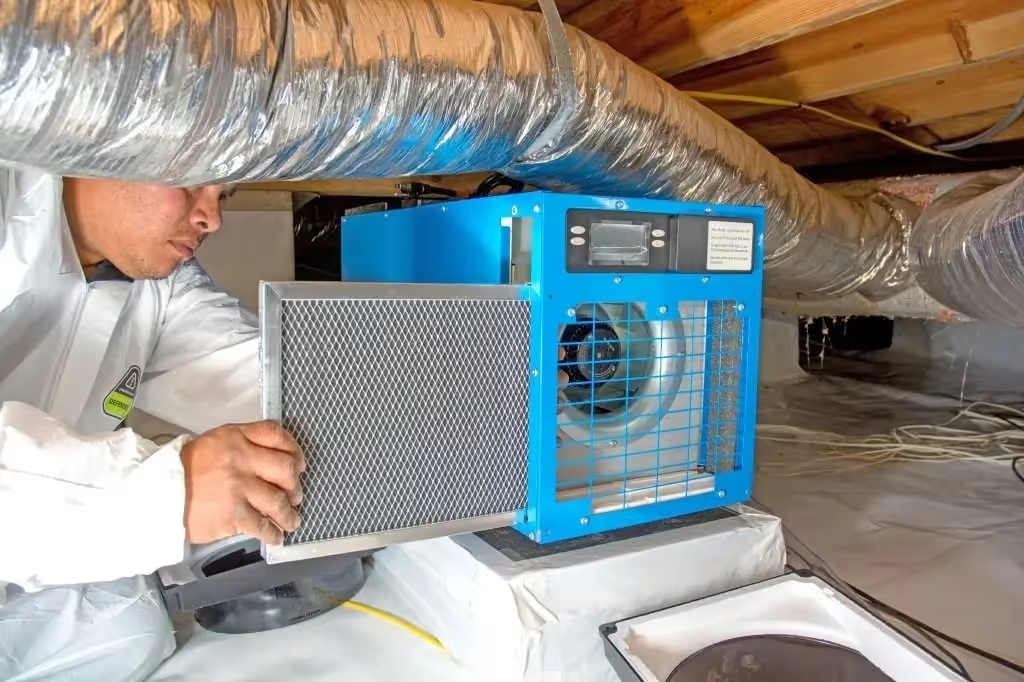
The Installation Process for Integrated Humidity Control
Implementing a whole-home solution requires technical precision and a clear understanding of airflow dynamics. Our technicians follow a rigorous protocol to ensure the equipment operates at peak efficiency and does not disrupt the balance of your existing HVAC equipment.
Site Assessment and Load Calculation:
First, we evaluate the specific moisture challenges in your home. This involves measuring the square footage, inspecting the crawl space or basement conditions, and identifying the existing ductwork configuration. We calculate the amount of moisture removal required per day (measured in pints) to select a unit that can keep up with the demand during the peak summer season.
Unit Placement and Preparation:
Next, we determine the optimal location for the equipment. Common installation points include the basement, a dedicated utility closet, or the attic, depending on where the central air handler is located. We prepare the mounting surface to ensure the unit is level and isolated from vibration to minimize operating noise.
Ductwork Modification and Connection:
Then, we modify the existing supply and return plenums to accommodate the dehumidifier. This often involves installing a bypass duct or creating a dedicated return for the dehumidifier to pull air from the house, treat it, and inject it back into the supply stream. Proper zoning and dampers are installed to ensure airflow is directed correctly when the HVAC fan is running.
Electrical and Drainage Setup:
Subsequently, we handle all necessary electrical connections. Dehumidifiers require a dedicated power source to operate safely. Crucially, we pipe the condensate drain directly to the outdoors or a floor drain. If gravity drainage is not possible due to the unit's location, we install a condensate pump to move the water away from the home automatically, eliminating the need for buckets.
System Testing and Calibration:
Finally, we power on the system and test all operation modes. We calibrate the humidistat to the recommended levels for the Plum Springs climate and verify that the unit cycles on and off correctly. We also check for air leaks in the new duct connections and ensure the drainage system is flowing freely.
Determining When a Dehumidifier Is Necessary
Many homeowners mistakenly believe that their air conditioner is sufficient for controlling humidity. While an AC unit does dehumidify as a byproduct of cooling, it controls temperature first and humidity second. In many scenarios, relying solely on an air conditioner leads to a home that is cold but clammy. Recognizing the specific signs that a dedicated dehumidifier is necessary can save you money on energy bills and repairs.
The "Short-Cycling" Problem
During days with moderate temperatures but high humidity, your air conditioner may cool the house to the target temperature quickly and then shut off. This "short cycle" satisfies the thermostat but does not run long enough to remove significant moisture from the air. A dedicated dehumidifier runs independently of the cooling cycle, removing moisture even when the AC is off. This allows you to set your thermostat higher while feeling cooler, as dry air promotes better natural evaporation from the skin.
Physical Evidence of Excess Moisture
If you notice condensation forming on the inside of windows, water pipes, or toilet tanks, the relative humidity in your home is too high. Cupping wood floors, sticking doors, and peeling wallpaper are also clear indicators that the building materials are absorbing excess moisture. Left unchecked, this leads to structural rot. Installing a dehumidifier stabilizes the environment, protecting your investment in flooring and fixtures.
Biological Indicators
A persistent musty smell is the primary indicator of mold or mildew presence. Dust mites, which are a leading cause of indoor allergies, thrive in environments with humidity above 50%. If family members experience increased allergy symptoms or respiratory issues while at home, controlling the moisture level is often the most effective remediation strategy. A whole-home system filters the air as it dries it, contributing to a healthier indoor environment.
Managing Humidity in Our Subtropical Climate
The local climate presents specific challenges that make humidity control essential for year-round comfort. We operate in a humid subtropical zone where summers are characterized by high temperatures and frequent thunderstorms. This combination creates a heavy, moisture-laden atmosphere that constantly tries to infiltrate your home through doors, windows, and even the foundation.
Summer Saturation:
During the peak of summer, the outdoor dew point often reaches uncomfortable levels. Whenever you open a door, or even through the natural "breathing" of the house, that moisture enters. Without a dedicated removal system, your AC has to work overtime to combat this latent heat, increasing wear and tear on the compressor.
Shoulder Season Challenges:
Spring and autumn in our area can be particularly tricky. Temperatures often hover in the 60s or 70s—ranges where you might not want to run the AC—but the humidity remains high due to rain. A dehumidifier allows you to keep the windows closed and the air dry without freezing yourself out with the air conditioner.
Winter Considerations:
While winters are generally mild, temperatures can dip into the low 20s. In tighter, energy-efficient homes, daily activities like cooking and showering generate moisture that gets trapped inside. If this moisture touches cold surfaces (like windows or exterior walls), it condenses. A whole-home system manages this internal moisture generation to prevent winter mold growth.
Permits and Utilities:
Proper installation often involves electrical work that must adhere to local building codes. We ensure that all wiring meets the National Electrical Code (NEC) standards and that any necessary permits are handled. Additionally, we consider the electrical load on your main panel to ensure your home’s utility infrastructure can support the new equipment without issues.
Why Choose Professional HVAC Integration?
The difference between a generic solution and a professionally engineered installation lies in the details of airflow and capacity planning. A unit that is too small will run continuously without achieving the desired set point, wasting electricity and burning out the compressor. A unit that is too large may cycle too frequently, failing to circulate air properly throughout the furthest reaches of the home.
Carter Heating and Cooling approaches every project with a focus on building science. We understand that your home is a system. The dehumidifier must work in harmony with the air handler, the ductwork, and the insulation. We utilize static pressure testing to ensure that adding a dehumidifier does not restrict airflow for your furnace or AC.
Warranty and Long-Term Reliability
Manufacturer warranties for high-end dehumidification equipment often depend on professional installation. Improper ducting or drainage setup can void these warranties. By choosing a professional service, you ensure that the equipment is protected. We also provide guidance on maintenance, such as filter changes and cleaning the drainage trap, to ensure the system lasts for over a decade.
Filtration Benefits
Modern whole-home dehumidifiers do more than dry the air; they clean it. Most units come equipped with MERV-rated filters that capture dust, pollen, and other particulates as the air passes through the system. This provides a secondary layer of air purification, working alongside your main HVAC filter to reduce indoor pollutants.
Secure Your Home Against Moisture Today
Living with high humidity is a choice, not a requirement. The technology exists to maintain a perfect indoor climate regardless of the weather outside. By installing a whole-home dehumidifier, you protect your property from rot and mold, reduce the strain on your air conditioner, and create a healthier breathing environment for your family.
Don't let moisture dictate your comfort level. Take control of your indoor air quality with a solution designed for longevity and performance.
Contact Carter Heating and Cooling today to schedule your comprehensive humidity assessment.

Great Service at a Fair Price
Veterans Discount


Senior Discount

Law Enforcement

Fire fighters/ems

Hear From Your Neighbors!
Hear from your neighbors to see how our commitment to dependable service and lasting comfort has made a difference in their homes.