

How can we help today?
Choose an option to see quick actions and get help faster.HEPA Air Cleaner Replacement in Plum Springs, KY
HEPA Air Cleaner Replacement in Plum Springs, KY
Explore professional HEPA filter replacement in Plum Springs, KY to improve your home's air quality. Schedule a consultation today to breathe easier and reduce allergens effectively.
Breathe Easier with Professional HEPA Filter Replacement
Struggling with persistent allergies and poor air quality inside your home can make daily life exhausting, but a professional HEPA air cleaner replacement offers a definitive solution to restore your indoor environment. For homeowners in Plum Springs, KY, looking to eliminate airborne contaminants immediately, contact us to schedule a comprehensive evaluation and replacement service.
- Ensure clean and allergen-free air with a professionally installed HEPA system.
- Experience immediate improvement in air quality as soon as installation is complete.
- Extend the lifespan and efficiency of your HVAC system with optimized filters.
All installations are compliant with local building codes, backed by a comprehensive service warranty.
Discover the Benefits of HEPA Clean Air
High-Efficiency Particulate Air (HEPA) filtration is not merely a standard furnace filter upgrade; it is a hospital-grade solution adapted for residential use. While standard MERV 8 or MERV 11 filters capture larger dust particles and lint, they often allow microscopic irritants to pass through and recirculate within your ductwork. A true HEPA system captures 99.97% of particles as small as 0.3 microns. This level of filtration is critical for removing smoke, bacteria, viruses, and fine allergens that standard systems miss.
Residents in the Plum Springs area often face high humidity levels, which can encourage the growth of mold spores and dust mites. Installing a dedicated HEPA air cleaner provides a barrier against these biological contaminants. By trapping these pollutants before they enter the lungs or settle on furniture, you create a significantly more hygienic living space.
Furthermore, replacing an outdated or ineffective air cleaner with a modern HEPA unit protects your heating and cooling equipment. When dust bypasses a filter, it accumulates on the evaporator coil and blower motor. This buildup acts as insulation, preventing the coil from absorbing heat effectively and forcing the motor to work harder. Carter Heating and Cooling ensures that every replacement focuses on both human health and equipment longevity.
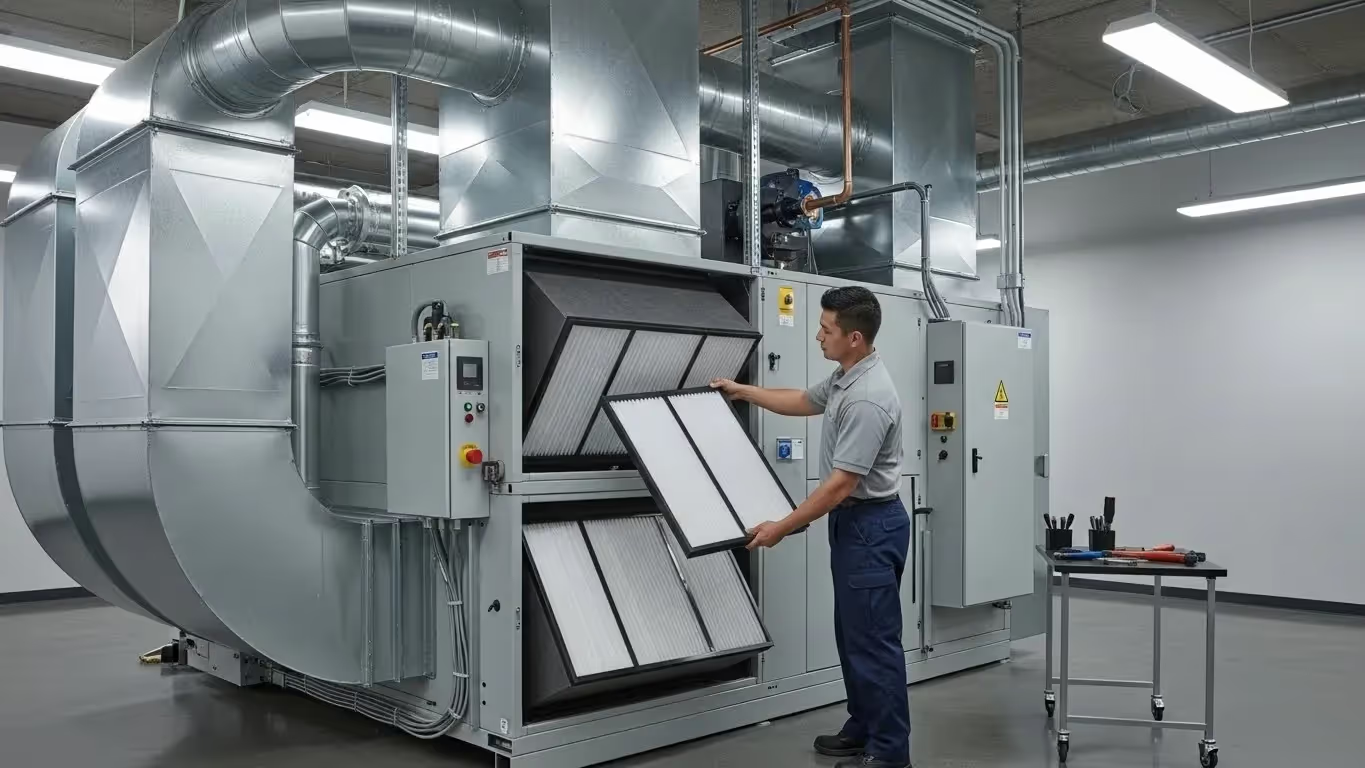
What Our HEPA Replacement Service Includes
When you invest in a professional replacement service, you are paying for more than just the hardware. The focus is on integrating the new unit seamlessly into your existing HVAC infrastructure without disrupting airflow or causing static pressure issues.
Comprehensive System Assessment
Technicians begin by evaluating your current HVAC system’s static pressure and blower capacity. HEPA filters are dense, and without proper assessment, adding one can choke the system, reducing airflow and potentially damaging the furnace or air handler.
Unit Selection and Sizing
Based on the assessment, the correct HEPA unit is selected. This includes determining whether a bypass configuration (which cleans a portion of the air on each pass) or a fan-powered unit is necessary to maintain proper air circulation throughout the home.
Ductwork Modification and Fabrication
Replacement often requires modifying the return air drop or supply plenum. This includes measuring, cutting, and installing sheet metal transitions to ensure the new air cleaner fits perfectly with zero air leakage.
Electrical Integration
Fan-powered HEPA units require dedicated electrical connections. The service includes safe wiring to ensure the air cleaner operates in sync with your HVAC blower or runs independently depending on the desired filtration strategy.
Air sealing and Insulation
Once the unit is physically installed, all connections are sealed with mastic or foil tape to prevent unconditioned air from entering the stream. This step is vital for maintaining energy efficiency.
Step-by-Step HEPA Filter Installation Process
A professional installation follows a rigorous protocol to ensure the system functions correctly from day one. This process minimizes downtime and guarantees that the filtration system does not negatively impact the heating or cooling performance of the home.
Site Preparation and Safety Check
First, the technician turns off power to the HVAC system to ensure safety. The workspace around the furnace or air handler is cleared, and drop cloths are placed to protect the flooring. The existing filter rack or old air cleaner is inspected for removal.
Removal of Existing Equipment
Next, the old media cabinet or electronic air cleaner is disconnected and removed. If the previous unit was integrated into the ductwork, the technician carefully extracts it, ensuring that the integrity of the surrounding sheet metal is maintained.
Template Marking and Cutting
The technician then marks the new installation location on the return air duct or the supply plenum, depending on the specific model's requirements. Using specialized metal-cutting tools, the opening is created precisely to match the dimensions of the new HEPA unit, ensuring a tight fit.
Mounting the HEPA System
The new cabinet is lifted into place and secured to the ductwork using sheet metal screws. Leveling is checked to ensure the unit sits square. If the unit is a bypass model, a secondary connection is made between the supply and return ducts to facilitate the necessary airflow loop.
Sealing and Testing
After mounting, every seam and joint is sealed to prevent air bypass. The technician then powers the system on. A manometer is used to measure the static pressure drop across the new filter to verify it falls within the manufacturer's specified range. This confirms that the blower motor is not being overworked.
When to Opt for Replacement Over Repair
Homeowners often debate whether to repair an existing electronic air cleaner or media cabinet versus upgrading to a new HEPA system. There are specific technical indicators that suggest replacement is the more prudent financial and functional choice.
Obsolescence of Electronic Parts
Many older homes contain electrostatic precipitators (electronic air cleaners) that constantly zap and pop. When the power packs or ionizing wires in these units fail, finding replacement parts can be difficult and expensive. If the unit is over 10 years old, the cost of repair often approaches the cost of a modern, low-maintenance HEPA replacement — apply for HVAC financing today.
Persistent Airflow Restriction
If your current filtration system causes your furnace to overheat or your AC coil to freeze due to lack of airflow, it is likely sized incorrectly or the media is too restrictive for your ductwork. Replacing the unit with a properly sized HEPA system designed for your specific blower capacity resolves these airflow dynamics.
Inability to Source Media
Older filtration cabinets often use odd-sized filters that are no longer standard in the industry. Custom-ordering filters adds significant recurring costs. Updating to a current model ensures that replacement media is readily available and more affordable over the life of the system.
Change in Health Requirements
Standard media cleaners are effective for dust, but if a household member develops severe asthma or respiratory sensitivity, a repair of a standard unit will not increase its efficiency. Replacement with HEPA filtration is the only way to achieve the capture rate necessary for medical-grade air quality.
Local Compliance and Seasonal Considerations
Operating in Plum Springs, KY, requires specific attention to regional climate factors and building standards. The humid subtropical climate means that moisture control is as important as particulate removal.
Managing Humidity and Mold Load
In Kentucky, the transition from wet springs to hot, humid summers creates a prime environment for mold growth within ductwork. HEPA filters are non-negotiable for trapping mold spores. However, the installation must ensure that the filter does not restrict airflow to the point where the AC coil freezes, which would increase humidity and mold risk. Professional sizing balances filtration intensity with necessary dehumidification airflow.
Winter Viral Control
During the colder months, when homes are sealed tight against the weather, indoor viral loads increase. A HEPA replacement ensures that recirculated air is scrubbed of airborne pathogens. This is particularly relevant for local households where windows remain closed for months at a time.
Permitting and Electrical Codes
Any installation involving modification to the fixed wiring of the home or significant changes to the HVAC infrastructure must adhere to local Kentucky building and electrical codes. Professional installers ensure that fan-powered HEPA units are hardwired correctly, with appropriate disconnects and circuit protection, to pass any required inspections and ensure insurance compliance.
Location Specifics
Many homes in the area utilize crawl spaces or attics for HVAC equipment. Assessing the physical space for a HEPA unit—which is often bulkier than a standard filter rack—is a key part of the local service. Technicians plan for accessibility so that future filter changes are not impossible for the homeowner.
Why Choose Us: Our Technical Expertise
Selecting the right partner for air quality improvements is about technical precision and verification. It is not enough to simply cut a hole in a duct and screw in a box; the physics of airflow must be respected to avoid damaging the heating and cooling equipment.
Instrumentation and Verification
We utilize advanced diagnostic tools, including static pressure manometers and particle counters, to verify the performance of the installation. We do not guess; we measure the air resistance before and after installation to guarantee your system operates within safe parameters.
Focus on Total System Performance
Our approach views the HEPA filter as a component of a larger thermal system. We analyze the blower motor curve and duct design to recommend a unit that cleans the air without strangling the furnace. This technical diligence is key to prevent premature equipment failure.
Sealed and Sanitary Installation
We adhere to strict cleanliness protocols. When cutting into ductwork, we ensure metal shavings are removed and not left to circulate. All transitions are sealed with professional-grade mastic to ensure that the air you breathe comes through the filter, not from the crawlspace or attic.
Take the Next Step for Cleaner Air
Upgrading your home’s filtration capability is a decisive step toward a healthier living environment and a protected HVAC investment. Whether you are dealing with seasonal allergies or simply want the peace of mind that comes with hospital-grade air purity, the right equipment installed correctly makes all the difference. For expert HEPA air cleaner replacement in Plum Springs, KY, trust the team at Carter Heating and Cooling to deliver results you can feel.
Ready to improve your indoor air quality? Schedule your HEPA replacement consultation today.

Great Service at a Fair Price
Veterans Discount


Senior Discount

Law Enforcement

Fire fighters/ems

Hear From Your Neighbors!
Hear from your neighbors to see how our commitment to dependable service and lasting comfort has made a difference in their homes.