
How can we help today?
Choose an option to see quick actions and get help faster.Furnace Service in Plum Springs, KY
Furnace Service in Plum Springs, KY
Furnace Service in Plum Springs, KY
Inconsistent Heating and System Failures Require Immediate Attention
As the temperatures drop into the 20s during a typical winter, a malfunctioning furnace quickly shifts from a minor inconvenience to a critical safety concern for your household. Carter Heating and Cooling provides rapid, decisive furnace repair and maintenance services to restore heat to your home immediately. Contact us today to schedule a diagnostic visit or to inquire about our available financing options.
- Same-day service availability ensures your heating system is restored before the house freezes.
- Expert technicians arrive fully equipped to service all major furnace makes and models.
- Transparent, flat-rate pricing models eliminate surprise costs on your final bill.
- All repair and installation services come with a satisfaction guarantee and flexible financing.
Immediate Furnace Repair Services
When a heating system fails, the symptoms are rarely subtle. You may notice the air coming from your vents is lukewarm or cold, or perhaps the unit is cycling on and off so frequently that it never actually reaches the set temperature on the thermostat. In other cases, the system may refuse to turn on entirely, leaving the home to rapidly match the outdoor temperature. These issues indicate mechanical or electrical failures that require professional intervention rather than DIY troubleshooting.
Residents in Plum Springs often encounter specific failure points due to the heavy workload placed on furnaces during the humid, cold winters. Ignitors fail after years of repetitive cycling, flame sensors become coated in carbon buildup, and blower motors burn out from straining against clogged filters or restricted ductwork. Addressing these issues immediately prevents a small component failure from causing a catastrophic system breakdown. A professional response focuses on isolating the root cause—whether it is a gas flow issue, a faulty limit switch, or a compromised control board—and implementing a permanent fix.
What You Get Today: Fast Service and Reliable Outcome
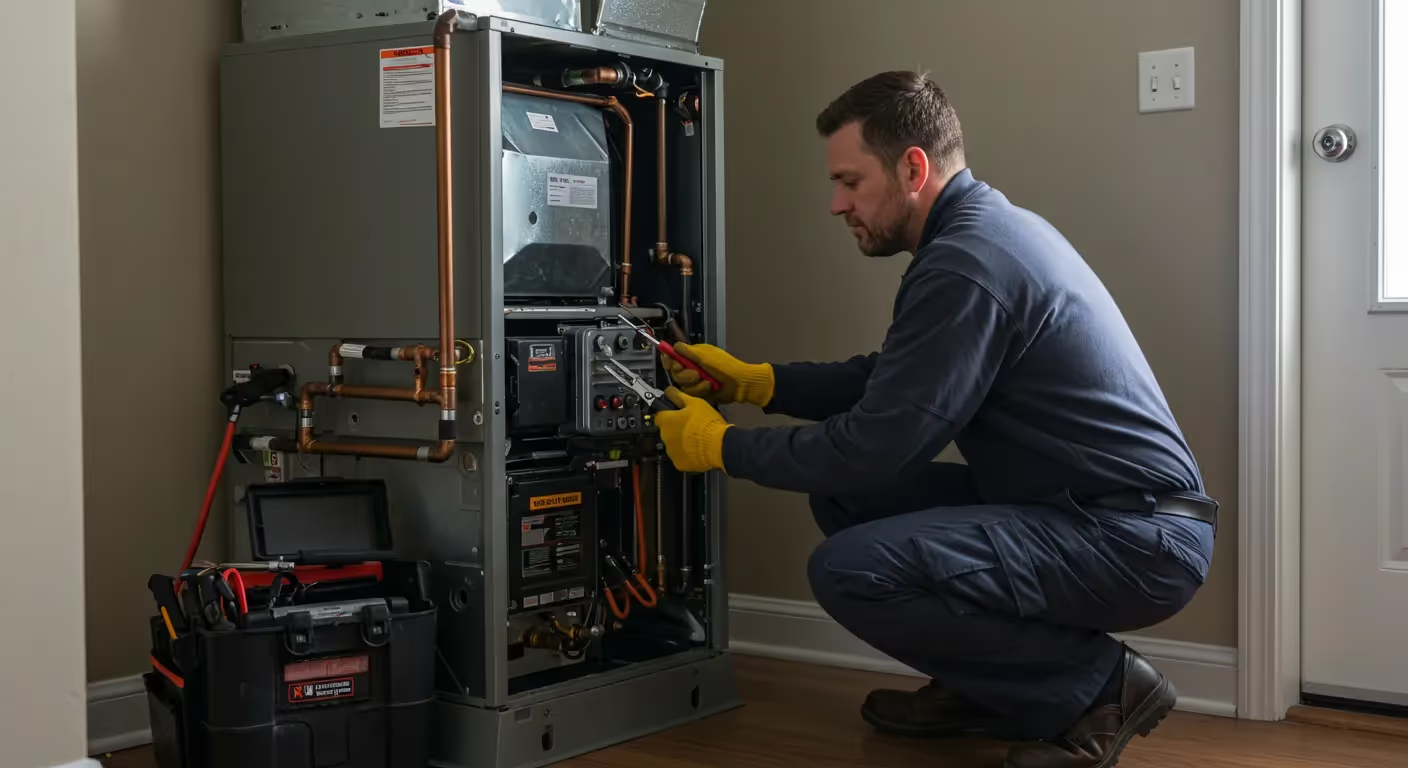
Securing a service appointment means you are looking for a resolution, not just a consultation. The primary objective is to restore safe, efficient heating operation in a single visit whenever possible. This requires a service provider who prioritizes truck stock and technical expertise.
Comprehensive Diagnostics
The service begins with a thorough evaluation of the entire heating envelope. Technicians do not simply swap parts; they use multimeters to check voltage drops, manometers to verify gas pressure, and combustion analyzers to ensure safety. This data-driven approach ensures that the repair addresses the origin of the problem, not just the symptom.
Safety Inspections
Every repair visit includes a mandatory safety check. Gas furnaces involve combustion, which carries the risk of carbon monoxide leaks if heat exchangers are cracked or venting is obstructed. Verifying the integrity of the heat exchanger and the draft of the flue pipe is a standard part of the protocol to ensure the home is safe for occupancy.
System Optimization
Once the repair is complete, the system is not just turned on; it is calibrated. This includes adjusting the gas valve for proper pressure, checking the temperature rise across the heat exchanger, and ensuring the blower motor is operating at the correct speed. These adjustments ensure the furnace runs efficiently, reducing the strain on components and lowering monthly utility costs.
Our Furnace Repair Process: Quick and Efficient
A structured repair process eliminates guesswork and ensures consistency. When you request service, the workflow is designed to minimize downtime and maximize clarity regarding the condition of your equipment.
- Arrival and Assessment: The technician arrives within the scheduled window, respecting your property by wearing shoe covers and using drop cloths. The assessment phase involves listening to the unit, testing electrical connections, and inspecting the thermostat to gather initial data on the failure.
- Diagnosis and Explanation: After testing the system components, the technician identifies the specific failure. You receive a clear explanation of what is broken, why it failed, and what is required to fix it. This discussion includes a straightforward price quote for the repair, so you have full control over the decision before any work begins.
- Execution of Repairs: Upon approval, the technician proceeds with the repair. Carter Heating and Cooling technicians carry a wide range of universal and OEM parts to facilitate immediate repairs. If a specialized part is required, the procurement process is handled swiftly to expedite the return of heat.
- Testing and Validation: The job is not complete until the system has run through a full heating cycle. The technician verifies that the furnace ignites smoothly, the flame is stable, the blower engages at the right time, and the system shuts down properly once the target temperature is reached.
- Site Cleanup: The work area is cleaned thoroughly. Old parts, packaging, and debris are removed from the home, leaving the utility room exactly as it was found, with the exception of a working furnace.
When Replacement Beats Repair: Making the Right Choice
Deciding between repairing an aging unit and investing in a new system is a financial and practical calculation. While repair is often the most immediate and least expensive option, there are specific thresholds where continuing to patch an old system becomes economically unwise.
The 50% Rule
A common industry standard is the 50% rule. If the cost of the necessary repair approaches or exceeds 50% of the value of a new system, replacement is generally the smarter financial move. This is particularly true if the unit is out of warranty, as future repairs will also be full-price expenses.
Age of the Equipment
Furnaces generally have a lifespan of 15 to 20 years. If your unit is approaching the 15-year mark and suffers a major component failure—such as a cracked heat exchanger or a blown compressor in a dual-fuel system—replacement usually offers a better return on investment. Newer units offer significantly higher AFUE (Annual Fuel Utilization Efficiency) ratings, which can offset the installation cost through lower energy bills over time.
Safety Concerns
A cracked heat exchanger is an automatic condemnation of a furnace. This component separates the combustion gases from the breathing air in your home. If it is compromised, carbon monoxide can leak into the ductwork. In this scenario, repair is rarely a viable or legal option; the heat exchanger must be replaced (which is costly) or the entire furnace must be swapped out for the safety of the household.
Frequency of Breakdowns
If you have required multiple service calls in the last two years, the system is signaling the end of its reliable service life. Continuing to pay for service calls, parts, and labor on a dying machine is often referred to as "throwing good money after bad." transitioning to a modern system eliminates these recurring costs and provides manufacturer warranty protection.
Local Expertise in Plum Springs: Permits and Regulations
Operating in the local area requires more than just technical skill; it requires knowledge of local building codes, permit requirements, and climate-specific challenges. The Plum Springs area sees winter lows that demand reliable, high-capacity heating solutions.
Understanding Local Load Calculations
A furnace must be sized correctly for the specific square footage and insulation values of the home. Local technicians understand how the humid subtropical climate affects heating loads. An undersized unit will run constantly, failing to heat the home and burning out quickly. An oversized unit will short-cycle, leading to uneven heating and excess wear. Accurate load calculations ensure the equipment matches the local weather demands.
Navigating Permits and Codes
Major gas work and system replacements often require adherence to specific local and state building codes. This includes regulations regarding gas line sizing, flue venting clearances, and electrical disconnects. Professional service providers manage the permitting process where necessary, ensuring that all work complies with safety standards and will pass inspection if the home is sold in the future.
Utility Coordination
Whether your home relies on natural gas, propane, or electricity, the interface between the utility supply and your equipment must be secure. Local service involves checking gas pressures to ensure they match the requirements of the local utility provider or managing the specific setup required for propane conversions common in areas surrounding the city center.
Why Choose Carter? Our Commitments to Excellence
Selecting a service provider is a decision based on trust and competency — read our reviews today. The focus remains on delivering a functional heating system without unnecessary upselling or delays.
- Technical proficiency is the baseline. Technicians undergo continuous training to stay current on modern high-efficiency systems, communicating thermostats, and variable-speed blower technologies.
- Inventory readiness ensures that the most common failure points—ignitors, capacitors, pressure switches, and control boards—can be addressed immediately from the van inventory.
- Respect for time means providing accurate arrival windows and calling ahead. You are not left waiting all day for a technician to appear.
- Warranty support provides peace of mind. Repairs are backed by labor warranties, and new installations come with robust manufacturer protections that are fully registered by the office staff.
- Safety protocols are strictly followed. From gas leak detection to electrical safety grounding, every step is taken to ensure the protection of the property and its inhabitants.
When your furnace fails, you need a solution that is fast, professional, and enduring. Do not let a heating breakdown compromise your safety or comfort this winter.
Restore Reliable Heat and Protect Your Home
When heating issues disrupt your comfort, taking action quickly can prevent further damage and ensure your household stays safe during cold weather. With expert diagnostics, prompt response, and dependable workmanship, Carter Heating and Cooling delivers furnace solutions designed to restore consistent heat and long-term system reliability for homes in Plum Springs.
Secure your appointment for expert furnace repair or replacement today.

Great Service at a Fair Price
Veterans Discount


Senior Discount

Law Enforcement

Fire fighters/ems

Hear From Your Neighbors!
Hear from your neighbors to see how our commitment to dependable service and lasting comfort has made a difference in their homes.