
How can we help today?
Choose an option to see quick actions and get help faster.Emergency Repair in Plum Springs, KY
Emergency Repair in Plum Springs, KY
Facing HVAC failures in Plum Springs? Contact Carter Heating & Cooling for rapid, reliable repairs with 24/7 emergency support. Get a quick, professional service today!
System Malfunctions and Airflow Loss Demand Urgent Action
When your heating or cooling system breaks down, every minute counts toward preserving the safety of your home and the comfort of your family. That is why you need a reliable solution that prioritizes speed without sacrificing technical accuracy. Contact us immediately to schedule a dispatch or to discuss financing options for major repairs:
- Immediate response from certified technicians—24/7 availability.
- Quick diagnosis and efficient repair to restore your comfort.
- Transparent pricing with no hidden fees.
Licensed service with warranties on all repairs—for your peace of mind.
Comprehensive Emergency Diagnostics and Repair Scope
An HVAC emergency rarely happens at a convenient time. Breakdowns occur during the hottest afternoons of July or the coldest nights of January, often when the system is under the heaviest load. When you request emergency service in Plum Springs, the objective is to restore functionality as quickly as possible to prevent property damage or health risks. The scope of emergency repair goes beyond a standard tune-up; it involves rapid mobilization of resources and targeted fault isolation.
Residents dealing with a system failure receive a specific set of deliverables designed to mitigate the crisis. This process begins with the dispatch of a fully stocked service vehicle. These trucks act as mobile warehouses, carrying the most common failure points such as capacitors, contactors, igniters, and flame sensors. By arriving with the necessary components, the likelihood of a same-day resolution increases significantly, reducing the downtime of your climate control system.
The service also includes a comprehensive safety inspection. While the immediate goal is to get the air moving again, technicians must ensure that the failure did not compromise the safety of the unit. This includes checking for carbon monoxide leaks in furnaces, refrigerant leaks in air conditioners, and electrical shorts that could pose a fire hazard. You receive a detailed report of what failed, why it failed, and what is required to fix it permanently.
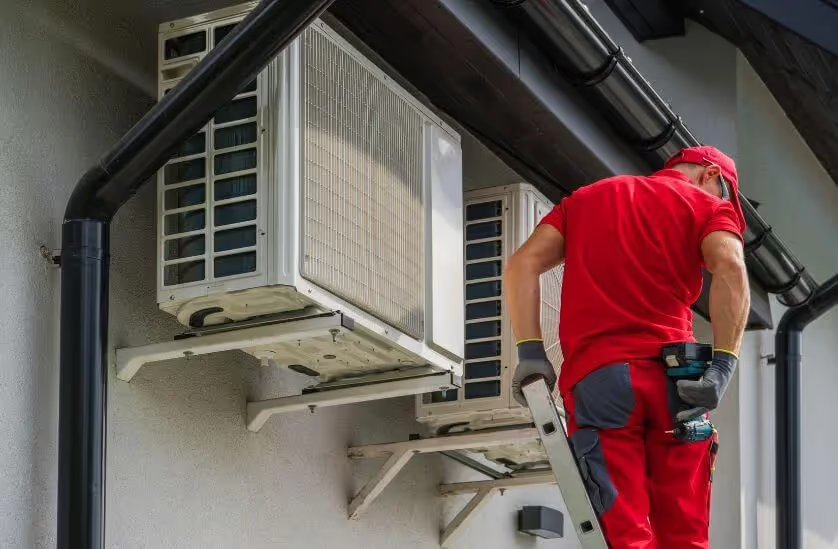
How the Emergency Restoration Process Works
Navigating a heating or cooling failure can be stressful, but understanding the workflow helps manage expectations. The process is designed to be linear and transparent, moving from the initial distress call to the final system test without unnecessary delays:
- Dispatch and Arrival: Upon receiving your request, a technician is routed to your location. You receive updates regarding arrival times so you are not left waiting in an uncomfortable home. The technician arrives equipped to troubleshoot immediately, respecting your property by parking in designated areas and wearing protective shoe covers before entering.
- System Assessment: The technician begins by isolating the symptoms. This involves testing thermostat communication, checking electrical voltages, and inspecting mechanical components like blower motors and compressor fans. This step is not a guess; it is a calculated diagnostic procedure using multimeters and pressure gauges to pinpoint the exact source of the failure.
- Presentation of Solutions: Once the issue is identified, you are presented with the findings. The technician explains the specific part that failed and provides a flat-rate quote for the repair. There are no hourly guessing games; the price given is the price paid. You approve the work before any tools are used to perform the fix.
- Execution of Repair: With approval granted, the technician proceeds to replace the broken component or repair the wiring issue. If the specific part is a rare proprietary component not on the truck, the technician coordinates with local supply houses to obtain it immediately.
- Verification and Testing: After the repair is complete, the system is not just turned on; it is stress-tested. The technician measures temperature differentials (the difference between supply and return air) to ensure the unit is cooling or heating at the manufacturer's specified capacity. The workspace is cleaned, and the system is monitored for a full cycle to guarantee stability.
Critical Decision Guide: Repair vs. Replace
During an emergency visit, homeowners often face a difficult choice: pour money into an aging unit or invest in a replacement. This decision should not be made on impulse but rather on data and financial logic. Carter Heating and Cooling technicians provide the data necessary to make an informed choice based on the condition of the specific unit:
The 50% Rule
Industry standards suggest that if the cost of the repair approaches 50% of the value of a new system, replacement is the more fiscally responsible option. A compressor failure in an older unit, for example, is a catastrophic repair that often warrants a full system upgrade rather than a patch job.
Equipment Age and Efficiency
HVAC systems generally have a lifespan of 10 to 15 years. If a unit in Plum Springs is over 12 years old and requires a major repair, the probability of a secondary failure in the near future is high. Newer systems offer higher SEER (Seasonal Energy Efficiency Ratio) ratings, which can significantly lower monthly utility bills, helping to offset the cost of installation over time.
Frequency of Breakdowns
If a system has required multiple emergency visits within the last two years, it has likely entered the end-of-life phase. Continual repairs become a "money pit," where the cumulative cost of service calls exceeds the monthly financing cost of a modern, reliable system.
Refrigerant Type
Older air conditioners may utilize R-22 refrigerant (Freon), which has been phased out due to environmental regulations. Repairing a leak in an R-22 system is exponentially more expensive than repairing a modern R-410A system due to the scarcity and cost of the refrigerant. If an R-22 unit has a leak, replacement is almost always the correct path.
Safety Concerns
For furnaces, safety is the ultimate tie-breaker. If a heat exchanger is cracked, repair is rarely an option due to the risk of carbon monoxide poisoning. In such cases, the system must be red-tagged and replaced to ensure the safety of the occupants.
Local Climate Factors and Regulatory Considerations
Operating HVAC equipment in Kentucky requires specific attention to regional weather patterns and local building codes. The climate in this region puts distinct stressors on heating and cooling infrastructure that must be addressed during emergency repairs.
Seasonality and Humidity Control
Summers in the region often see temperatures reaching the 90s with extremely high humidity. An air conditioner does more than cool the air; it dehumidifies it. When a system fails in July, the humidity levels inside a home can spike rapidly, promoting mold growth and warping wood floors. Emergency repairs in this area prioritize restoring the dehumidification cycle to protect the home's interior structure. Conversely, winter lows frequently drop into the 20s. A furnace failure during a freeze puts the home's plumbing at risk of bursting. Emergency heating service is as much about protecting the pipes as it is about keeping the residents warm.
Electrical and Permit Requirements
Repairs must adhere to local electrical codes and safety standards. While minor component swaps typically do not require new permitting, major system alterations or replacements often do. Professional technicians understand the local requirements for Plum Springs and the surrounding county areas, ensuring that all work is compliant with current regulations. This includes proper grounding of electrical connections and adherence to breaker sizing protocols to prevent fire hazards.
Utility Integration
Whether the home relies on natural gas, propane, or electricity, the repair must integrate seamlessly with the utility provider's infrastructure. Technicians check gas pressure to ensure it matches the furnace's manifold specifications and verify that electrical service drops are sufficient to handle the startup amperage of repair compressors. This alignment ensures the longevity of the repair and prevents strain on the municipal grid or the home's main panel.
Technical Expertise and Service Standards
When a system fails, the quality of the technician determines the longevity of the fix. It is not enough to simply swap a part; the root cause of the failure must be understood. A blown capacitor, for example, might be a symptom of a dirty condenser coil or a failing fan motor. Addressing only the symptom guarantees another breakdown in the near future.
Professional service involves a holistic view of the HVAC system. Technicians examine airflow dynamics, ductwork integrity, and static pressure to ensure the equipment is breathing correctly. Restricted airflow is a leading cause of premature component failure. By identifying and correcting these underlying issues during an emergency call, the system is returned to a state of optimal performance rather than just bare-minimum functionality.
Furthermore, professionalism extends to how the service is conducted. Emergency situations are stressful for homeowners. A professional presence brings calm to the chaos. This means clear communication regarding arrival times, respectful treatment of the home environment, and a guarantee that the workspace will be left cleaner than it was found. Warranties on parts and labor provide assurance that the repair is backed by a commitment to quality — read our reviews for confirmation.
Restoring Comfort and Safety to Your Home
A functional heating and cooling system is a necessity, not a luxury. When that system fails, the response must be swift, accurate, and professional. From the initial diagnostic assessment to the final safety check, every step is taken to ensure your home returns to a comfortable temperature and stays that way.
Do not let a mechanical failure disrupt your life or endanger your property. Trust in a team that understands the local climate and the technical intricacies of modern HVAC equipment. Carter Heating and Cooling is ready to respond when you need it most.
Secure your appointment now to get your system back online immediately.

Great Service at a Fair Price
Veterans Discount


Senior Discount

Law Enforcement

Fire fighters/ems
Hear From Your Neighbors!
Hear from your neighbors to see how our commitment to dependable service and lasting comfort has made a difference in their homes.